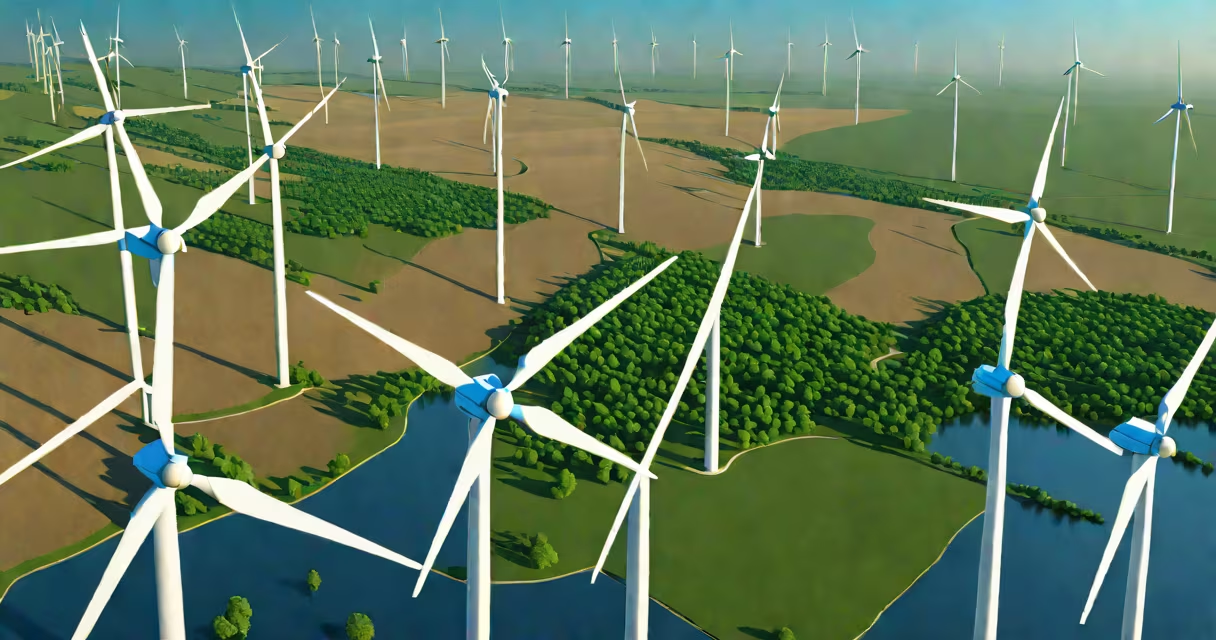
Wind power is electricity generated by converting the kinetic energy of moving air into mechanical energy through wind turbines, which then drive generators. This process produces clean, renewable electricity without emitting greenhouse gases during operation.
Wind power relies on consistent airflow over large blades attached to a central hub. As wind turns the blades, they spin a shaft connected to a generator inside the nacelle-the housing atop the tower. The generator converts rotational motion into electrical current, which is fed into the grid or used locally.
The technology has evolved from early water-pumping windmills in Persia to modern offshore arrays capable of powering entire cities. Today, wind power accounts for over 7% of global electricity generation, according to the International Energy Agency (IEA).
Wind forms due to uneven heating of Earth's surface by the sun. Air rises over warm areas and sinks over cooler ones, creating pressure differences. These differences generate wind, which moves across land and sea.
When wind blows across turbine blades, it creates lift and drag forces. The blade design-similar to an airplane wing-maximizes lift, causing rotation. A gearbox increases rotational speed to match the generator's requirements. Modern turbines operate efficiently at wind speeds between 12 and 25 km/h (7-15 mph).
For example, a single 2.5 MW turbine can produce enough electricity annually to power about 1,000 homes, assuming average U.S. consumption. That output equals removing approximately 1,600 metric tons of CO₂ emissions per year-equivalent to taking 350 cars off the road.
Wind power systems fall into two primary categories based on location and scale:
| Type | Location | Capacity Range | Use Case |
|---|---|---|---|
| Onshore | Land-based, often in rural or mountainous regions | 1-5 MW per turbine | Grid-connected farms supplying regional power |
| Offshore | Installed in oceans or seas, typically 10-100 km from shore | 8-15 MW per turbine | Larger-scale projects feeding national grids |
Onshore wind farms dominate current installations due to lower construction costs and easier maintenance. Offshore systems benefit from stronger, more consistent winds but face higher installation and repair expenses.
A notable example is the Hornsea Project in the UK, the world's largest offshore wind farm. It spans over 400 square kilometers and houses 174 turbines, producing enough electricity for nearly 1.3 million homes annually.
Many assume wind power is unreliable because wind doesn't blow constantly. However, grid operators manage variability through forecasting, battery storage integration, and diversified energy mixes. In countries like Denmark, wind supplies over 50% of electricity demand on peak days.
Another misconception is that turbines harm birds. While collisions occur, studies show that properly sited turbines cause far fewer bird deaths than buildings, vehicles, or domestic cats. The American Bird Conservancy estimates that wind turbines kill around 140,000 to 328,000 birds annually in the U.S.-a fraction of the 600 million birds killed by window strikes each year.
Wind power is not limited to large-scale projects. Small turbines can serve remote communities or individual homes. For instance, a 10-kW turbine installed on a property in Montana reduced annual electricity bills by $1,200 while cutting household carbon emissions by 7.5 tons.
Wind power is a core component of decarbonizing the energy sector. The Intergovernmental Panel on Climate Change (IPCC) states that wind and solar together must supply at least 60% of global electricity by 2050 to meet climate targets under the Paris Agreement.
Costs have dropped sharply. Since 2010, the levelized cost of electricity (LCOE) from onshore wind fell by 40%, making it one of the cheapest sources of new power in many markets. In parts of Texas and Germany, wind power now competes with fossil fuels on price alone.
I've observed this firsthand while visiting a community-owned wind project in Vermont. Residents voted to install three turbines on public land. Within two years, the cooperative covered its initial investment through energy sales and local tax revenue, demonstrating how wind power supports both sustainability and economic resilience.
Global statistics show rapid growth. In 2023, wind power added 110 gigawatts of capacity worldwide-enough to power 100 million homes. China led with 50 GW, followed by the U.S. and India. The wind power statistics tracks these developments in real time.
Wind power is a proven, low-carbon method of generating electricity. Its efficiency, declining costs, and environmental benefits make it essential for meeting climate goals and building resilient energy systems.