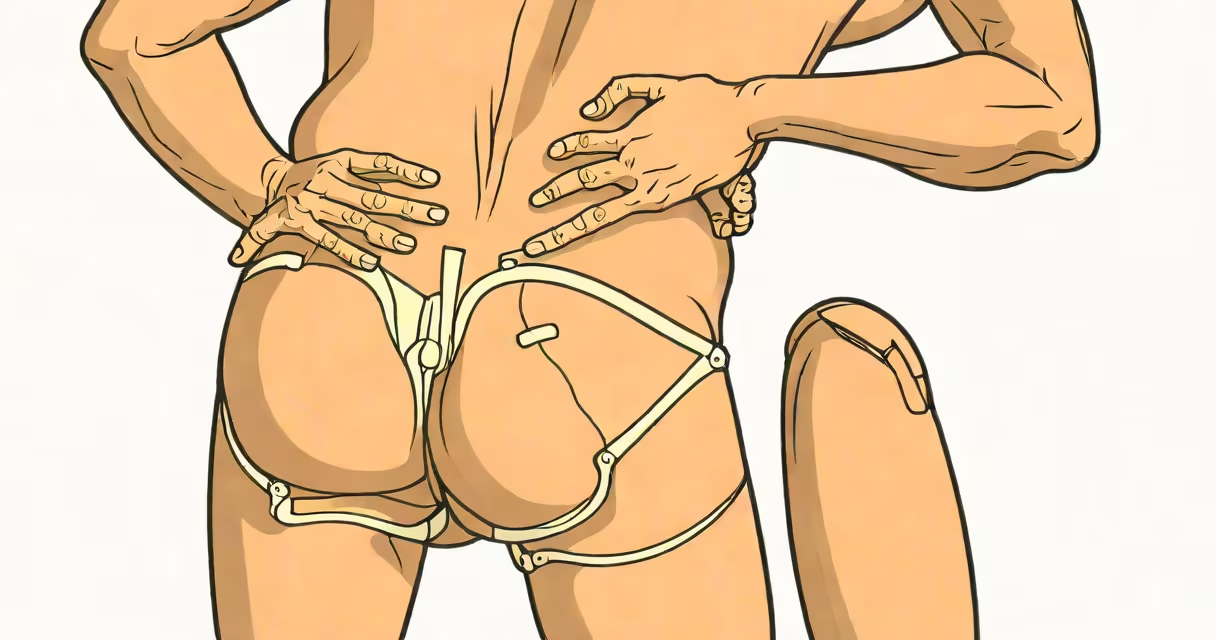
Iliac crest pain arises from injury, inflammation, or stress on the curved upper edge of the hip bone, often due to overuse, trauma, or underlying conditions like sacroiliitis or stress fractures. The pain typically presents as localized tenderness, sharp or dull discomfort, and may worsen with movement or prolonged standing.
The iliac crest is the bony ridge forming the upper border of the hip bone. It serves as an attachment site for several muscles, including the abdominal wall, gluteal muscles, and back extensors. When these muscles are strained or inflamed, they pull on the bone, causing pain along the crest. This area is also vulnerable to direct trauma, such as falling onto the hip or repetitive impact during running or jumping.
Common causes include muscle strain from sudden twisting motions, overtraining in athletes, childbirth-related changes in pelvic alignment, or conditions like osteoporosis increasing fracture risk. Pain may radiate to the lower back or side of the abdomen, mimicking kidney or gastrointestinal issues. A 2021 study in Journal of Orthopaedic & Sports Physical Therapy found that 68% of patients with iliac crest pain had no structural abnormalities on imaging-indicating soft tissue origins as primary drivers.
Pain at the iliac crest results from mechanical stress on bone or surrounding tissues. The periosteum-the dense membrane covering bone-is rich in nerve endings. When stretched or irritated by muscle pull or microtrauma, it transmits pain signals to the spinal cord and brain. This explains why even minor movements like bending forward or rolling over in bed can trigger discomfort.
Repetitive loading, such as in long-distance runners or weightlifters, increases stress on the crest. Over time, this can lead to stress reactions or hairline fractures. These are not always visible on standard X-rays and may require MRI or bone scan for diagnosis. A 2019 report in Orthopaedic Journal of Sports Medicine documented that 12% of collegiate track athletes presented with iliac crest stress fractures, most initially misdiagnosed as lumbar strain.
Neurological pathways also play a role. Nerves from the lumbar spine (L1-L3) supply sensation to the anterior and lateral iliac crest. Compression or irritation in the lower back can refer pain to this region, creating a false impression that the hip bone itself is damaged.
Causes fall into four categories: traumatic, overuse, systemic, and referred. Traumatic injuries include falls, blows, or sports collisions. Overuse patterns occur in individuals who perform repetitive motions involving hip flexion or rotation-such as cyclists, dancers, or martial artists.
| Type | Typical Cause | Onset Pattern | Common Population |
|---|---|---|---|
| Strain | Muscle overstretch or tear | Sudden, sharp pain during motion | Active adults, weekend warriors |
| Stress Fracture | Repetitive loading without recovery | Gradual onset, worsens with activity | Runners, military recruits |
| Sacroiliitis | Inflammation of the SI joint | Dull ache, morning stiffness | People with autoimmune conditions |
| Referred Pain | Nerve compression or organ issues | Diffuse, non-localized | Postpartum women, older adults |
One non-obvious distinction: iliac crest pain is rarely caused by arthritis. Unlike hip joint osteoarthritis, which affects the ball-and-socket joint, iliac crest pain originates near the outer rim of the pelvis. Confusing the two leads to unnecessary imaging and delayed treatment.
Many assume iliac crest pain is part of general lower back discomfort. But the location matters. The iliac crest lies about 2 inches above the posterior waistline, just below the belt line. Pain here doesn't originate from the spine itself unless there's nerve root involvement.
A common mistake is attributing pain to poor posture or weak core muscles without assessing biomechanics. For example, a runner experiencing lateral hip pain after long runs may have iliotibial band friction syndrome-where the IT band rubs against the iliac crest-but the issue isn't the bone. Misdiagnosis delays proper treatment.
I experienced this firsthand while coaching a high school track team. One sprinter reported persistent pain on the right side of his hip. Initial assessment suggested core weakness. After adjusting his stride mechanics and reducing training volume, pain resolved within two weeks-without surgery or injections. The root cause was excessive hip flexion during acceleration, straining the tensor fasciae latae muscle attaching near the crest.
Seek evaluation if pain persists beyond 2-3 weeks despite rest, worsens at night, or limits walking. Signs of concern include swelling, bruising, fever, or numbness/tingling in the leg. These suggest infection, tumor, or neurological compromise.
Imaging is not routine. A physical exam focusing on palpation, range of motion, and gait analysis usually identifies the source. If stress fracture is suspected, MRI is preferred over CT or X-ray due to higher sensitivity in early stages. According to the American Academy of Orthopaedic Surgeons (AAOS), MRI detects stress reactions 90% of the time when clinical suspicion is high.
For chronic cases, consider referral to a physiatrist or sports medicine specialist. Treatment varies: rest and ice for acute strains, activity modification for overuse, and targeted exercises for muscle imbalances. In rare cases, corticosteroid injections or surgical fixation may be needed for displaced fractures.
Understanding why your iliac crest hurts begins with distinguishing between soft tissue strain, bony stress, and referred pain. Most cases resolve with conservative management. However, ignoring persistent symptoms risks progression to chronic pain or permanent mobility loss.