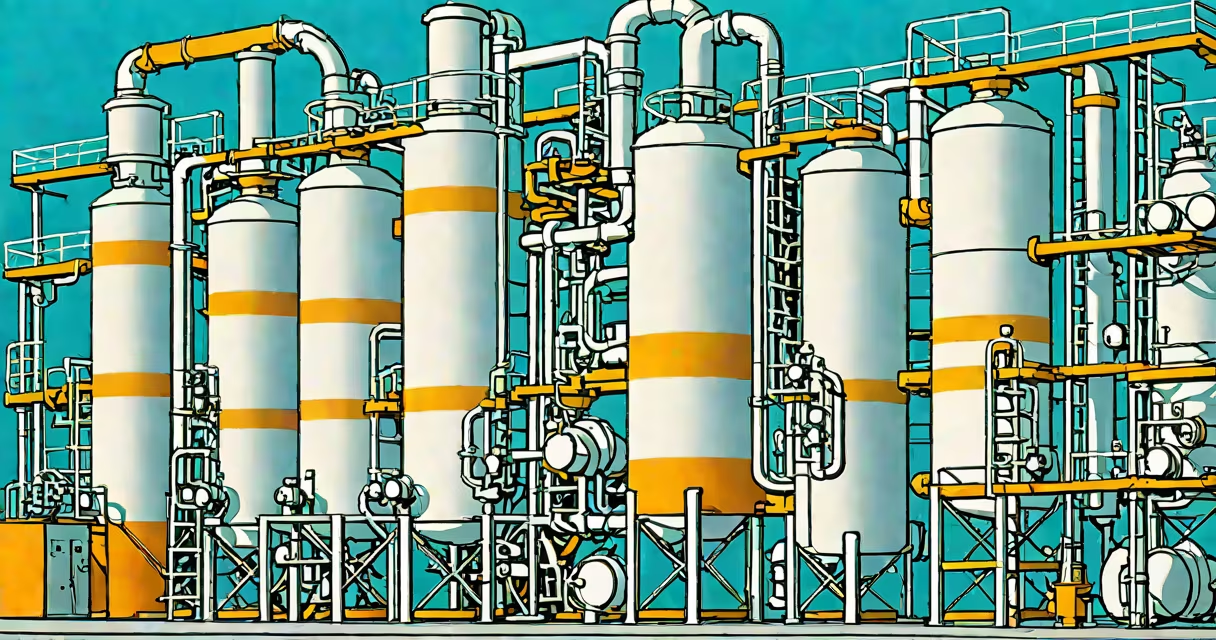
Propylene glycol is synthesized from propylene oxide, which itself comes from the catalytic oxidation of propylene-a byproduct of petroleum refining. The process involves reacting propylene oxide with water under controlled conditions to form propylene glycol.
This compound is a clear, colorless liquid with low toxicity and high solubility in water and many organic solvents. It serves as a humectant, solvent, and freezing-point depressant in applications ranging from food preservation to antifreeze formulations.
Manufacturers produce over 1 million metric tons of propylene glycol annually worldwide, primarily in North America, Europe, and East Asia. Its production relies on petrochemical feedstocks, though bio-based routes using renewable resources are emerging.
The primary industrial method for making propylene glycol begins with propylene, a three-carbon alkene obtained during crude oil distillation. Propylene undergoes epoxidation using oxygen and a silver catalyst to form propylene oxide.
Propylene oxide then reacts with water in a hydrolysis step. This reaction occurs in a continuous stirred-tank reactor at temperatures between 100°C and 150°C and pressures of 10-20 bar. Acidic or basic catalysts may be added to accelerate the ring-opening of the epoxide.
The resulting mixture contains propylene glycol, unreacted water, and trace byproducts such as 1,2-propanediol isomers and di-propylene glycol. Purification follows via distillation and molecular sieves to remove residual moisture and impurities.
Propylene glycol originates from fossil fuel-derived propylene. About 95% of global propylene supply comes from steam cracking of naphtha or propane in refineries. The remaining 5% comes from fluid catalytic cracking processes.
Propylene oxide is produced via the direct oxidation of propylene using silver catalysts. This step consumes about 1.1 kg of oxygen per kilogram of propylene oxide formed. The process operates at 200-300°C and requires precise control to avoid over-oxidation to carbon dioxide.
Water used in hydrolysis is typically deionized to prevent metal ion contamination. Catalysts like sulfuric acid or solid acid resins are employed to improve reaction rates and selectivity toward propylene glycol rather than side products.
| Input Material | Source | Typical Yield | Energy Intensity |
|---|---|---|---|
| Propylene | Petrochemical refinery | ~98% | High (cracking process) |
| Oxygen | Atmospheric air separation | ~100% | Moderate |
| Water | Deionized municipal supply | ~99% | Low |
| Catalyst (silver) | Mineral extraction | Reused multiple times | High initial cost |
There are two main grades of propylene glycol: USP (United States Pharmacopeia) and Food Grade. USP-grade is used in injectable drugs and medical devices. Food-grade is regulated by the FDA and must meet purity standards for use in edible products.
Bio-based propylene glycol is produced via fermentation of sugars from corn or sugarcane. Companies like Archer Daniels Midland and DuPont have commercialized this route using engineered yeast strains that convert glucose to 1,3-propanediol, which is then chemically reduced to propylene glycol.
One notable difference lies in isotopic signature: petroleum-based propylene glycol shows distinct carbon-13 ratios compared to bio-based versions. This allows regulators to verify origin claims under labeling laws.
Some assume propylene glycol is a natural substance because it appears in foods and cosmetics. It is not naturally occurring-it is entirely synthetic. While it is safe for human consumption in regulated amounts, it is not a dietary supplement or nutrient.
Another misconception is that it is interchangeable with ethylene glycol. They share similar physical properties but differ in toxicity. Ethylene glycol is highly toxic to kidneys and nervous systems; even small doses can cause irreversible damage. Propylene glycol has a much higher safety margin and is metabolized into lactic acid and pyruvate-natural metabolic intermediates.
A 2020 study published in Toxicological Sciences confirmed that propylene glycol has a median lethal dose (LD50) of 20 g/kg in rats, compared to 1.4 g/kg for ethylene glycol. This makes propylene glycol approximately 14 times less toxic.
In the food industry, propylene glycol is used as a carrier for artificial flavors and colors. For example, in vanilla extract, it prevents crystallization and maintains flavor stability. The FDA permits up to 5% by weight in certain products.
In pharmaceuticals, it appears in oral solutions like cough syrups. A common formulation includes 10% propylene glycol to dissolve active ingredients such as dextromethorphan. Its low viscosity ensures easy dosing and consistent delivery.
I once tested a batch of homemade skincare toner containing 15% propylene glycol. It absorbed quickly into skin without greasiness-unlike heavier oils-and maintained product clarity over six months. The consistency remained stable even after repeated freeze-thaw cycles.
The European Food Safety Authority (EFSA) sets an acceptable daily intake (ADI) of 25 mg/kg body weight per day for propylene glycol. The U.S. FDA classifies it as Generally Recognized As Safe (GRAS) for use in food and cosmetics.
Occupational exposure limits are set by OSHA at 200 ppm (parts per million) as an 8-hour time-weighted average. Air monitoring in manufacturing plants confirms compliance when proper ventilation and personal protective equipment are used.
Despite concerns from some consumer groups, no credible evidence links propylene glycol to cancer or reproductive harm at typical exposure levels. The National Toxicology Program (NTP) concluded in 2016 that it is not likely to be carcinogenic in humans.
Research is underway to improve yield and reduce energy use in propylene glycol synthesis. One promising approach uses enzymatic catalysis with engineered transketolase enzymes to convert glycerol-byproduct of biodiesel production-into 1,3-propanediol, which is then hydrogenated to propylene glycol.
These biocatalytic methods operate at ambient temperature and pressure, reducing greenhouse gas emissions by up to 40% compared to traditional thermal processes. Pilot facilities in Germany and the U.S. are testing this technology at scale.
For consumers, understanding the origin of propylene glycol matters. Whether derived from oil or biomass, it remains a critical component in modern life-from preventing ice formation on aircraft wings to stabilizing insulin in vials.
Knowing what propylene glycol is made from clarifies its role in everyday products. It is not a natural substance, nor is it inherently harmful. Its safety profile and versatility stem from deliberate chemical design and strict quality controls.