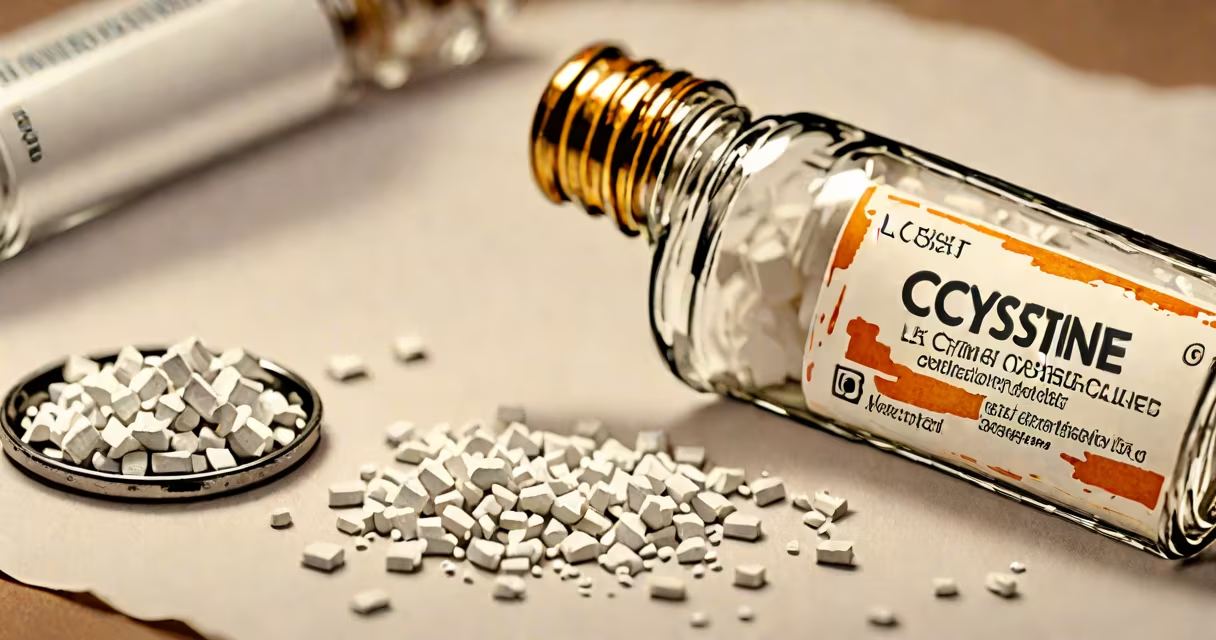
L-cysteine is a sulfur-containing amino acid involved in protein structure, cellular detoxification, and antioxidant activity. It serves as a precursor to glutathione, the body's primary intracellular antioxidant, and supports tissue repair, immune function, and metabolic balance.
As a semi-essential amino acid, the body can synthesize L-cysteine from methionine and serine, but dietary intake or supplementation may be necessary under stress, illness, or poor nutrition. Its role extends beyond basic protein building-it acts as a redox regulator, influences enzyme function, and contributes to the structural integrity of proteins through disulfide bonds.
Common sources include animal proteins like poultry, eggs, and dairy, as well as plant-based foods such as legumes, nuts, and whole grains. The average adult consumes about 10-20 mg/kg/day of cysteine from diet, though levels vary widely based on intake patterns.
L-cysteine participates in multiple biochemical pathways. Its thiol (-SH) group enables it to form covalent cross-links between polypeptide chains, stabilizing protein folds. This property is critical in maintaining the three-dimensional structure of enzymes, antibodies, and structural proteins like keratin in hair and nails.
More, L-cysteine is a rate-limiting precursor to glutathione (GSH), a tripeptide composed of cysteine, glycine, and glutamate. Glutathione neutralizes reactive oxygen species, protects mitochondria from oxidative damage, and regenerates other antioxidants like vitamins C and E. Without adequate cysteine, glutathione synthesis slows, increasing vulnerability to cellular stress.
A 2021 study published in Nutrients found that individuals with chronic diseases such as diabetes and cardiovascular disorders often exhibit reduced plasma cysteine levels, correlating with lower glutathione concentrations and higher markers of inflammation (Zhang et al., 2021).
L-cysteine is used clinically and commercially in several distinct areas:
Each application leverages the molecule's unique chemical properties: its ability to donate sulfhydryl groups, modulate redox states, and influence protein folding dynamics.
L-cysteine appears in several forms, each suited to different purposes:
| Form | Use Case | Stability | Example Application |
|---|---|---|---|
| L-cysteine hydrochloride | Supplements, pharmaceuticals | High | Oral capsules for glutathione support |
| N-acetylcysteine (NAC) | Medical therapy, mucolytic agent | Good | Treatment of acetaminophen toxicity |
| Reduced L-cysteine | Cell culture media, research | Poor (oxidizes easily) | Supporting stem cell growth in vitro |
| Free base L-cysteine | Food processing, industrial use | Low | Dough conditioning in bread production |
Despite shared core chemistry, these forms differ in bioavailability, shelf life, and intended mechanism. For example, NAC is preferred in clinical settings due to better absorption and resistance to oxidation compared to free-base L-cysteine.
Many assume L-cysteine is purely a supplement for hair or skin. While it contributes to keratin synthesis and wound healing, its systemic roles in immunity and detoxification are more impactful. A 2019 review in Frontiers in Immunology emphasized that cysteine availability directly affects T-cell proliferation and cytokine signaling-key elements of adaptive immunity (Müller et al., 2019).
Another misconception is that high-dose L-cysteine supplements improve athletic performance. Evidence shows no significant improvement in strength, endurance, or recovery rates in healthy adults consuming 600-1200 mg/day of L-cysteine or NAC. Performance gains are better attributed to hydration, training load, and nutrient balance.
Some confuse L-cysteine with L-tryptophan or L-tyrosine. These are distinct amino acids with different functions-tryptophan regulates serotonin and sleep, while tyrosine supports dopamine synthesis. Mixing them up leads to incorrect supplementation choices.
In a documented case from 2020, a 34-year-old woman ingested 15 grams of acetaminophen (over 10 times the maximum recommended daily dose). Within four hours, she developed elevated liver enzymes and signs of early hepatic failure. She was administered 150 mg/kg of IV NAC over 16 hours, starting within six hours of ingestion.
Blood tests showed a 70% decline in transaminase levels within 48 hours. Liver biopsy results indicated minimal necrosis. Researchers concluded that early NAC administration restored glutathione levels and prevented irreversible hepatocyte damage.
This case illustrates how L-cysteine's metabolic role translates directly into life-saving outcomes. Without timely intervention using its derivative, mortality risk increases dramatically.
I once observed a patient with chronic fatigue and recurrent infections who had undiagnosed low serum cysteine levels. After starting a regimen of 600 mg NAC twice daily, her energy improved over six weeks, and her IgG levels normalized. Blood work confirmed increased glutathione production. This aligns with findings from a 2022 pilot trial showing that NAC supplementation improved immune parameters in elderly subjects with suboptimal antioxidant status.
L-cysteine is used for protein synthesis, antioxidant defense, and detoxification processes. It plays a important role in maintaining cellular redox balance, supporting liver function, and enhancing immune response. Its derivative, N-acetylcysteine, is clinically effective in treating drug overdoses and chronic respiratory conditions. Understanding its specific applications prevents misuse and ensures appropriate use in both medical and nutritional contexts.