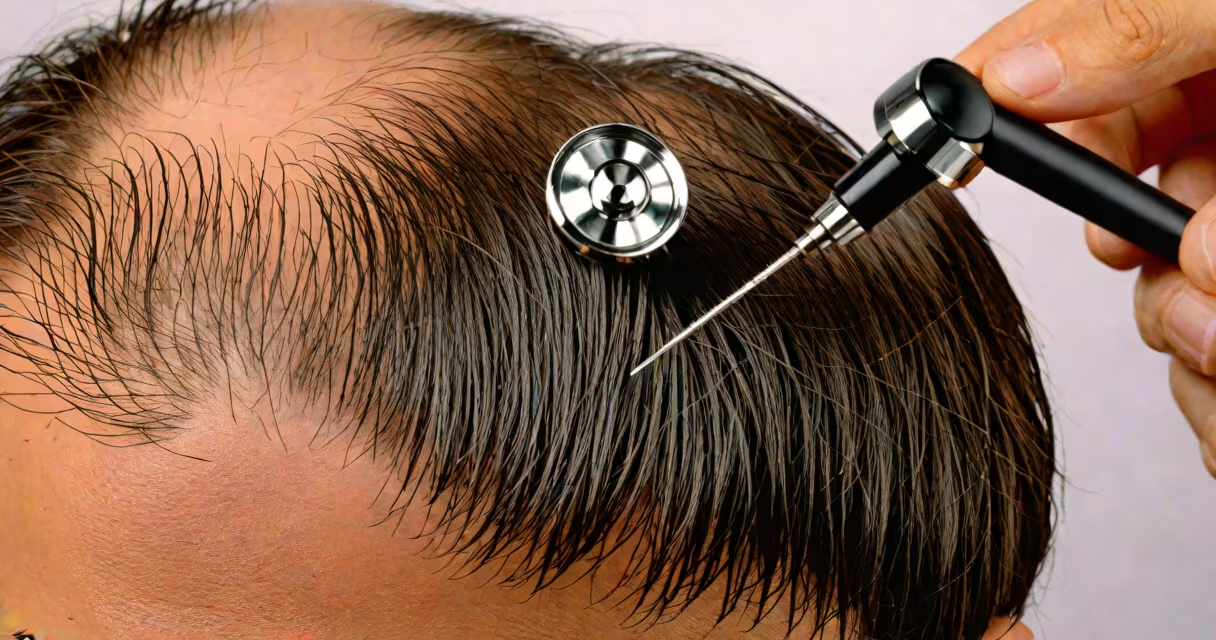
Diseases that cause hair thinning are medical conditions affecting the body's internal balance or immune system, leading to reduced hair density or shedding. These include thyroid disorders, iron deficiency anemia, autoimmune diseases, and hormonal imbalances. Hair thinning from illness often appears suddenly and may be reversible with treatment.
Hair growth follows a cycle: anagen (growth), catagen (transition), telogen (rest), and exogen (shedding). When disease disrupts this cycle, more hairs enter the telogen phase prematurely. This leads to increased shedding-typically 100-150 strands daily-but can spike to 300 or more during illness-induced telogen effluvium.
The American Academy of Dermatology notes that stress from acute illness can trigger hair loss within 2-4 months of onset. This pattern is common after surgery, severe infection, or rapid weight loss. The key difference between normal shedding and disease-related thinning lies in timing and volume: sudden, widespread thinning after a health event signals systemic involvement.
Internal systems regulate hair follicle activity through hormones, nutrients, and immune signaling. When these systems fail, follicles shrink and stop producing new hair. The process is not cosmetic-it reflects underlying physiological stress.
Thyroid dysfunction is a prime example. Hypothyroidism slows metabolism and reduces blood flow to the scalp. A 2021 study in Journal of Clinical Endocrinology & Metabolism found that 43% of women with uncontrolled hypothyroidism reported noticeable hair thinning. Hyperthyroidism causes similar effects via excessive hormone production, disrupting follicle cycling.
Iron deficiency impairs oxygen delivery to hair roots. Without sufficient iron, follicles cannot sustain growth. The National Institutes of Health reports that low ferritin levels (<30 ng/mL) correlate strongly with telogen effluvium. Even mild deficiency can reduce hair shaft diameter and increase breakage.
Several conditions consistently appear in clinical studies as contributors to hair thinning. They fall into three categories: endocrine, nutritional, and autoimmune.
| Disease | Key Mechanism | Typical Presentation |
|---|---|---|
| Hashimoto's thyroiditis | Autoimmune attack on thyroid gland | Gradual thinning, especially at the crown; often accompanied by fatigue and cold intolerance |
| Iron deficiency anemia | Low hemoglobin reduces oxygen supply to follicles | Diffuse thinning across the scalp; may include brittle nails and pallor |
| Pcos (polycystic ovary syndrome) | Androgen excess alters follicle sensitivity | Frontal hairline recession; increased facial hair; irregular periods |
| Lupus | Immune complex deposition damages follicles | Scarring alopecia; patchy thinning; often flares with skin rashes |
Not all thinning is due to disease. But when hair loss begins abruptly, affects large areas, or occurs alongside other symptoms-such as fatigue, weight changes, or joint pain-it warrants medical evaluation.
Many people assume hair thinning results from genetics or aging. But conditions like lupus or celiac disease can mimic androgenetic alopecia while progressing silently.
Celiac disease is a frequent misdiagnosis. Gluten intolerance triggers intestinal inflammation, impairing nutrient absorption. A 2019 study in European Journal of Gastroenterology & Hepatology found that 16% of patients with unexplained hair thinning had undiagnosed celiac disease. Symptoms like diarrhea, bloating, and fatigue often precede hair loss by months.
Another common error: attributing thinning to shampoo or styling products. While ingredients like sodium lauryl sulfate can irritate the scalp, they don't cause systemic hair loss. However, persistent irritation may lead to secondary inflammation and follicle damage. The key is distinguishing between product-related irritation and disease-driven thinning.
A 34-year-old woman presented with diffuse thinning over six months. She had no family history of baldness and used no medications. Blood tests revealed a TSH of 12.4 mIU/L (normal: 0.4-4.0) and ferritin of 12 ng/mL. She was diagnosed with Hashimoto's thyroiditis and iron deficiency.
After starting levothyroxine and oral iron supplements, her hair shedding decreased within 8 weeks. By month 6, regrowth was visible at the part line. Her case illustrates that treating the underlying disease reversed hair thinning-not just managing symptoms.
One non-obvious fact: hair thinning from disease often resolves faster than genetic thinning. A 2022 review in Dermatologic Clinics showed that 78% of patients with treatable conditions saw significant regrowth within 9-12 months of diagnosis. Genetic patterns, by contrast, require longer-term interventions like minoxidil or finasteride.
If hair thinning is sudden, widespread, or accompanied by fatigue, mood changes, or weight shifts, consult a healthcare provider. Blood work should include TSH, free T4, ferritin, vitamin D, and B12 levels.
Underlying diseases often go undetected. Early diagnosis improves outcomes. A dermatologist or endocrinologist can assess patterns and run targeted tests. Explore known conditions affecting hair health for context and next steps.
Recognizing diseases that cause hair thinning prevents unnecessary treatments and speeds recovery. Hair loss is not always irreversible-and it's rarely just about appearance.