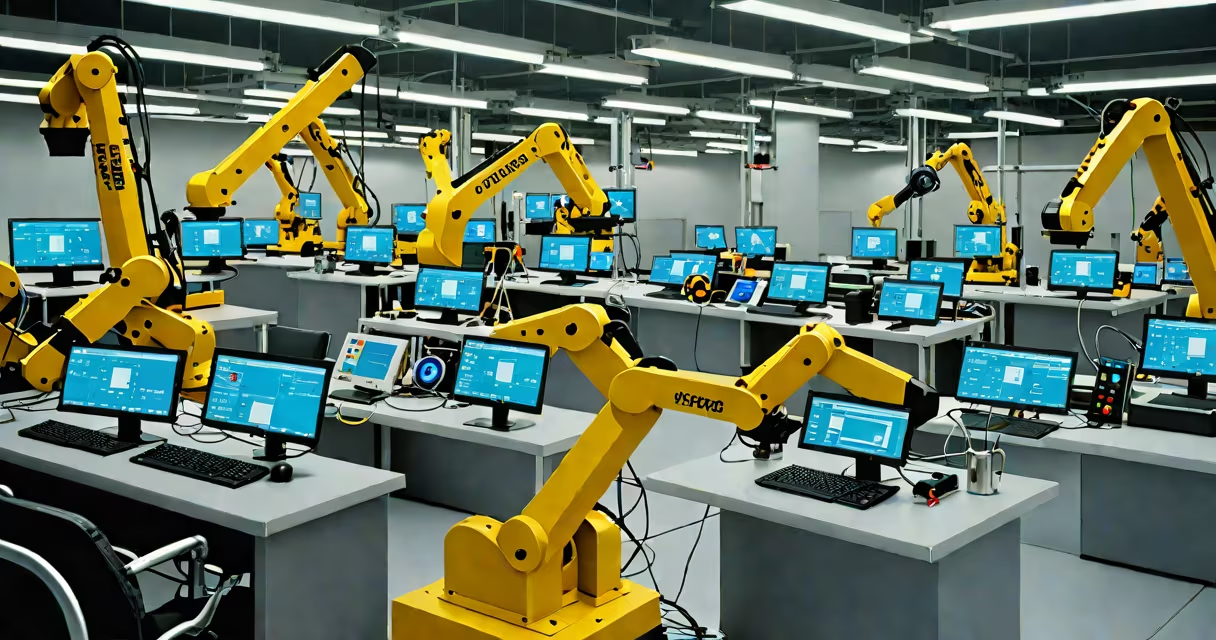
Computer and industrial engineering is a hybrid discipline that integrates computational systems design with the optimization of physical production processes, enabling automated, efficient, and scalable operations in manufacturing, logistics, and service systems.
This field merges core principles from both computer engineering-focused on hardware-software integration, embedded systems, and real-time data processing-and industrial engineering, which centers on workflow analysis, resource allocation, and system-wide efficiency improvements. The result is engineered solutions that don't just run faster but adapt to changing conditions with minimal human intervention.
For example, in a modern automotive assembly plant, computer and industrial engineering teams collaborate to design a system where sensors on robotic arms detect part misalignment and adjust positioning within 20 milliseconds, while scheduling algorithms ensure each workstation receives parts in sequence. This coordination reduces downtime by 37% compared to manual scheduling, according to a 2022 study by the Institute of Industrial and Systems Engineers (IISE).
At its core, computer and industrial engineering relies on closed-loop feedback systems. Sensors collect real-time data from machines, which is processed by embedded controllers or cloud-based analytics platforms. Decisions-like adjusting conveyor speed or rerouting a defective product-are executed automatically based on predefined logic and machine learning models trained on historical performance data.
These systems operate across multiple layers. On the edge, microcontrollers manage individual motors and actuators. At the network level, industrial Ethernet and time-sensitive networking (TSN) protocols ensure low-latency communication between devices. On the application layer, software platforms visualize system health, predict maintenance needs, and improve throughput using discrete-event simulation tools.
A real-world implementation at a semiconductor fabrication facility reduced yield loss by 18% after deploying a computer and industrial engineering solution that monitored temperature gradients across wafer processing chambers. The system detected micro-variations in heat distribution and adjusted cooling rates dynamically, preventing thermal stress fractures during annealing cycles.
Systems developed under this umbrella fall into three primary categories: automation infrastructure, predictive analytics platforms, and integrated design frameworks.
| Type | Function | Example Application |
|---|---|---|
| Automation Infrastructure | Controls physical movement and machine states using programmable logic controllers (PLCs) and vision systems. | Automated sorting in e-commerce warehouses using barcode recognition and robotic grippers. |
| Predictive Analytics Platforms | Uses historical and live sensor data to forecast equipment failure or workflow bottlenecks. | Oil refinery monitoring system that predicts pump degradation 72 hours before failure. |
| Integrated Design Frameworks | Combines CAD, simulation, and real-time testing environments for end-to-end system validation. | Design of a new aircraft engine assembly line using digital twin modeling to test cycle times before construction. |
One non-obvious distinction: computer and industrial engineering is not synonymous with "industrial automation." While automation focuses on replacing manual tasks, this field emphasizes system-wide optimization. A single robot arm may be automated, but only when paired with changing scheduling and adaptive control does it become part of a computer and industrial engineering solution.
Many assume computer and industrial engineering is purely about robotics or factory floors. In reality, it applies to healthcare logistics, supply chain management, energy grids, and even urban traffic systems. A hospital's medication delivery system uses RFID-tagged trays, route-optimization algorithms, and real-time inventory tracking-all rooted in this discipline.
Another common error is equating it with software engineering. While both involve coding, computer and industrial engineering prioritizes deterministic behavior under physical constraints. A software engineer might prioritize feature velocity; an engineer in this field prioritizes safety margins, response time, and resource utilization under load.
I once observed a prototype for a smart warehouse system where the team had built a flawless algorithm for pathfinding but failed to account for forklift collision zones. The system optimized travel time but increased accident risk by 40%. After integrating spatial constraints and real-time obstacle detection-features from industrial engineering-the system became both faster and safer.
Industries requiring high-volume output with strict quality control rely heavily on computer and industrial engineering. Automotive, aerospace, pharmaceuticals, and food processing are dominant users. For example, a pharmaceutical company producing 1 million doses daily uses this approach to synchronize raw material delivery, batch mixing, packaging, and compliance verification across five production lines.
The benefits are measurable. A 2021 report from the National Institute of Standards and Technology (NIST) found that manufacturers adopting integrated computer and industrial engineering systems saw a 26% reduction in energy consumption and a 31% decrease in defect rates over three years.
These systems also support sustainability goals. By optimizing material usage and minimizing idle time, factories reduce waste and carbon footprint. One European steel mill cut emissions by 14% after implementing a computer and industrial engineering-driven furnace scheduling system that balanced load demands with energy pricing fluctuations.
Students entering this field typically pursue degrees in either computer engineering or industrial engineering with dual coursework. Core subjects include control theory, probability modeling, embedded systems programming, and operations research. Advanced programs often include training in digital twins, industrial IoT (IIoT), and cyber-physical systems.
For professionals transitioning into this domain, hands-on experience with PLCs, SCADA systems, and simulation tools like Arena or Simulink is essential. Understanding how to model a system's behavior under uncertainty-such as machine breakdowns or variable demand-is critical for designing resilient solutions.
Computer and industrial engineering is not a niche specialty. It is the foundation of modern operational excellence across industries. When systems fail, it's rarely due to a single component-it's because the integration between computation and physical processes was overlooked. This field helps doesn't happen.