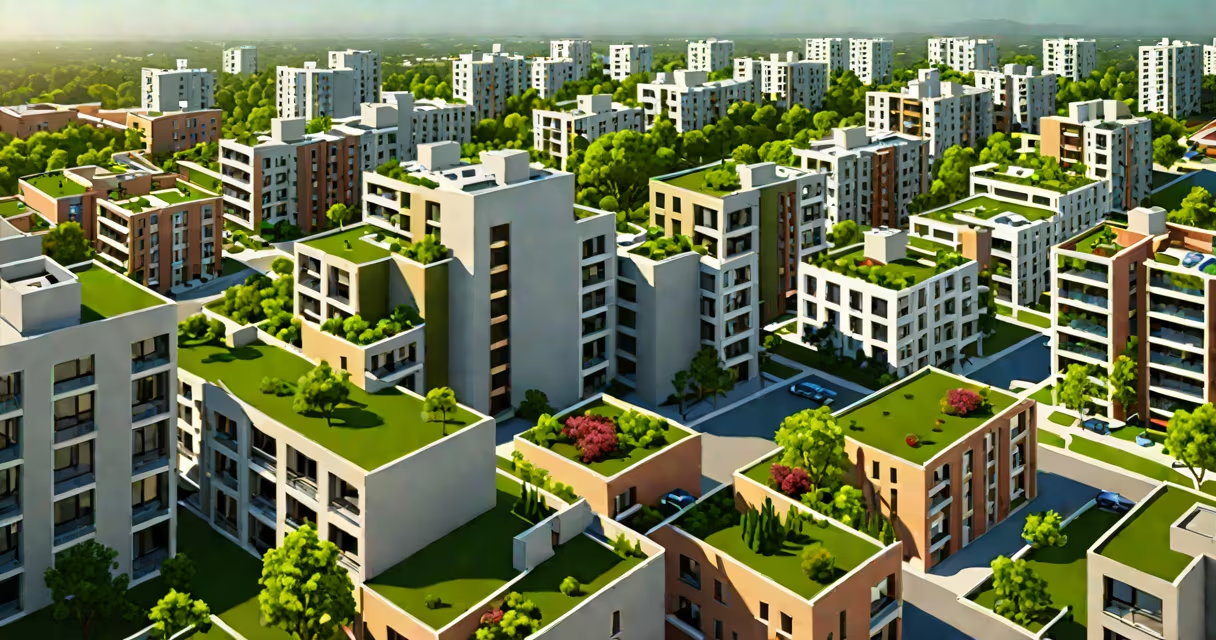
High density housing refers to residential developments that pack a large number of units onto a small area of land, typically using multi-unit buildings such as apartment complexes, townhouses, or mixed-use towers. These projects prioritize efficient land use and are designed to accommodate growing populations in urban areas.
Unlike single-family homes spread across low-density suburbs, high density housing concentrates people and services within walking distance of transit, shops, schools, and workplaces. This model supports compact, sustainable cities and reduces infrastructure costs per capita.
According to the U.S. Department of Housing and Urban Development (HUD), high density housing typically exceeds 20 dwelling units per acre in urban cores. The American Planning Association notes that such developments reduce vehicle miles traveled by up to 30% compared to low-density alternatives.
High density housing functions through vertical and horizontal space optimization. Buildings rise higher, and floor plans are designed to maximize usable square footage per unit. Shared amenities like laundry rooms, lounges, and bike storage reduce individual household footprints.
These developments often integrate mixed-use zoning, combining residences with retail, offices, and public spaces on the ground level. This creates 24-hour activity and enhances neighborhood safety. For example, a building in Portland, Oregon, includes 120 apartments above a grocery store, café, and community center-all accessible via sidewalk entrances.
Transit-oriented design is central to success. Projects near light rail or bus rapid transit lines see higher occupancy rates and lower resident transportation costs. A 2022 study by the Lincoln Institute of Land Policy found that households in high density zones near transit spend 18% less on transportation annually than those in low density areas.
High density housing comes in several forms, each suited to different environments and goals:
| Type | Units per Acre | Common Locations | Key Features |
|---|---|---|---|
| Mid-rise apartments | 20-40 | City centers, transit hubs | 6-12 stories, shared elevators, on-site parking |
| High-rise towers | 40-80+ | Downtown districts, waterfronts | 15+ stories, panoramic views, luxury finishes |
| Live-work units | 30-60 | Arts districts, historic neighborhoods | Ground-floor workspace, upper-floor residence |
| Clustered townhomes | 25-50 | Suburban infill, revitalization zones | Shared walls, small yards, walkable blocks |
Each form balances scale, cost, and livability. Mid-rise apartments dominate new urban construction due to affordability and regulatory ease. High-rises attract investment but require significant capital and long-term maintenance.
One underappreciated form is the "missing middle" housing-small apartment buildings and duplexes that fit between single-family homes and large towers. They maintain neighborhood character while increasing supply. In Minneapolis, zoning reforms allowing fourplexes on single-family lots increased housing stock by 12% in five years.
High density housing is most common in cities facing population growth, rising rents, and limited available land. New York City, San Francisco, and Seattle have adopted inclusionary zoning policies requiring developers to set aside 15-20% of units as affordable housing in high density projects.
It supports climate goals. The Urban Land Institute reports that high density communities produce 40% less carbon emissions per capita than suburban sprawl. Reduced road networks, shorter commutes, and centralized utilities lower environmental impact.
During the 2020 pandemic, cities with higher residential density saw faster economic recovery. A 2021 Brookings Institution analysis showed that neighborhoods with 30+ units per acre maintained 22% higher employment rates during lockdowns due to proximity to services and jobs.
Many assume high density housing equals overcrowding or poor quality. That's not accurate. Well-designed high density projects feature natural light, ventilation, private outdoor space, and noise buffering. A 2023 study by the National Institute of Building Sciences found that residents in high density buildings with proper acoustics reported equal or better mental health scores than those in low density homes.
Another myth is that high density increases crime. Data from the FBI's Uniform Crime Reporting system shows no correlation between residential density and violent crime rates. In fact, higher foot traffic and visible activity in dense areas correlate with lower property crime rates.
A key distinction: high density is not synonymous with high-rise. A cluster of six-story walk-up apartments in a walkable district can be higher density than a 40-story tower in a remote location. Density is measured by units per land area-not height.
I once observed a 12-unit mixed-use building in Oakland, California, where ground-floor retail supported the residential units. Residents walked to work, groceries, and parks. Noise levels were low, and shared courtyards hosted weekly events. The building had no elevator but still achieved 95% occupancy. It proved that density doesn't require height or luxury finishes to succeed.
High density housing is not a one-size-fits-all solution, but it is a proven tool for creating resilient, equitable, and sustainable communities. When properly planned, it reduces sprawl, lowers emissions, and improves access to opportunity.
Understanding what is high density housing means recognizing it as a practical response to urban challenges-not a trend, but a necessity. With thoughtful design and inclusive policy, it can deliver housing for all income levels while protecting the environment.