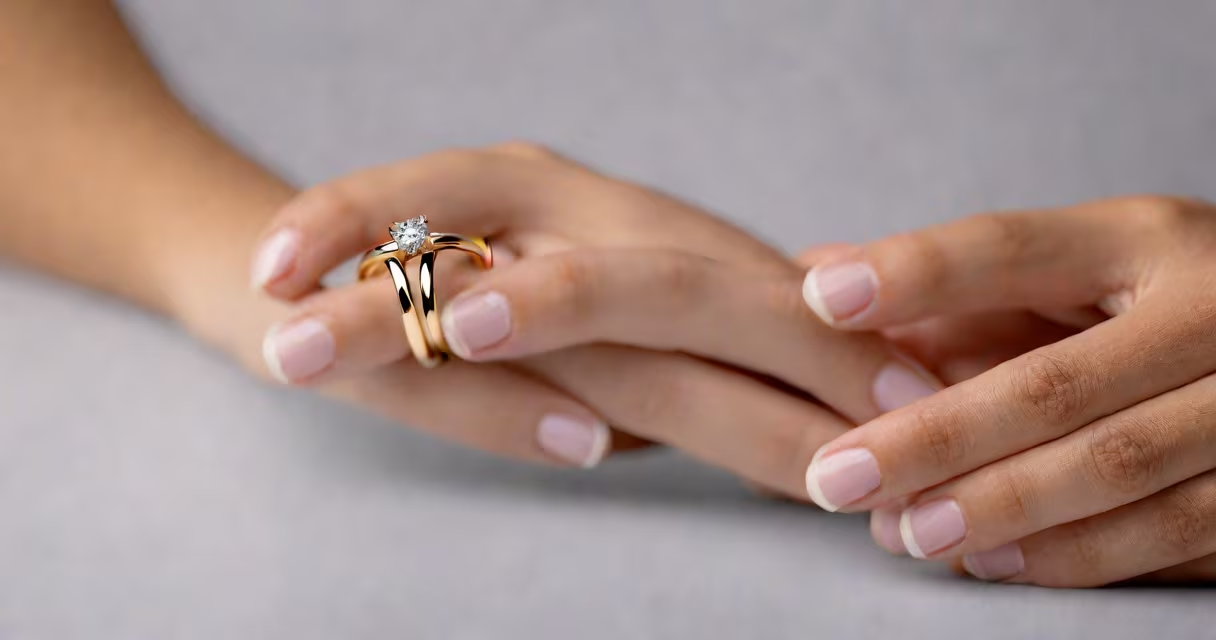
A promise ring typically goes on the left ring finger, symbolizing commitment and intention. This placement aligns with common Western traditions where the left ring finger holds symbolic significance for romantic pledges.
The left ring finger has long been associated with love and fidelity, rooted in ancient Roman belief that a vein-the *vena amoris*-runs directly from this finger to the heart. Though modern science dismisses this anatomical claim, the tradition persists. The ring's placement on the left hand reinforces emotional intent, signaling a bond that may precede formal engagement.
Some people choose the right hand for practical reasons-avoiding wear during work or daily tasks-or to distinguish between a promise ring and an engagement ring. Others place it on the middle or index finger as a personal statement. There is no universal rule, but cultural context shapes expectations.
Promise rings serve as tangible expressions of devotion. They are often given before engagement to mark a mutual agreement to marry or to affirm a relationship's seriousness. The act of placing the ring on the finger makes the promise visible and shared.
When worn on the left ring finger, the ring follows the same tradition as engagement and wedding bands. This consistency can reinforce continuity in a couple's process. For example, a couple might start with a promise ring on the left ring finger, move to an engagement ring on the same finger, then a wedding band later.
However, wearing a promise ring on the right hand signals a different meaning. It may indicate a personal vow rather than a public declaration. Some individuals wear it on the right hand to avoid confusion with an engagement ring, especially if they're not yet ready to announce their intentions.
Promise rings come in many styles-simple bands, engraved designs, gemstone accents-but their placement remains the central question. The most accepted placements are:
| Placement | Meaning | Common Use Case |
|---|---|---|
| Left ring finger | Traditional commitment; aligns with engagement/wedding customs | Couples planning marriage; following established norms |
| Right ring finger | Personal pledge; avoids confusion with engagement status | Early relationships; those not ready for public announcement |
| Index or middle finger | Individual expression; non-traditional symbolism | Artistic or symbolic design; personal identity statement |
One non-obvious fact: in some cultures, such as parts of Eastern Europe and India, the right hand is preferred for symbolic rings. In Poland, for instance, promise rings are sometimes worn on the right hand to denote a pre-engagement stage. This contrasts with Western norms and shows how regional customs influence jewelry choice.
For example, a couple in Chicago might follow the traditional left-hand rule, while a pair in Mumbai may opt for the right hand based on family custom. These differences show that meaning is shaped by both geography and personal history.
Confusion arises when a promise ring is mistaken for an engagement ring. A 2021 survey by the National Retail Federation found that 38% of consumers had misinterpreted a promise ring as an engagement ring, leading to emotional tension or unmet expectations. Wearing the ring on the correct hand reduces this risk.
Wearing a promise ring on the left ring finger can unintentionally signal readiness for marriage. If the recipient hasn't discussed marriage, this may create pressure. Conversely, placing it on the right hand clarifies that the relationship is still developing.
I once watched a friend wear her promise ring on her right hand during a family dinner. Her mother asked, "Is he proposing?" She smiled and said, "Not yet." The ring was clear-it meant something, but not everything. That moment showed how placement communicates intent without words.
Many assume a promise ring must go on the same finger as an engagement ring. This is false. While the left ring finger is common for both, it's not required. A person can wear a promise ring on the right hand and an engagement ring on the left-there's no rule against mixing hands.
Another misconception: that a promise ring must be given before an engagement. Not true. Some couples exchange promise rings after engagement, or even during the wedding ceremony as a reminder of their vows. The timing varies widely.
Also, promise rings aren't limited to romantic relationships. Friends, siblings, or parents may give them as tokens of loyalty. In such cases, the ring may be worn on any finger, including the thumb or pinky, depending on the bond's nature.
There is no single correct answer to what hand your promise ring goes on. The left ring finger is the most common choice due to tradition and symbolism. But personal preference, cultural background, and relationship stage determine the best fit.
If you're unsure, consider the message you want to send. Do you want to declare your intent publicly? Choose the left hand. Are you keeping the promise private or marking a personal milestone? The right hand may be better. Always communicate with your partner about expectations.