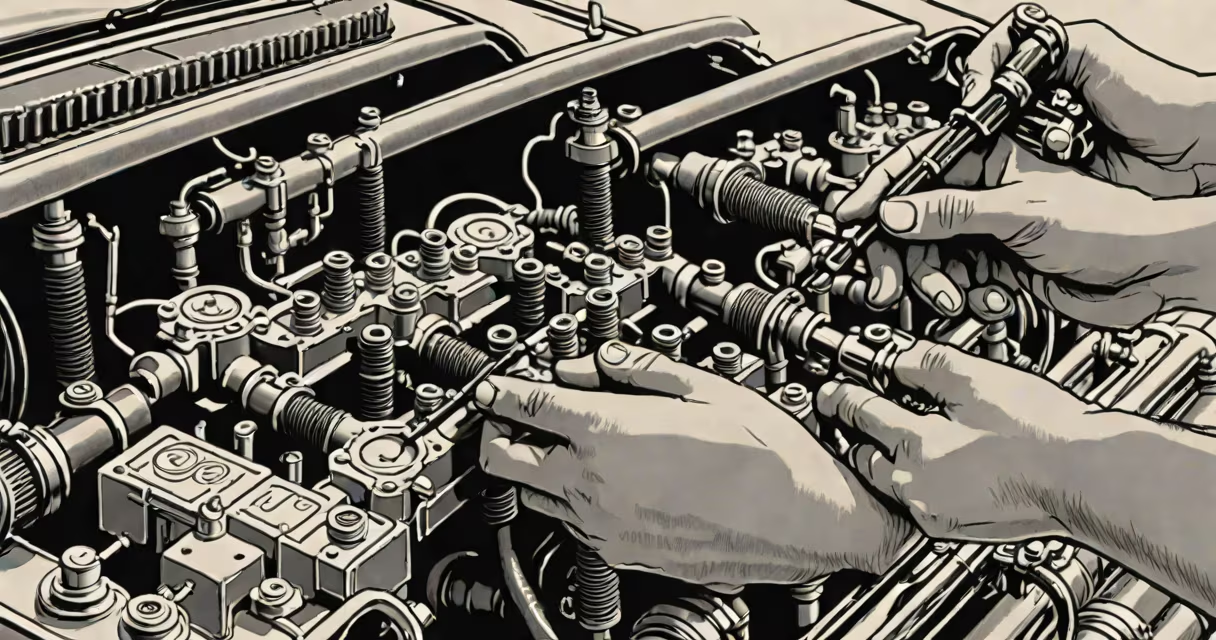
A fuel injection service cleans and tests fuel injectors to restore proper fuel atomization, ensure accurate fuel delivery, and maintain optimal engine performance. It prevents clogging, improves throttle response, and reduces emissions. This service is essential for maintaining fuel efficiency and preventing long-term engine damage.
Fuel injectors spray precise amounts of fuel into the engine's combustion chamber. Over time, dirt, varnish, and fuel impurities build up inside the injector nozzle, reducing spray pattern quality and fuel metering accuracy. A fuel injection service removes these deposits using chemical cleaners or ultrasonic baths, then verifies flow rates and spray patterns meet factory specifications.
Modern engines rely on electronic control units (ECUs) to adjust injector pulse width based on sensor feedback. When injectors are dirty or misfiring, the ECU compensates by adjusting timing and fuel volume. This leads to inefficient combustion, increased fuel consumption, and higher emissions. A professional service resets injector behavior to factory standards.
Technicians begin by scanning the vehicle's onboard diagnostics (OBD-II) to check for fault codes related to fuel trim, misfires, or oxygen sensor readings. These codes indicate potential injector issues before physical inspection.
The actual cleaning process varies by method. Some shops use direct-injector cleaning tools that pump a solvent-based cleaner through the fuel rail while the engine runs. Others remove injectors entirely and clean them in an ultrasonic bath with specialized fluid. The latter method provides better access and allows for flow testing under pressure.
After cleaning, technicians perform a flow test using calibrated equipment. Each injector must deliver within 5% of the manufacturer's specified flow rate. Spray pattern analysis uses a special viewing chamber to confirm even, cone-shaped atomization. Injectors that fail these tests are replaced.
Not all fuel injection systems require the same level of care. Port fuel injection (PFI) systems use injectors mounted in the intake manifold. They're prone to carbon buildup from intake valve exposure to unburned fuel vapors. PFI systems benefit from regular cleaning every 30,000 to 50,000 miles.
Diesel common-rail systems operate at pressures exceeding 30,000 psi. Contaminants like water or particulates can cause injector failure. These systems often require filtered cleaning fluids and strict adherence to manufacturer flush procedures. Cleaning intervals are typically 60,000 miles or as specified in service manuals.
Gasoline direct injection (GDI) systems inject fuel directly into the combustion chamber. Because fuel doesn't wash over intake valves, they accumulate carbon deposits. GDI engines may need injector cleaning every 40,000 miles due to higher internal temperatures and lack of fuel washing.
| System Type | Typical Cleaning Interval | Common Contaminants | Service Method |
|---|---|---|---|
| Port Fuel Injection (PFI) | 30,000-50,000 miles | Carbon, gum, varnish | On-car cleaning with solvent |
| Gasoline Direct Injection (GDI) | 40,000 miles | Carbon, oil ash, high-temp residue | Off-car ultrasonic cleaning |
| Diesel Common-Rail | 60,000 miles | Water, particulates, fuel degradation | Filtered flush with precision tester |
Fuel injection services are standard in preventive maintenance programs at dealerships and independent repair shops. They're recommended during routine service intervals, especially when symptoms like rough idling, hesitation during acceleration, or reduced fuel economy appear.
For example, a 2018 Toyota Camry with 82,000 miles began showing a 12% drop in fuel economy and intermittent misfire codes. After a fuel injection service, the owner reported smoother idle, improved acceleration, and restored fuel efficiency. Post-service diagnostics showed corrected short-term fuel trims and stable oxygen sensor readings.
Some manufacturers recommend cleaning only if injectors show signs of failure. But research from the Society of Automotive Engineers (SAE) shows that even clean injectors degrade in flow capacity over time. A 2021 SAE study found that 68% of injectors tested at 100,000 miles had flow variation exceeding 10%, leading to measurable performance loss.
Many drivers assume that adding fuel additives to the gas tank achieves the same result as a professional service. While some additives can slow deposit formation, they cannot remove hardened carbon or clean internal injector components effectively. A 2020 Consumer Reports test showed that off-the-shelf fuel treatments reduced carbon buildup by only 15% compared to 92% removal in professional ultrasonic cleaning.
Another misconception is that fuel injection service fixes all engine performance issues. It won't resolve problems caused by worn spark plugs, faulty sensors, or vacuum leaks. If a vehicle still idles roughly after service, further diagnosis is needed. A technician should never claim a service fixes unrelated mechanical faults.
One non-obvious fact: injectors cleaned in ultrasonic baths can develop micro-cracks in the nozzle tip if the cleaning solution contains abrasive particles. Reputable shops use only non-abrasive, pH-neutral solvents approved by OEMs. Always verify that the shop follows manufacturer guidelines.
I once performed a fuel injection service on a 2016 BMW 330i with persistent hesitation during light throttle input. The car had 78,000 miles and passed emissions testing, but fuel economy dropped from 28 mpg to 22 mpg. On-car cleaning with a solvent-based tool showed no improvement. After removing and ultrasonically cleaning the injectors, flow rates normalized, and the spray pattern became uniform. The car returned to 27.5 mpg and drove smoothly.
This case highlights that visual or diagnostic checks alone don't catch internal clogging. Only physical cleaning and flow testing reveal the true condition.
Get a fuel injection service if your vehicle shows:
Preventive service every 40,000 to 60,000 miles helps avoid costly repairs. Delaying service increases the risk of injector failure, which can cost $1,000 or more to replace, depending on the model.