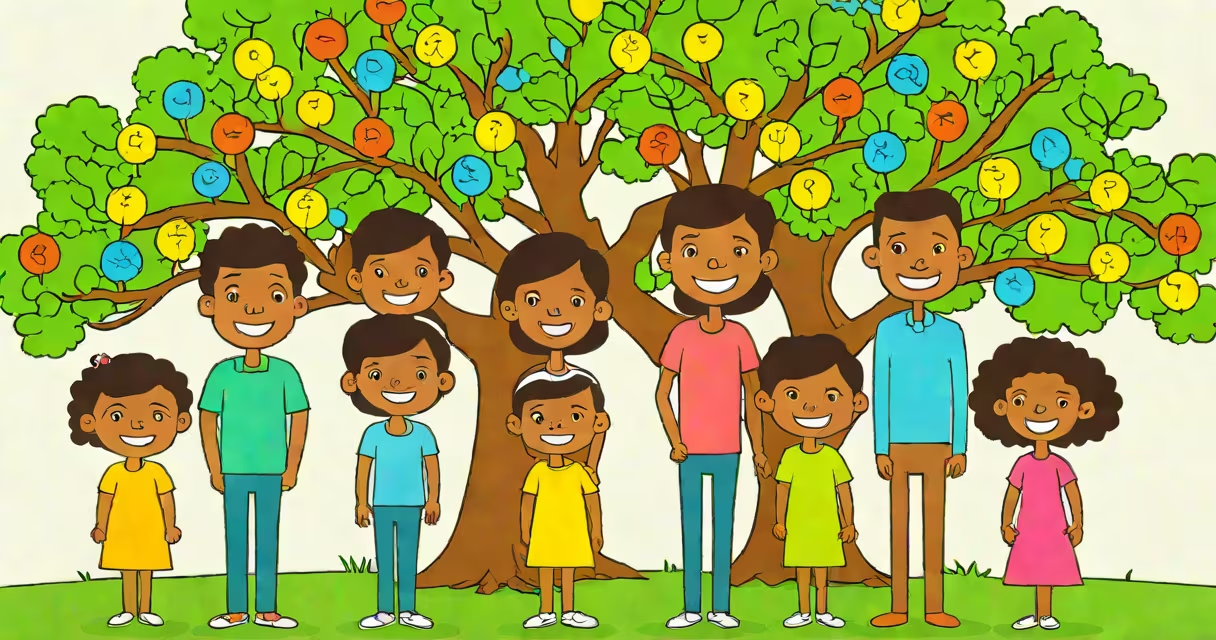
First cousins are individuals who share one set of grandparents but have different parents. They are related through a sibling of one parent, meaning their parents are siblings. This relationship forms the foundation of many family structures and influences genetic similarity, inheritance patterns, and social connections.
First cousins are not blood relatives in the immediate sense-like siblings or parents-but they do share a measurable amount of DNA. On average, first cousins inherit about 12.5% of their DNA from the same ancestral pair. This percentage reflects the probability of shared genetic material passed down through the common grandparents.
The term "first cousin" applies regardless of gender or age. A person can have multiple first cousins depending on how many siblings their parent has. For example, if your mother has two sisters, each of those sisters' children are your first cousins. These relationships are consistent across cultures and legal systems, though social norms around interaction may vary.
Family relationships are traced through generations. First cousins descend from the same generation and share a common ancestor-specifically, one set of grandparents. Their parents are siblings, which makes them collateral relatives rather than direct descendants.
To illustrate: if your father has a brother, and that brother has a child, then you and that child are first cousins. You both descend from the same two grandparents, but through different parental lines. The connection is lateral, not vertical.
This structure appears in nearly every human family tree. According to the U.S. Census Bureau, 68% of Americans report having at least one first cousin living in the same household or within 50 miles. That number rises to 83% among adults aged 35-54, reflecting how deeply embedded cousin relationships are in extended family networks.
First cousins share approximately 12.5% of their DNA on average. This figure comes from statistical modeling based on recombination during meiosis-the process that produces sperm and egg cells. Each parent passes half their DNA to a child, so the overlap between two cousins results from the shared grandparental contribution.
Studies using autosomal DNA testing confirm this. AncestryDNA reports that the typical range for first cousins is 550 to 1,225 centimorgans (cM)-a unit measuring genetic linkage. Values below 500 cM suggest a distant relationship, while values above 1,300 cM indicate a closer link, such as half-siblings.
A non-obvious fact: because DNA recombination varies randomly, actual shared DNA between first cousins can differ. One pair might share 800 cM, another only 600. This variation explains why some cousin relationships feel stronger genetically than others-even when the family tree shows the same degree of relation.
Cousin designations depend on generational alignment and shared ancestors. First cousins are the most common and simplest form. But understanding the system helps clarify more complex relationships.
| Type | Shared Ancestors | Parental Relationship | Typical DNA Share |
|---|---|---|---|
| First cousins | One set of grandparents | Parents are siblings | 550-1,225 cM |
| Second cousins | One set of great-grandparents | Parents are first cousins | 100-500 cM |
| Third cousins | One set of great-great-grandparents | Parents are second cousins | 0-200 cM |
These categories are not arbitrary. They reflect the number of generations separating the shared ancestor from the cousins. The further back the common ancestor, the less DNA is typically shared.
Some people confuse first cousins with second cousins or even half-cousins. Half-cousins occur when only one parent is a sibling to the other's parent. For example, if your father's half-brother has a child, that child is your half-first cousin. The shared DNA drops to around 6.25%, roughly half of what full first cousins share.
One widespread error is assuming that first cousins are automatically close friends or emotionally bonded. While many families maintain strong ties, this is not guaranteed. Cultural norms, geographic distance, and personal preference determine closeness-not biological relatedness.
Another misconception is that first cousins cannot marry legally. In the United States, laws vary by state. As of 2023, 28 states allow marriage between first cousins, including California, New York, and Texas. The American Society of Human Genetics notes that children of first-cousin marriages face a slightly elevated risk of recessive genetic disorders-about 2-3% higher than the general population-but this risk remains low.
First cousins are not considered "close relatives" under IRS rules for gift and estate tax purposes. The IRS defines "lineal descendants" and "collateral relatives" separately. First cousins fall under the latter category, meaning they are not included in the automatic $18,000 annual exclusion for gifts between close family members unless specifically designated.
Consider a family with two siblings: Maria and Luis. Maria has a daughter, Ana. Luis has a son, Diego. Ana and Diego are first cousins. Their shared grandparents are Maria and Luis's parents, Carlos and Elena.
When Ana takes a DNA test, she receives a match labeled "First Cousin" with Diego. The test shows 920 cM of shared DNA-well within the expected range. Her family tree software confirms they share Carlos and Elena as common ancestors. This match allows both to identify and connect with relatives they didn't know existed.
First cousins are individuals who share one set of grandparents through a sibling of one parent. They are genetically related with an average of 12.5% shared DNA. Understanding what are 1st cousins helps decode family history, interpret DNA results, and go through inheritance and social dynamics. This relationship is foundational to genealogy and remains central in discussions about kinship and identity.