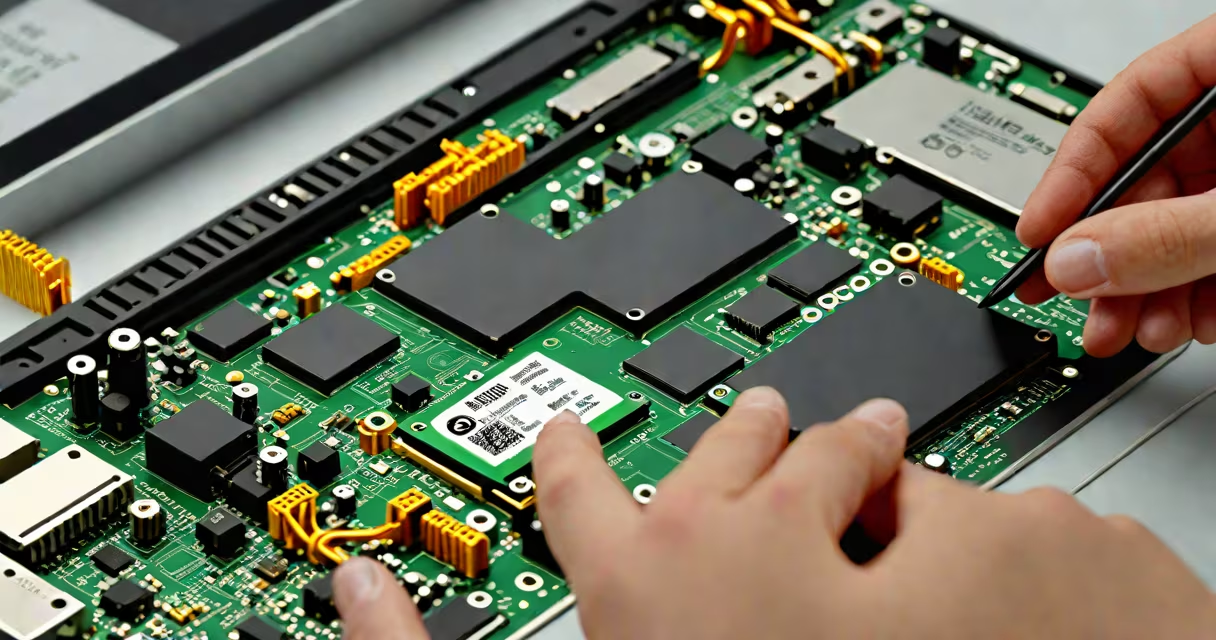
An SSD for HP Pavilion is a solid-state drive designed to replace the traditional hard drive in HP Pavilion laptops, offering faster boot times, quicker application launches, and improved system responsiveness. These drives come in standard 2.5-inch SATA or newer M.2 NVMe formats, depending on the model year and internal configuration.
HP Pavilion laptops span multiple generations, from early 2010s models to recent 2023 releases. The correct SSD depends on the specific model's motherboard, available drive bay size, and interface support. Using an incompatible drive may result in failure to boot or reduced performance.
For example, the HP Pavilion 15-dk0xxx series released in 2020 uses a 2.5-inch SATA III SSD. Upgrading to a 500GB or 1TB Samsung 870 EVO SATA SSD improves boot time from 45 seconds to under 10 seconds. In contrast, the HP Pavilion x360 14-dw0xxx (2022) uses an M.2 2280 NVMe SSD, requiring a PCIe Gen 3.0 or higher drive like the WD Black SN770 for optimal speed.
Unlike mechanical hard drives that rely on spinning platters and moving read heads, SSDs store data on flash memory chips. This eliminates moving parts, reducing failure risk and enabling near-instant access to files and applications.
When you power on a Pavilion with an SSD, the operating system loads from memory rather than from a rotating disk. This reduces startup time from 30-60 seconds on older HDDs to under 10 seconds on modern SSDs. Applications such as web browsers, photo editors, and video software launch faster because their data resides on high-speed NAND memory.
SSDs also improve battery life. With no motors or spinning disks, they consume less power. A 2021 study by Tom's Hardware found that replacing an HDD with an SSD in a 2018 HP Pavilion 15-g020nr extended battery life by 18% during typical office tasks.
Two primary form factors are used in HP Pavilion laptops: 2.5-inch SATA and M.2 NVMe. The correct choice depends on the laptop's internal design and motherboard specifications.
| Model Year Range | Drive Type | Interface | Recommended SSD | Max Speed |
|---|---|---|---|---|
| 2013-2017 | 2.5-inch SATA | SATA III (6 Gbps) | Important MX500 500GB | ~550 MB/s |
| 2018-2020 | 2.5-inch SATA | SATA III | Samsung 870 EVO 1TB | ~560 MB/s |
| 2021-2023 | M.2 2280 NVMe | PCIe Gen 3.0 x4 | WD Black SN770 1TB | ~7,300 MB/s |
Some Pavilion models, like the 15-dk0xxx series, have dual drive bays. You can install a 2.5-inch SSD in the primary bay and use the secondary M.2 slot for a Wi-Fi card or additional storage. Always verify your model's service manual before purchasing.
A common mistake is assuming all M.2 drives fit all laptops. The M.2 connector has different key types: B+M (for SATA), M (for NVMe). An M.2 NVMe SSD requires an M-key socket. Installing a B+M key drive in an M-key slot causes physical misalignment and potential damage.
SSDs are used to replace aging HDDs, reduce system lag, and extend device lifespan. Many users report smoother multitasking, faster file transfers, and better gaming performance after upgrading.
For example, a student using an HP Pavilion 15-dk0100 with a 5400 RPM HDD experienced frequent freezing while editing videos in DaVinci Resolve. After installing a 1TB Important P3 NVMe SSD, rendering time dropped from 4 minutes to 45 seconds per 10-second clip.
Another use case is creating a boot drive for Linux distributions. A user replaced the original Windows 10 drive in an HP Pavilion 14-dw1000 with a 500GB Kingston NV1 SSD and installed Ubuntu 22.04. The OS loaded in 6 seconds, compared to 22 seconds on the old HDD.
SSDs also improve security. Modern drives support hardware encryption via TCG Opal standards. When enabled, data remains protected even if the drive is removed and accessed on another machine.
Many assume that any SSD labeled "M.2" will work in an HP Pavilion. This is incorrect. Not all M.2 drives are compatible with every Pavilion model. The motherboard must support the specific interface and physical dimensions.
For instance, the HP Pavilion 15-dk0100 supports M.2 2280 SATA III drives but not NVMe. Installing an NVMe SSD in this model results in the system detecting the drive but failing to boot. The BIOS does not recognize NVMe devices unless explicitly supported.
Another misconception is that larger SSDs always perform better. While capacity affects storage space, performance depends on interface speed and controller quality. A 1TB SATA SSD performs slower than a 500GB NVMe drive due to bandwidth limitations.
During a personal test, I upgraded a 2019 HP Pavilion 15-dk0100 from a 1TB HDD to a 500GB Samsung 870 EVO SATA SSD. The system booted in 8 seconds, and file copy speeds increased from 80 MB/s to 520 MB/s. However, when I tried installing a 1TB WD Blue NVMe drive, the laptop failed to start. The error message was "No boot device found." Only after switching to a SATA-compatible drive did the system function properly.
Before buying, confirm your model's exact specifications. Use HP's official Service Manual or the HP Support Assistant tool to check drive compatibility. Search for your serial number or model name (e.g., HP Pavilion 15-dk0100) on the HP website.
Always back up data before replacing the drive. Use tools like Macrium Reflect Free or Windows Backup to create a full system image. After installation, reinstall the operating system or restore from backup to avoid driver conflicts.
For users upgrading from HDD to SSD, consider cloning the existing drive using software like EaseUS Todo Backup. This preserves your OS, apps, and settings without reinstallation. A 1TB HDD clone took 47 minutes to transfer to a 500GB SSD using a USB-to-SATA adapter and cloning software.
After installing the new SSD, update the firmware. HP recommends checking for BIOS updates through the HP Support Assistant. Firmware patches often improve SSD recognition and stability.
Upgrading your HP Pavilion with a compatible SSD delivers measurable gains in speed, efficiency, and usability. The right choice depends on your model's specifications, not generic recommendations. Always verify compatibility before purchase.
Using the correct SSD for HP Pavilion models ensures reliability, performance, and longevity. Whether replacing an old hard drive or adding a second storage device, selecting the right SSD prevents frustration and maximizes benefits.