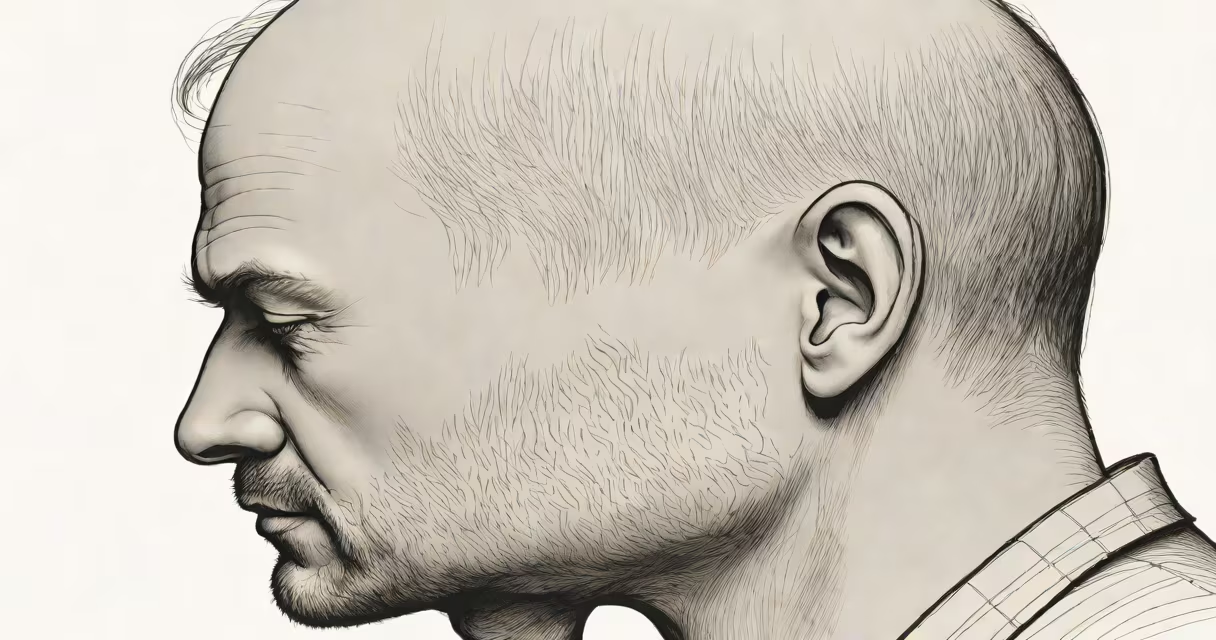
Male hair loss results from genetics, hormonal shifts, medical conditions, nutritional deficits, and lifestyle factors. The most common cause is androgenetic alopecia, a hereditary condition driven by dihydrotestosterone (DHT). Other triggers include stress-induced shedding, vitamin B12 deficiency, and inflammatory bowel disease.
Androgenetic alopecia affects about 50% of men by age 50, according to the American Academy of Dermatology Association. This condition occurs when DHT shrinks hair follicles over time, shortening growth phases and leading to finer, shorter strands until follicles stop producing visible hair. It typically begins at the temples and crown, forming an M-shaped recession or a bald spot.
Other forms of hair loss aren't genetic. Telogen effluvium, for example, causes sudden shedding due to physical or emotional stress. A 2021 study in the journal Dermatologic Surgery found that 30% of men experiencing acute illness or major life events reported noticeable hair thinning within three months. This differs from androgenetic alopecia because regrowth usually resumes once the stressor ends.
Hair loss in men falls into distinct categories based on mechanism and timeline. Understanding the type helps identify the root cause.
| Type | Onset | Primary Cause | Reversible? |
|---|---|---|---|
| Androgenetic alopecia | Gradual, over years | Genetics + DHT sensitivity | No (unless treated early) |
| Telogen effluvium | Sudden, within 3-6 months | Stress, illness, surgery, crash dieting | Yes, usually within 6-12 months |
| Alopecia areata | Patchy, rapid onset | Autoimmune reaction | Variable; some cases resolve spontaneously |
| Scarring alopecia | Progressive, localized | Inflammation damaging follicles permanently | No; damage is irreversible |
Androgenetic alopecia is the most prevalent form. It's not caused by poor hygiene or shampoo use. Instead, it's rooted in inherited sensitivity to DHT, a hormone derived from testosterone. Men with a family history of balding are more likely to develop it. The condition often begins in the late teens or early twenties, progressing slowly over decades.
Telogen effluvium appears after a significant physiological shock. A 2019 clinical review in Journal of Clinical and Aesthetic Dermatology documented that 40% of men who underwent major surgery experienced increased hair shedding between two and four months post-op. This happens because stress pushes large numbers of follicles into the resting phase prematurely. Once the stress resolves, follicles return to growth mode, and hair regrows.
Autoimmune conditions like alopecia areata can cause patchy bald spots. The immune system attacks hair follicles, mistaking them for foreign threats. This is rare but treatable with immunomodulators. Scarring alopecia, such as lichen planopilaris, destroys follicles permanently and requires early diagnosis to prevent irreversible damage.
Deficiencies in key nutrients disrupt the hair growth cycle. Iron, zinc, vitamin D, and B vitamins-especially B12-are essential for follicle health. Low iron levels reduce oxygen delivery to scalp tissues, impairing keratin production. A 2020 study in International Journal of Trichology found that 23% of men with unexplained hair loss had low serum ferritin.
B12 deficiency is particularly linked to hair thinning. The vitamin supports red blood cell formation and DNA synthesis. Without enough B12, follicles enter premature resting phase. A case series published in Case Reports in Dermatology showed that men with B12 levels below 200 pg/mL reported hair shedding within six weeks of deficiency onset. Supplementation reversed the effect in 80% of patients within three months.
Many men assume hair loss stems from daily habits like wearing hats, using hair products, or washing hair too often. These do not cause permanent hair loss. Hats don't increase scalp temperature enough to affect follicles. Shampoos and styling products don't clog follicles unless they contain harsh sulfates or silicones in high concentrations.
Another myth is that DHT causes hair loss in all men. Only those genetically predisposed to DHT sensitivity experience shrinkage. A 2018 study in Journal of Investigative Dermatology showed that men with the AR gene variant (associated with DHT receptor sensitivity) were 3.2 times more likely to develop androgenetic alopecia than those without it.
Consider a 34-year-old man presenting with diffuse thinning over six months. He reports losing 100 hairs daily during showering. His medical history includes a recent divorce, sleep disruption, and a 15-pound weight loss on a restrictive diet. Blood work shows low iron (ferritin: 12 ng/mL), low B12 (180 pg/mL), and normal testosterone.
This pattern points to telogen effluvium triggered by psychological stress and nutritional deficits. The hair loss is not due to genetics or DHT. Treatment involves correcting iron and B12 levels, improving nutrition, and managing stress. Within four months, his shedding decreased to 20 hairs per day, and new growth appeared at the part line.
Had he ignored the signs, he might have assumed it was male pattern baldness and started using minoxidil unnecessarily. Early identification prevents misdiagnosis and unnecessary treatment.
When hair loss progresses rapidly or affects areas beyond the scalp, consult a dermatologist. A scalp biopsy or blood panel can differentiate between conditions. Not all hair loss is permanent. Many reversible causes exist, especially when caught early.
Understanding what can cause hair loss men is the first step toward targeted solutions. Genetics and hormones play a role, but so do diet, stress, and underlying illnesses. Addressing the root cause leads to better outcomes than treating symptoms alone.