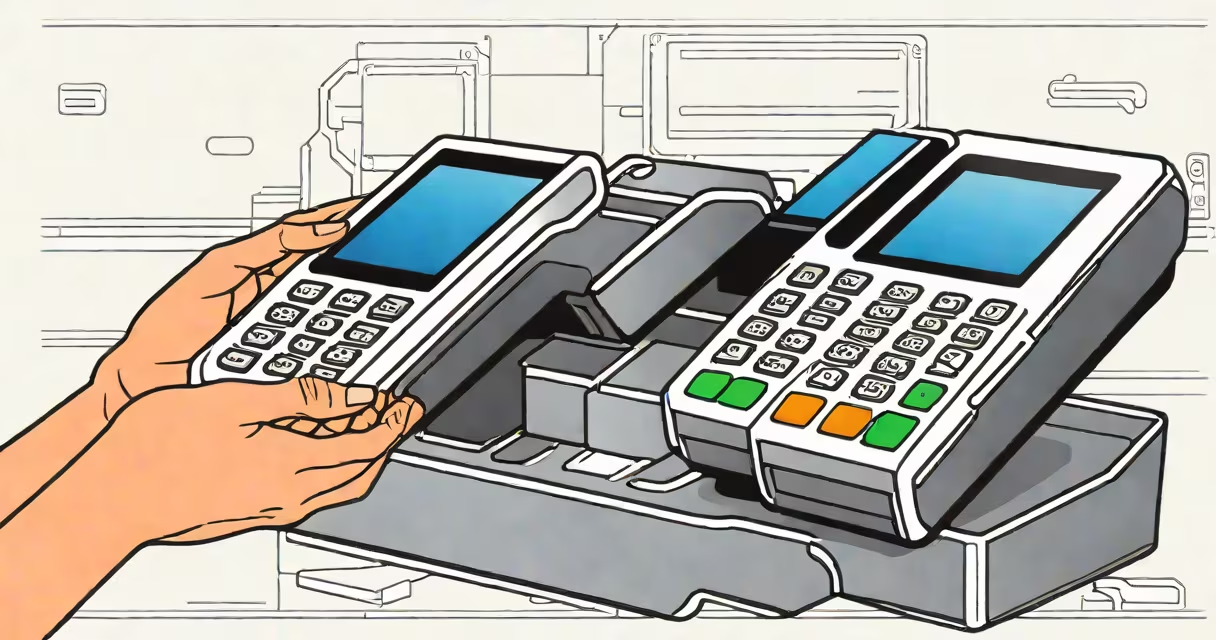
Gateway credit card processing is a system that authorizes and transmits electronic payments between merchants, customers, and banks using a secure intermediary known as a payment gateway. It handles the technical steps required to verify funds, confirm card validity, and transfer money-ensuring transactions complete securely and quickly.
When a customer enters their card details during checkout, the merchant's website sends the data to a payment gateway. The gateway then communicates with the card issuer (like Visa or Mastercard) to check if the card is valid and has sufficient funds. Once approved, the gateway relays the response back to the merchant's site, completing the transaction. This process typically takes under two seconds.
Without a payment gateway, online stores would need direct connections to multiple banks and card networks-a complex, costly setup. Gateways simplify this by acting as a single interface for dozens of payment methods, including credit cards, debit cards, and digital wallets.
The flow begins when a customer submits a payment on a merchant's website. The browser sends the card number, expiration date, CVV, and amount to the merchant's server. That server forwards the data to a payment gateway provider such as Stripe, PayPal, or TSY S (now part of Fiserv).
The gateway encrypts the data and routes it through the appropriate card network-VisaNet, Mastercard's Interlink, or American Express's Express. The network checks with the issuing bank to verify the cardholder's balance and authentication details. If the bank approves the transaction, the network sends a confirmation back through the gateway to the merchant.
Merchants receive a success message within 1-2 seconds. Funds are then transferred to the merchant's account via a settlement process that usually takes 1-3 business days. All steps happen behind the scenes, protected by encryption standards like TLS 1.3 and PCI DSS compliance.
Payment gateways vary in complexity, integration method, and supported features. The most common types are hosted, self-hosted, and API-based gateways.
| Type | Integration | Security Responsibility | Best For |
|---|---|---|---|
| Hosted | Redirects users to gateway's secure page | Gateway provider | Small businesses, low-risk sites |
| Self-hosted | Embeds form fields on merchant's site | Merchant (must meet PCI compliance) | High-volume stores needing custom UX |
| API-based | Direct integration via code | Merchant (with proper security) | Developers, apps, SaaS platforms |
For example, a Shopify store using Stripe's hosted checkout uses a hosted gateway. The customer sees Stripe's secure page, which reduces the merchant's PCI scope. In contrast, a custom e-commerce platform integrating Stripe's API must handle tokenization and encryption themselves.
A lesser-known fact: many gateways offer changing currency conversion (DCC). When a U.S.-based merchant accepts a Norwegian credit card, the gateway can convert the transaction into USD at the time of purchase. This avoids foreign exchange fees for the customer-but may result in less favorable rates than standard bank conversions.
One widespread misunderstanding is that gateway credit card processing is the same as acquiring. While both are part of the payment chain, they serve different roles. A payment gateway handles authorization and routing. The acquiring bank (or processor) settles funds and deposits them into the merchant's account.
Another error is assuming all gateways support the same card types. Some only accept major credit cards. Others integrate with alternative payment methods like Apple Pay, Google Pay, or local options such as Klarna or iDeal. A merchant selling in Norway must ensure their gateway supports local card networks like Vipps or the Norwegian Bankgiro system.
I once tested a gateway that claimed to support "all international cards." During a live demo, it rejected a Norwegian credit card issued by DNB Bank due to missing BIN (bank identification number) registration. The provider had not updated its list of accepted issuers. This highlights the importance of verifying regional support before deployment.
Consider a handmade jewelry shop based in Portland, Oregon, selling on Etsy. The owner uses Shopify with Stripe as the payment gateway. When a customer in Berlin buys a $120 pendant:
Within 48 hours, the funds appear in the shop's bank account after settlement. The entire process, from click to deposit, takes less than 72 hours.
Stripe charges a fee of 2.9% + $0.30 per transaction. The shop owner pays this automatically, with no manual reconciliation needed. Without gateway credit card processing, this transaction would require separate agreements with every European bank and card network-an impractical task for a solo seller.
Gateway credit card processing enables secure, cross-border commerce. According to the Federal Reserve, 86% of U.S. consumers prefer using credit cards online. Without gateways, businesses couldn't scale beyond local markets.
Security is paramount. The Payment Card Industry Data Security Standard (PCI DSS) requires all systems handling card data to meet strict encryption and access controls. Gateways are audited annually to maintain compliance. Failure to meet standards results in fines up to $500,000 per incident.
Merchants who skip gateways risk higher fraud rates. A study by Javelin Strategy & Research found that unauthorized transactions rose 12% in 2023 among businesses using direct bank integrations versus those using certified gateways.