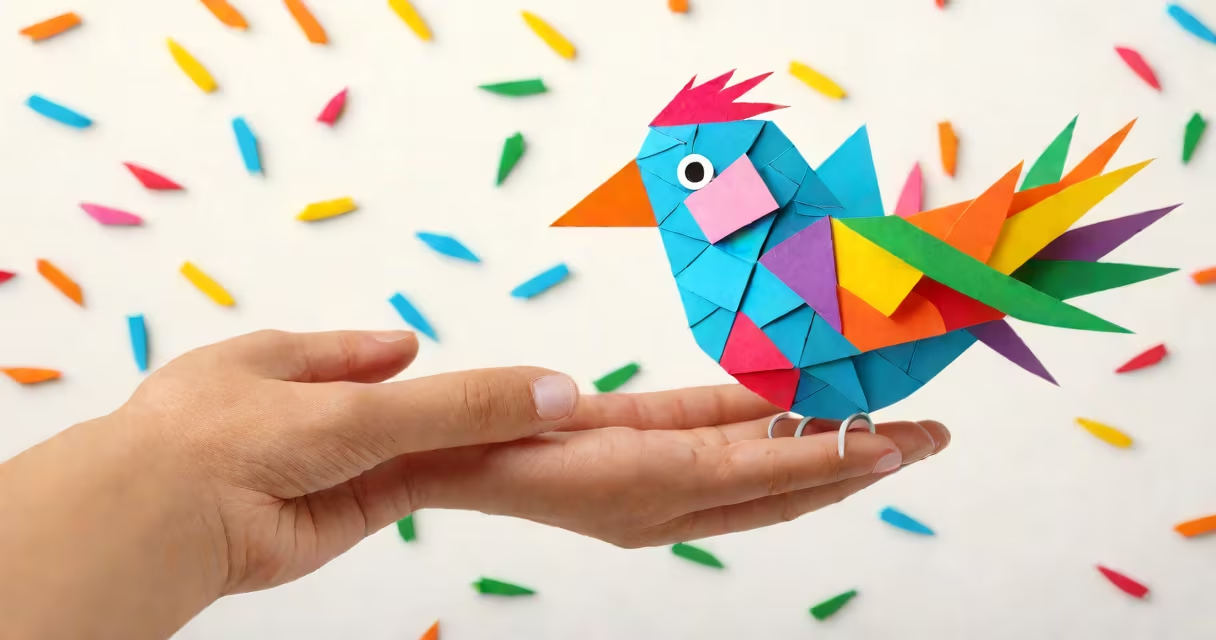
upcycled craft projects for kids to spark creativity turn discarded household items-like cardboard tubes, plastic bottles, and old fabric-into engaging, educational art and play objects. These projects reuse materials that would otherwise be thrown away, teaching resourcefulness while nurturing imagination.
Each project begins with a common waste item: a toilet paper roll, a yogurt container, or a worn-out shirt. Instead of discarding them, kids repurpose these into new forms-animals, toys, decorations, or functional organizers. The process involves sorting, cleaning, cutting, gluing, and decorating, building fine motor skills and decision-making along the way.
For example, a clean plastic bottle becomes a plant pot when cut in half and painted. A child fills the bottom half with soil and plants seeds. Over time, they watch sprouts emerge-a living lesson in growth and sustainability. This single project uses a material often tossed in the trash and transforms it into a tool for learning and joy.
These projects follow a simple cycle: identify a waste item, assess its potential form, prepare it for shaping, then assemble and decorate. The transformation relies on basic tools-scissors, glue, paint-and adult supervision for safety. No special equipment is needed.
Children engage in problem-solving: "Can I make a lion from this cardboard box?" "Will this bottle hold enough water for my seedling?" They test ideas, adjust designs, and learn from trial and error. This trial-and-error loop builds resilience and confidence in their ability to create something meaningful from nothing.
Research from the National Endowment for the Arts shows that regular engagement in arts and crafts correlates with improved focus and emotional regulation in children aged 6-12. When kids use upcycled materials, they're not just making art-they're developing habits of mindful consumption and environmental responsibility.
Common upcycled materials and their typical uses:
| Material | Typical Project Form | Skills Developed |
|---|---|---|
| Cardboard tubes (toilet paper or paper towel) | Animals, rockets, musical instruments | Cutting precision, spatial reasoning |
| Plastic bottles (clean, empty) | Planters, lanterns, wind chimes | Measuring, folding, structural stability |
| Old fabric scraps (t-shirts, bed sheets) | Stuffed animals, patchwork quilts, bags | Sewing basics, color coordination |
| Used egg cartons | Seed starters, decorative masks, toy cars | Pattern recognition, modular assembly |
Not all upcycling requires crafting. A child might take a broken toy, disassemble it, and rebuild it into a new machine using parts. This form of upcycling-called "reconstruction"-teaches systems thinking and mechanical understanding. For instance, a child once rebuilt a broken clock mechanism into a kinetic sculpture that moves when wind blows through it.
A key distinction: upcycling is not recycling. Recycling breaks down materials into raw components (e.g., turning plastic into pellets). Upcycling keeps the original form intact and enhances it. A plastic bottle reused as a bird feeder is upcycling. A bottle melted into resin for new products is recycling.
upcycled craft projects for kids to spark creativity are used in classrooms, after-school programs, summer camps, and homes. Teachers report increased participation during art sessions when materials come from home trash bins. Children feel ownership because they brought the item themselves.
In schools, these projects align with STEM/STEAM curricula. A classroom project using bottle caps to build a mosaic map teaches geography, color theory, and pattern design-all while reducing waste. One elementary school in Portland, Oregon, reduced its weekly landfill output by 18% after introducing weekly upcycled craft days.
Parents find these projects reduce screen time and encourage focused, tactile engagement. A mother in Austin, Texas, shared that her son, who previously struggled with attention during homework, began asking to "make something" after completing his math worksheet. He now creates small sculptures from leftover Lego pieces and scrap wood.
Many assume upcycled crafts require expensive supplies or advanced skills. This is false. Success depends on access to everyday waste and encouragement-not cost. A child can make a dragon from a cereal box, string, and markers with no budget beyond a trash can.
Another myth: upcycling is only for eco-activists or artists. But it's accessible to anyone. A 5-year-old can glue buttons onto a paper plate to make a face. That's upcycling-even if the result isn't displayed in a gallery.
Some confuse upcycling with repurposing. Repurposing changes function (e.g., using a shoebox as a drawer). Upcycling adds value-turning a shoebox into a miniature theater with stage lights and actors. The goal isn't just utility-it's storytelling, expression, and surprise.
Step-by-step creation of a mosaic using 100 cleaned bottle caps:
The finished piece is both decorative and educational. It teaches color mixing, symmetry, and pattern repetition. The child learns that even tiny waste items-caps often discarded after one use-can contribute to a larger artwork.
According to the Environmental Protection Agency, Americans discard about 100 billion plastic bottles annually. Reusing just 1% of those caps in such projects reduces plastic pollution and fosters civic-mindedness in young people.
These projects don't demand perfection. A lopsided sun is still a sun. A crooked fish is still a fish. The value lies in the act of making, not the outcome. That mindset-"I made this from what was left"-builds long-term creativity and environmental empathy.