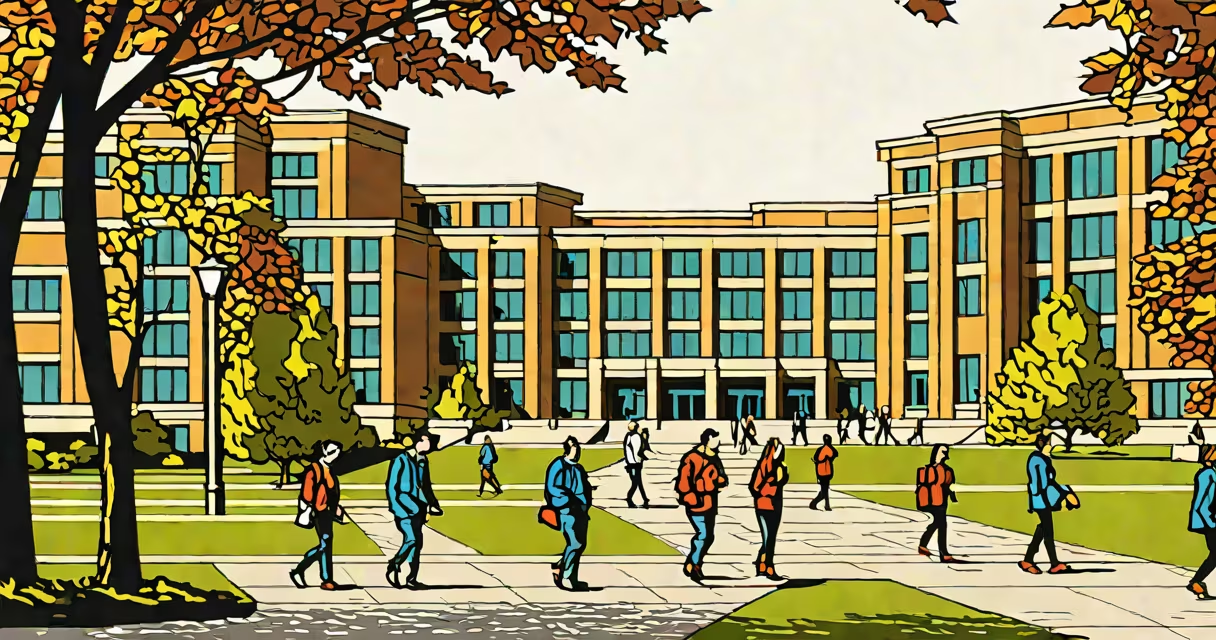
The University of Washington offers over 200 graduate degree and certificate programs across its Seattle, Bothell, and Tacoma campuses, including research-based PhDs, professional master's degrees, and specialized certificates in fields such as computer science, public health, engineering, and business.
Graduate programs at the University of Washington are organized under seven schools and colleges, including the College of Engineering, School of Public Health, Build School of Business, and College of Education. Admission requires a bachelor's degree, competitive GPA, standardized test scores (where applicable), letters of recommendation, and a statement of purpose. Programs vary in duration from one year for professional master's degrees to five or more years for doctoral programs.
Each program sets its own application deadlines, which typically fall between October and January for fall enrollment. The university uses a rolling admissions process for most programs, meaning applications are reviewed as they arrive. Some high-demand programs, such as the Master of Science in Computer Science, have early deadlines and limited seats.
Most graduate programs begin with a core curriculum designed to build foundational knowledge. Students then select electives based on their interests and career goals. Research-focused programs require a thesis or dissertation, while professional programs emphasize applied projects, internships, and capstone experiences.
Students are assigned academic advisors who help plan course loads, track progress toward milestones, and connect them with funding opportunities. Graduate assistants may receive tuition waivers and stipends in exchange for teaching or research support. Funding availability varies by department and program type.
For example, the MS in Data Science program requires 60 credits, including courses in machine learning, statistical inference, and data visualization. Students complete a team-based capstone project using real-world datasets from industry partners. The program takes 18 months to complete and admits around 120 students annually.
University of Washington graduate programs fall into three primary categories: research degrees (PhD, MD, JD), professional degrees (MS, MBA, MPA), and certificates. Each serves distinct academic and career objectives.
| Type | Duration | Focus | Examples |
|---|---|---|---|
| Research Doctoral (PhD) | 5-7 years | Original scholarly work, publications, teaching | PhD in Bioengineering, PhD in Psychology |
| Professional Master's (MS, MBA, MPA) | 1-2 years | Applied skills, internships, industry readiness | MS in Information, MBA in Technology Management, MPA in Environmental Policy |
| Certificates | 6-12 months | Specialized training, career advancement | Graduate Certificate in Cybersecurity, Certificate in Healthcare Leadership |
Some programs blend both tracks. The Master of Science in Human Centered Design & Engineering combines coursework in design thinking, usability testing, and prototyping with a hands-on project in collaboration with local tech firms. Graduates often secure roles in UX research or product management.
Many applicants assume that all graduate programs at the University of Washington require GRE scores. This is incorrect. While some programs still accept GRE results, many have dropped the requirement. For example, the MS in Computer Science program no longer requires GRE scores for domestic applicants, relying instead on undergraduate performance, coding portfolios, and interviews.
Another misconception is that graduate programs are only for recent undergraduates. In reality, over 40% of graduate students at UW are over 30, including professionals returning to school for career shifts. The Professional and Continuing Education division supports adult learners through flexible scheduling, online options, and accelerated formats.
A lesser-known fact: the University of Washington offers concurrent degree programs. A student can earn a JD and an MPH simultaneously through a partnership between the School of Law and the School of Public Health. This dual-degree path takes four years and prepares graduates for careers in health policy and legal advocacy.
The MS in Environmental and Forest Sciences (MSEFS) is a 24-month program focused on sustainable land management, climate resilience, and ecological restoration. It accepts 30 students annually from diverse academic backgrounds, including biology, environmental studies, and civil engineering.
Applicants must submit transcripts, a resume, three letters of recommendation, and a personal statement outlining their interest in forest ecosystems. The program includes a required field practicum in the Pacific Northwest, where students work with state agencies and tribal governments on watershed restoration projects.
One student I observed during a site visit in 2022 had previously worked as a park ranger in Montana. After completing the MSEFS program, she secured a position with the U.S. Forest Service managing fire-adapted forests in Oregon. Her success reflects the program's emphasis on practical experience and regional partnerships.
Graduate programs at the University of Washington serve multiple purposes: advancing scientific research, preparing professionals for leadership roles, and supporting economic development in the Pacific Northwest. The university ranks among the top 10 public institutions nationally for research funding, with $1.2 billion awarded in federal grants in 2023.
Programs in computer science, neuroscience, and marine science attract significant external funding. The Department of Bioengineering, for instance, received $42 million in NIH grants to develop wearable sensors for chronic disease monitoring. These funds support graduate students through research assistantships and travel grants to present findings at conferences.
Employers value UW graduate degrees due to the institution's strong industry ties. Tech companies like Amazon, Microsoft, and Boeing recruit heavily from the College of Engineering and the Information School. The university's Career Services office hosts over 150 employer events annually, including on-campus interviews and networking sessions.
For example, the MS in Business Administration (MBA) program at Build School of Business reports a 95% job placement rate within three months of graduation. Median starting salary for full-time MBAs was $132,000 in 2023, according to the school's annual employment report.
University of Washington graduate programs are not correspondence-only or purely online. While some courses are offered remotely, most programs require in-person attendance for labs, seminars, and collaborative work. The university maintains strict academic standards and does not offer "diploma mills" or unaccredited credentials.
They are also not interchangeable with undergraduate degrees. Graduate study demands deeper specialization, independent research, and advanced critical thinking. A student entering a PhD program in Molecular Biology must demonstrate mastery of complex biochemical pathways and contribute new knowledge to the field-tasks beyond the scope of a bachelor's degree.
Finally, these programs are not solely for students aiming to become professors. While PhDs prepare scholars for tenure-track positions, many graduates pursue careers in government, nonprofit organizations, healthcare, and private industry. The UW Office of Research reports that 68% of PhD recipients in STEM fields take jobs outside academia within five years of graduation.
Understanding the structure, requirements, and outcomes of university of washington graduate programs enables informed decisions about academic and career futures. With rigorous curricula, strong faculty mentorship, and extensive resources, these programs prepare individuals for impactful roles across sectors.