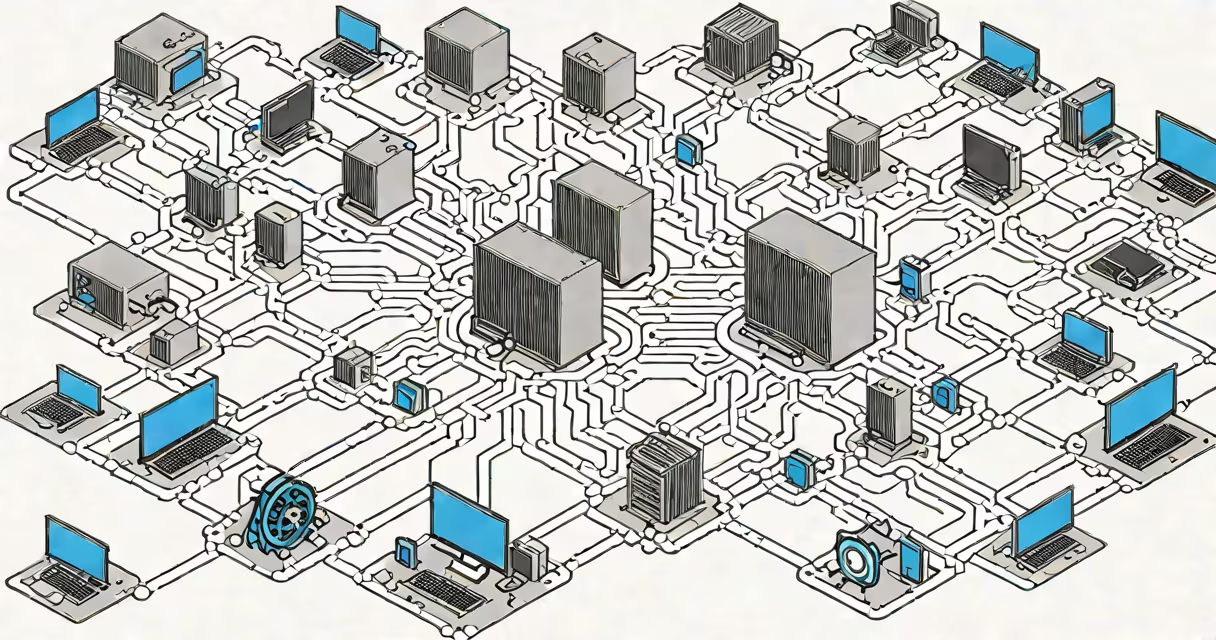
Internet network security is the practice of protecting data, systems, and users from cyber threats as they travel across or reside within a network. It involves configuring firewalls, encrypting traffic, monitoring for anomalies, and enforcing access controls to prevent breaches.
At its core, internet network security helps only authorized users and devices can access network resources and that data remains confidential, intact, and available. This includes safeguarding against malware, phishing, denial-of-service attacks, and insider threats. The goal is to maintain trust in digital communications and infrastructure.
Modern networks face constant threats from automated scanning tools, ransomware campaigns, and state-sponsored hacking groups. Without proper security layers, organizations risk data leaks, operational downtime, and financial loss. According to the 2023 Verizon Data Breach Investigations Report, 83% of breaches involved some form of network-based attack.
Network security operates through layered defenses that inspect, filter, and control data flow. Traffic enters a network via routers or gateways, where firewalls apply predefined rules to allow or block packets based on source IP, port, protocol, and content.
Once inside, traffic may pass through intrusion detection systems (IDS) or intrusion prevention systems (IPS), which analyze patterns for known malicious behavior. For example, an IPS can detect a SQL injection attempt by recognizing suspicious syntax in HTTP requests and automatically drop the packet.
Encryption plays a critical role. When data travels over public or shared networks, protocols like TLS (Transport Layer Security) scramble the payload so even if intercepted, it cannot be read. A web browser connecting to a bank's site uses TLS to create a secure channel, verified by a digital certificate issued by a trusted authority such as DigiCert or Let's Encrypt.
Internet network security relies on several interconnected technologies. These include:
Organizations often deploy a combination of these tools. For instance, a company might use a new firewall (NGFW) that combines traditional filtering with deep packet inspection, application awareness, and sandboxing for unknown files.
| Type | Function | Example Use Case |
|---|---|---|
| Perimeter Firewall | Blocks external threats at network entry points | Prevents brute-force login attempts on a corporate email server |
| Host-Based Firewall | Controls traffic at the device level | Stops a rogue app from sending customer data to a remote server |
| Web Application Firewall (WAF) | Protects web apps from common exploits | Filters out cross-site scripting (XSS) payloads targeting a retail checkout page |
| Zero Trust Network Access (ZTNA) | Enforces identity verification before granting access | Requires multi-factor authentication before allowing access to HR databases |
Many assume that installing antivirus software equates to full network security. That's incorrect. Antivirus focuses on endpoint protection-detecting malware already on a device-but it doesn't stop attacks during transmission or prevent unauthorized access to network services.
Another misunderstanding is equating "firewall" with "security." A basic firewall blocks ports and filters IPs, but it won't catch encrypted malicious payloads or zero-day exploits. Advanced firewalls integrate threat intelligence feeds and machine learning models to improve detection accuracy.
A key distinction lies between network security and endpoint security. While network security monitors traffic between devices, endpoint security secures individual devices like laptops, phones, and servers. Both are essential. A breach can start at either end. For example, a phishing email delivered to a single employee's inbox may bypass network filters but trigger endpoint detection when the malicious attachment runs.
I once observed a small business lose sensitive client records because their IT team relied solely on a consumer-grade router with default settings. An attacker exploited an unpatched service running on port 23 (Telnet) and gained root access. The organization had no logging, no segmentation, and no intrusion detection. After the breach, we implemented a segmented network design, enforced MFA, and deployed a SIEM system. Within 48 hours, we detected another attempted connection from a known malicious IP range.
Every organization with digital operations uses internet network security. Financial institutions, healthcare providers, government agencies, and cloud service providers enforce strict policies due to regulatory requirements like HIPAA, PCI-DSS, and GDPR.
For example, a hospital must ensure patient records remain private while being accessible to authorized staff. Network segmentation isolates medical devices from administrative systems, reducing the risk of ransomware spreading from a nurse's tablet to an MRI machine.
Small businesses also rely on it. A local accounting firm using a single router without VLANs or firewall rules risks exposure to malware that could compromise tax filings. Implementing a managed firewall and regular patching reduces this risk.
According to the National Institute of Standards and Technology (NIST), effective network security reduces the average time to detect a breach by 60% and lowers recovery costs by up to 40%. Organizations that follow NIST's Cybersecurity Structure report fewer incidents and faster incident response times.
When selecting a provider, research firms like Palo Alto Networks, Fortinet, and CrowdStrike. These companies offer solutions validated by independent testing labs such as NSS Labs and AV-TEST. Their products undergo rigorous evaluation for performance, accuracy, and resilience under attack simulations.
Always verify vendor claims with real-world benchmarks. A firewall claiming "99.9% threat detection" should specify whether that rate applies to known malware, zero-day samples, or specific attack vectors. Transparency matters.
Internet network security is not a one-time setup. It demands continuous monitoring, policy updates, and staff training. As new vulnerabilities emerge-like the Log4Shell exploit in 2021-organizations must act quickly to close gaps. Automated patch management and regular penetration testing help maintain readiness.
Internet network security is the foundation of trustworthy digital interaction. Without it, data flows are vulnerable, systems fail, and trust erodes. Protecting networks isn't optional-it's necessary for every connected entity in today's environment.