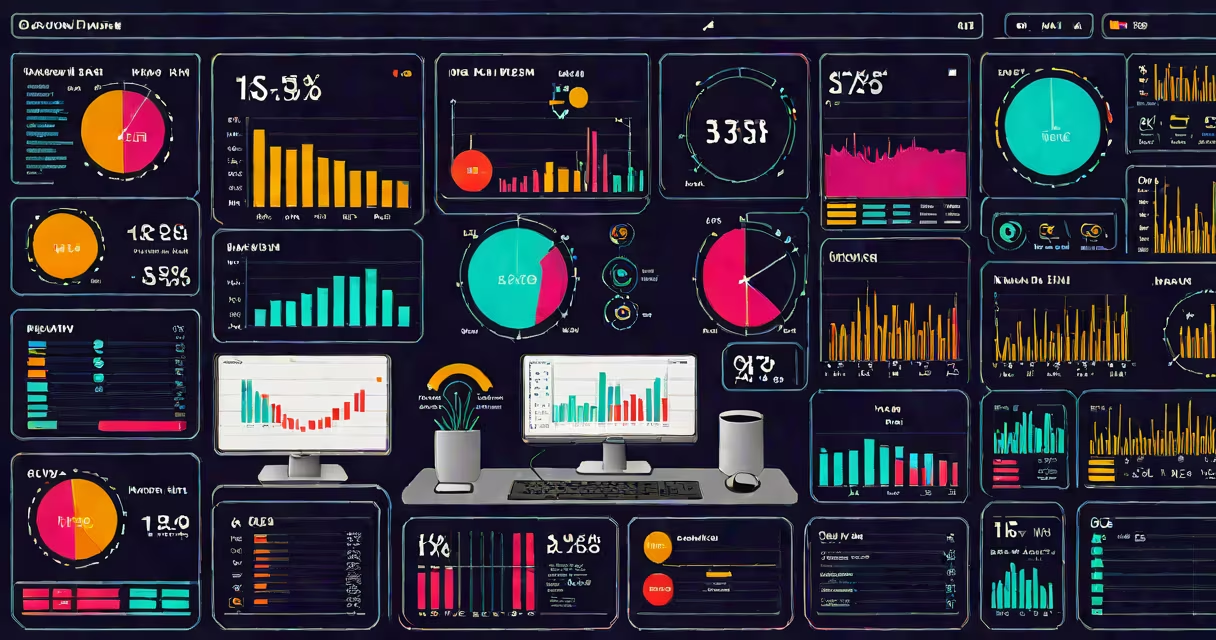
Operations Support Systems (OSS) and Business Support Systems (BSS) are integrated software platforms that manage the technical operations and business functions of telecommunications networks. OSS handles network monitoring, fault detection, and service provisioning, while BSS manages customer accounts, billing, and revenue generation. Together, they ensure services are delivered reliably and customers are charged accurately.
OSS and BSS form the core of modern telecom infrastructure. Without them, providers couldn't track outages, activate new lines, or process monthly invoices. These systems run behind the scenes in every mobile carrier, ISP, and cable company, processing millions of transactions daily.
For example, when a customer in New York activates a 5G plan through their carrier's app, OSS verifies network capacity and configures the necessary switches. BSS creates the account, sets up the billing cycle, and sends the first invoice. This entire process happens in under 90 seconds.
OSS focuses on the network side. It monitors equipment status, detects failures, and automates repairs. When a cell tower goes offline, OSS triggers alerts, assigns engineers, and tracks resolution times. It also supports service activation by provisioning bandwidth, assigning IP addresses, and configuring routers.
BSS handles everything related to customers. It processes orders, manages subscriptions, calculates usage-based charges, and handles disputes. A customer calling to report a missing charge would have their history pulled from BSS databases, which store every transaction, plan change, and credit adjustment.
The two systems communicate via APIs and shared data models. When a new service is activated, OSS sends a confirmation to BSS, which then generates a billable event. This integration prevents mismatches between what was promised and what was billed.
OSS includes network inventory, fault management, performance monitoring, and service fulfillment tools. Fault management identifies issues like dropped signals or router crashes. Performance monitoring tracks latency, packet loss, and bandwidth utilization across regions.
BSS consists of customer relationship management (CRM), order management, billing, and revenue assurance modules. CRM stores customer preferences and support history. Order management routes requests through approval workflows. Billing systems apply rate plans based on usage thresholds.
| System | Primary Function | Key Tools | Example Use Case |
|---|---|---|---|
| OSS | Network health and service delivery | Fault management, performance monitoring | Identifying a failed fiber node in Chicago |
| BSS | Customer lifecycle and revenue | Billing engine, CRM, order orchestration | Processing a $65 monthly bill for a family plan |
A common misconception is that OSS and BSS are standalone systems. In reality, they're part of a larger system. Many carriers now deploy converged platforms that combine both functions using microservices architecture. This reduces latency and improves error handling.
People often confuse OSS with IT operations tools used in other industries. While both involve monitoring and automation, OSS is designed specifically for telecom networks with real-time constraints. A single dropped call in a busy metro area can trigger a cascade of OSS alerts.
Another mistake is assuming BSS only handles billing. It also manages promotions, discounts, and contract renewals. For instance, a carrier offering "free data for 3 months" must track expiration dates and prevent auto-renewal unless opted in.
One non-obvious fact: OSS and BSS systems are regulated by telecom standards bodies. The TM Forum's Frameworx structure defines data models and interfaces used globally. Carriers in Europe must comply with GDPR when storing customer data in BSS systems, even if the data is processed in the US.
In 2022, a major U.S. carrier experienced a regional outage affecting 1.2 million users. Within 14 minutes, OSS detected a surge in dropped calls across five cities. The system flagged a core router failure and automatically rerouted traffic through backup nodes.
Simultaneously, BSS triggered a notification to customer service agents. Over 800 support tickets were generated, but the system prioritized users on premium plans. Automated messages informed affected customers about the issue and offered 24 hours of free data as compensation.
Engineers resolved the hardware fault in 47 minutes. OSS logged the incident, updated the network map, and sent a post-mortem report. BSS applied credits to impacted accounts and sent reconciliation reports to finance teams. All steps completed within two hours.
I once observed a live deployment of a new roaming agreement between two European telcos. The integration required syncing OSS data on available international frequencies with BSS pricing tiers. During testing, a mismatch caused incorrect billing for 3,400 users. The root cause was a misconfigured API endpoint that failed to validate country codes.
After fixing the interface, the system correctly applied reduced rates for EU travelers. The incident highlighted how tightly coupled OSS and BSS must be. Even a minor data mismatch can lead to financial losses and customer complaints.
As telecom moves toward 5G and edge computing, OSS and BSS scale to handle changing resource allocation. A 5G network may provision virtualized network functions (VNFs) on-demand. OSS ensures those functions are deployed correctly. BSS bills based on actual compute time and bandwidth used.
Without OSS and BSS, telecom providers couldn't maintain service quality or generate accurate revenue. These systems are not optional-they're essential for operational integrity and customer trust.
Understanding what is OSS and BSS in telecom reveals how invisible systems power everyday connectivity. They ensure that when you make a call, stream video, or pay your bill, the underlying processes work flawlessly.