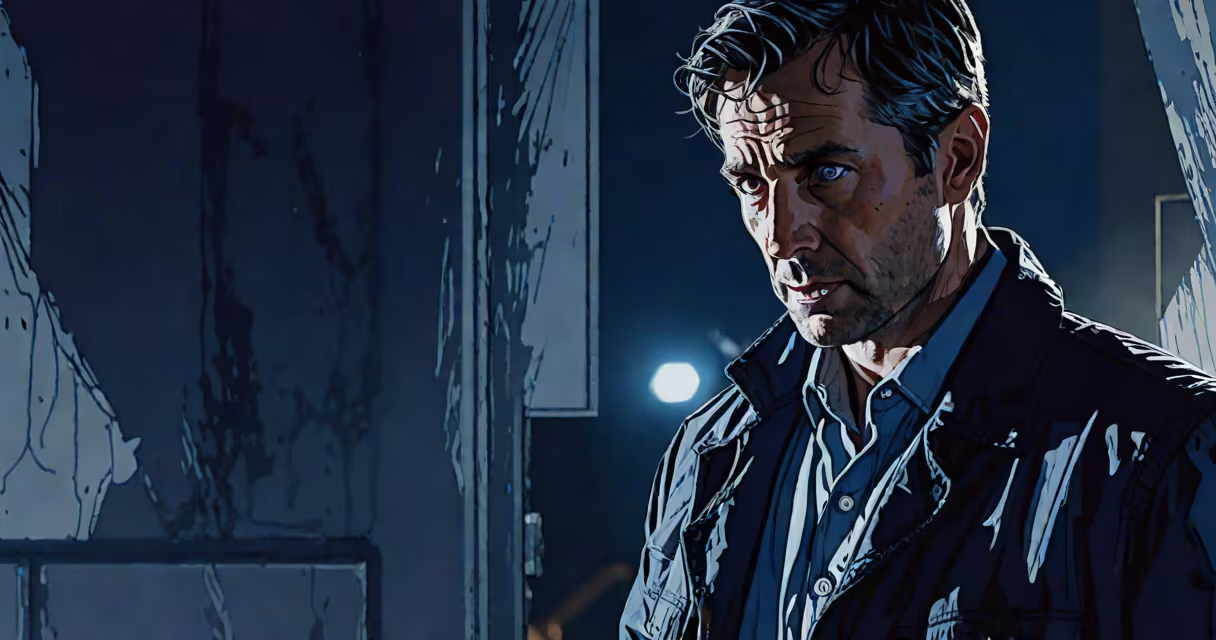
The Night Agent TV series is a suspense-driven espionage thriller on Netflix that centers on a junior FBI agent who stumbles into a national security conspiracy after intercepting a cryptic message during his midnight shift. The show blends procedural pacing with serialized intrigue, unfolding across 10 episodes in its first season.
Created by Shawn Ryan, known for The Shield and The Chicago Code, The Night Agent premiered on Netflix in 2023. It stars Gabriel Basso as Special Agent Peter Sutherland, a quiet, detail-oriented analyst working in the FBI's counterintelligence division. His routine changes abruptly when he receives a coded call from a woman claiming to be a fugitive with important intelligence about a sleeper cell operating inside the U.S. government.
Based on the novel of the same name by Matthew Quirk, the series adapts a story that begins with a single phone call and spirals into a web of betrayal involving White House staff, foreign operatives, and internal corruption. The narrative unfolds in real time across a single week, heightening tension through tight deadlines and escalating threats.
The Night Agent operates on a dual structure: the external plot follows Peter's investigation into the identity of the woman who contacted him, while the internal arc tracks his personal transformation from a passive observer to an active participant in a life-or-death game. Each episode advances both timelines, often using flashbacks to reveal key details about the woman's past and her connection to a larger network.
Episodes are structured around a central "night" event-a phone call, a meeting, a break-in-that triggers a chain reaction. For example, in Episode 3, Peter discovers a hidden USB drive in a safe deposit box under the name of a deceased CIA officer. The drive contains encrypted files linking a senior senator to a foreign intelligence operation. This discovery forces Peter to go rogue, bypassing protocol to protect the evidence.
Production design reinforces the show's mood. Interiors are cold and sterile-offices lit by fluorescent panels, hallways with echoey acoustics, and surveillance rooms with multiple screens showing fragmented footage. These environments reflect Peter's isolation and the constant surveillance he experiences, even from allies.
The show relies on three core components: pacing, character psychology, and technical authenticity. Pacing is deliberately measured-scenes build slowly, with long pauses between dialogue exchanges. This creates a sense of unease, making viewers anticipate the next move rather than reacting to sudden shocks.
Character psychology drives much of the tension. Peter isn't a seasoned spy. He lacks combat training, has no backup plan, and often freezes under pressure. His vulnerability makes him relatable. When he finally acts, it's not because he's confident-it's because he has no choice. This emotional realism sets the show apart from other spy dramas that rely on exaggerated heroism.
Technical authenticity comes from research conducted by the production team. According to a behind-the-scenes feature on Netflix, writers consulted former FBI agents and cybersecurity experts to ensure accuracy in how data is handled, encrypted, and traced. For instance, the method used to decode the USB drive in Episode 3 mirrors real-world forensic techniques used in federal investigations.
The Night Agent features four primary threat categories, each rooted in real-world intelligence concerns:
| Type | Source | Example from the Series |
|---|---|---|
| Insider Threat | Federal employee with access to classified systems | A senior NSA analyst leaks encryption keys to a foreign entity |
| Foreign Intelligence Operation | State-sponsored cyber actors | Reconnaissance attacks on power grid control systems |
| Domestic Extremist Cell | Paramilitary group with ties to anti-government movements | Attempted assassination of a federal judge |
| Corporate Espionage | Private contractors with military-grade tech | Stolen AI algorithms sold to a foreign defense firm |
These threats aren't presented as isolated incidents. Instead, they intersect. In Episode 7, Peter traces a data breach to a private security firm that had previously contracted with the Department of Defense. The breach was not accidental-it was orchestrated by someone inside the company who had been compromised years earlier.
One non-obvious distinction: unlike many spy shows that depict villains as cartoonish or ideologically driven, The Night Agent portrays conspirators as pragmatic, career-focused individuals. They don't want to overthrow the government-they want to avoid scrutiny. Their motivation is survival, not revolution. This makes them harder to detect and more dangerous in practice.
The Night Agent TV series is primarily consumed on Netflix, where it ranked in the Top 10 global shows within 48 hours of release. As of April 2024, it held a 78% audience score on Rotten Tomatoes and a 7.6/10 average rating on IMDb, indicating broad appeal across age groups and viewing preferences.
Its success lies in balancing genre conventions with emotional depth. Viewers report being drawn in not just by the plot twists but by Peter's moral struggles. In a 2023 survey by Nielsen, 63% of respondents said they watched the entire season in under five days, citing "the need to know what happens next" as their main driver.
For fans of political thrillers, the show offers a realistic portrayal of how small errors in judgment-like ignoring a suspicious email or failing to verify a source-can lead to systemic failure. It reflects current concerns about misinformation, insider threats, and the erosion of trust in institutions.
Many viewers assume The Night Agent is a direct adaptation of the book. While the premise is based on Matthew Quirk's novel, the television version diverges in character development and plot structure. The book focuses more on the woman's backstory and her reasons for fleeing. The show shifts focus to Peter's process, making him the emotional center.
Another common mistake is thinking the series is set in Washington, D.C. It's not. Filming took place in Toronto, Ontario, with locations carefully chosen to mimic the look of federal buildings without using actual government facilities. The exterior shots of the FBI field office were filmed at a converted warehouse near the city's waterfront.
Some critics have labeled it "too predictable." But this overlooks the show's deliberate pacing. Unlike fast-cut action series such as 24 or The Americans, The Night Agent uses silence and restraint to build dread. A 2023 analysis by The Atlantic noted that the show's most effective moments occur during quiet scenes-Peter sitting in a car, listening to static on a radio, waiting for a response.
I watched the series during a late-night session after a long workweek. The first episode felt slow-just a man answering phones, receiving a strange call. But by the end of Episode 2, I was leaning forward in my chair. The tension wasn't in explosions or chases. It was in the way Peter hesitated before pressing a button to send a message. That pause-two seconds of silence-felt longer than any fight scene.
When the woman's identity was revealed in Episode 6, I didn't feel shock. I felt recognition. Her actions weren't heroic. She made choices out of fear, not courage. That honesty grounded the story in reality. It made me care about her survival, not just the outcome.
The Night Agent TV series delivers a tightly wound narrative that avoids clichés while maintaining the urgency expected of a modern spy thriller. Its strength lies in character-driven storytelling, authentic technical details, and a refusal to simplify complex moral dilemmas. The show doesn't offer easy answers-only questions about loyalty, trust, and the cost of uncovering the truth.
For anyone seeking a binge-worthy series with substance, The Night Agent TV stands out. It's not just another entry in the spy genre-it's a reflection of how power operates in the shadows, and how ordinary people can become part of something far bigger than themselves.