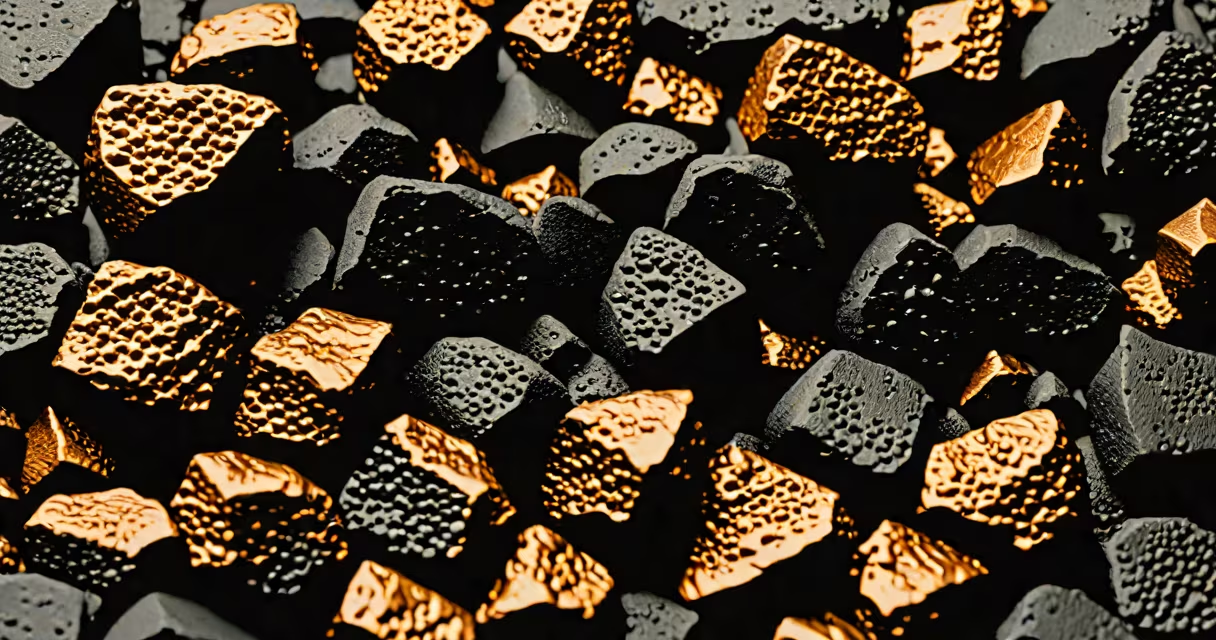
Copper in the ground typically appears as dense, reddish-brown or greenish masses embedded in rock, formed through hydrothermal processes over millions of years. It rarely occurs as pure metal but often as sulfides, oxides, or native copper in sedimentary or igneous formations.
Native copper-the metallic form-forms when dissolved copper ions in groundwater precipitate out under reducing conditions. This process happens slowly, over geological time, resulting in large, irregular lumps rather than shiny bars. These deposits are usually found in fracture zones or porous rock layers where water flows through bedrock.
Geological surveys show that native copper deposits are most common in regions with volcanic activity or ancient sea beds. The Keweenaw Peninsula in Michigan hosts one of the largest known occurrences, where copper was mined from veins in basaltic rock between 1840 and 1920. The ore there appears as jagged, rust-colored chunks mixed with quartz and iron oxides.
Copper in the ground doesn't resemble the polished metal used in wiring. Instead, it shows signs of weathering and chemical alteration. Fresh native copper is a deep, metallic red or orange-red, but exposure to air and water causes oxidation, turning it green or blue-similar to the patina on old statues.
The most common mineral forms include:
A 2018 study by the U.S. Geological Survey confirmed that native copper in the ground averages 60-90% purity in high-grade deposits, but most ores contain significant impurities like iron, sulfur, or silica. Pure copper is rare in nature-it's almost always alloyed or chemically bound.
Copper forms in hydrothermal veins, where hot, mineral-rich water circulates through cracks in rock. As the water cools, dissolved metals precipitate out. Copper tends to concentrate in areas with volcanic activity or tectonic stress, such as the Andes or the Great Lakes region.
For example, the Bingham Canyon Mine in Utah-once the largest open-pit mine in North America-extracts copper from porphyry-type deposits. Here, copper sulfides like chalcopyrite form in granite intrusions, appearing as fine-grained, speckled rock. The ore is grayish-green with visible metallic flecks under magnification.
When copper is buried and exposed to oxygen and moisture over centuries, it undergoes secondary enrichment. This process creates richer, more concentrated ore near the surface. A 2020 report from the National Mining Association noted that secondary enrichment can increase copper concentration by up to 300% compared to primary deposits.
Copper in the ground is often confused with pyrite ("fool's gold") due to similar color and luster. But pyrite is harder (6-6.5 on Mohs scale) and has a brassy yellow hue, while native copper is softer (2.5-3) and shows a distinct reddish tint. Streak tests confirm this: copper leaves a red streak, pyrite a greenish-black.
Another common confusion is with hematite, which can appear dark red. Hematite is much harder (5.5-6.5) and lacks copper's metallic sheen. Native copper also conducts electricity-hematite does not. Field geologists use handheld conductivity testers to quickly identify copper-bearing rock.
One non-obvious fact: copper in the ground rarely appears as a single, solid mass. Even high-grade deposits consist of networks of tiny veins or nodules. A 1994 analysis of samples from the Chuquicamata mine in Chile showed that native copper occurs in clusters averaging 2-5 cm in diameter, separated by silicate matrix.
In northern Zambia, copper is extracted from sedimentary rocks deposited 500 million years ago. The ore appears as dark gray to black shale interbedded with thin layers of copper sulfide minerals. When freshly broken, the rock reveals shimmering, golden specks-chalcopyrite-and deeper veins of malachite.
Field workers describe the material as "dull, gritty, and heavy." One geologist who sampled the area in 2016 noted: "The copper wasn't shiny. It looked like rusted metal mixed with dirt. Only under a hand lens did you see the crystalline structure."
This example illustrates how misleading visual expectations can be. Many assume copper in the ground is bright and metallic. In reality, it's often hidden, weathered, and indistinguishable from other minerals without testing.
People often think copper in the ground is always shiny or easily identifiable. That's false. Most copper deposits are deeply buried, altered by water and pressure, and visually unremarkable. They require lab analysis or drilling to confirm.
Another misconception is that copper is always found in large nuggets. In fact, native copper forms in fracturing zones and grows slowly-some nodules take thousands of years to reach 10 cm in size. Large, pure specimens are extremely rare.
Finally, many believe copper in the ground is the same as recycled copper. It's not. Recycled copper is refined and purified. Natural copper must be processed through smelting and electrolysis to reach industrial purity levels.
Understanding what copper looks like in the ground helps avoid misidentification during prospecting. For those exploring mineral resources, a basic field kit including a streak plate, magnet, and hardness tester is essential.
Knowing what copper looks like in the ground isn't just academic-it shapes how we extract and use this important metal. Its appearance in nature reflects deep geological history, not just a shiny wire waiting to be pulled from the earth.