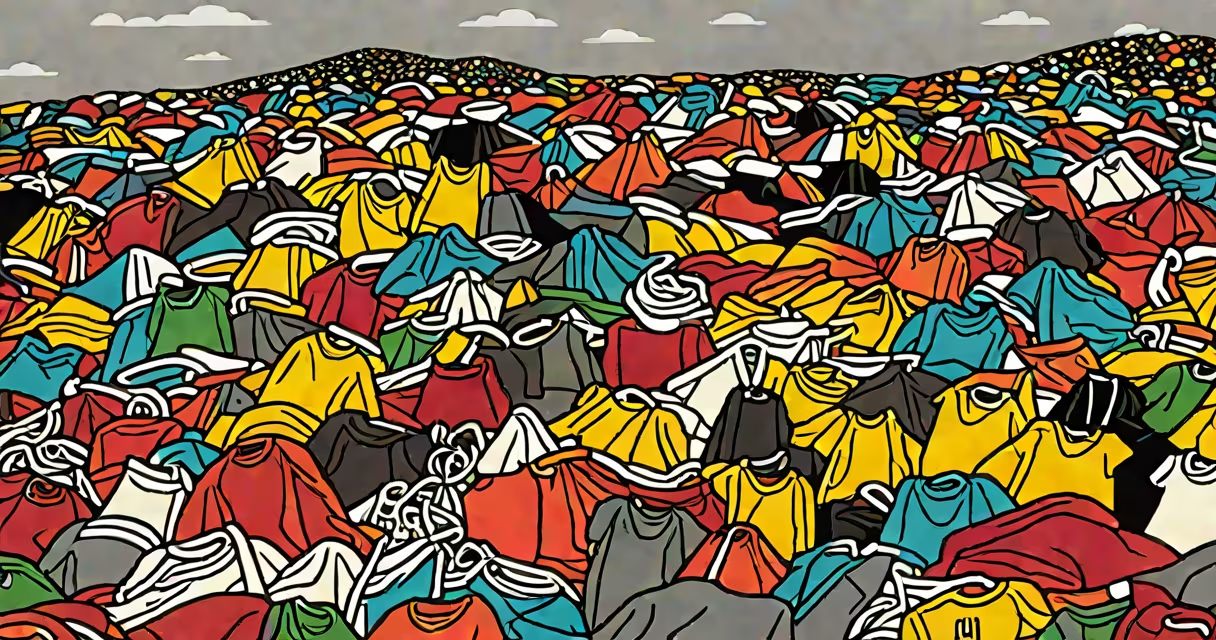
The environmental impact of fast fashion refers to the extensive ecological damage caused by the rapid production, consumption, and disposal of inexpensive clothing. This system relies on high-volume manufacturing using synthetic fibers, chemical dyes, and energy-intensive processes, leading to water pollution, greenhouse gas emissions, and mountainous textile waste.
Fast fashion operates on a model of constant novelty. Brands release new collections every week, encouraging consumers to buy more frequently. This cycle demands raw materials at scale-cotton requires vast irrigation, polyester is derived from fossil fuels-and results in disproportionate environmental costs. The average garment is worn only seven times before being discarded, accelerating resource extraction and waste accumulation.
According to the Ellen MacArthur Foundation, the fashion industry produces 10% of global carbon emissions and consumes more energy than aviation and shipping combined. Water usage is equally alarming: producing a single cotton t-shirt requires about 2,700 liters of water-enough for one person's drinking needs for 2.5 years. These figures reveal how deeply embedded fast fashion is in climate and water stress.
Fast fashion begins with design cycles shortened to weeks rather than seasons. Designers respond to social media trends in real time, pushing out new styles to meet demand. Factories in countries like Bangladesh, Vietnam, and China operate at maximum output, often with poor labor standards and minimal environmental oversight.
Manufacturing involves multiple stages: fiber cultivation, spinning, weaving, dyeing, finishing, and assembly. Dyeing alone accounts for 20% of global industrial water pollution. Toxic chemicals such as formaldehyde, lead, and chromium are used in fabric treatments and discharged into rivers. In Dhaka, Bangladesh, the Buriganga River runs black with untreated effluent from nearby textile plants-a visible sign of unchecked industrial waste.
After purchase, garments are rarely reused. The Global Fashion Agenda reports that 60% of clothing ends up in landfills within a year. In the U.S., 85% of textiles are thrown away annually, with only 15% recycled. When synthetic fabrics like polyester degrade, they release microplastics into soil and water systems-particles that persist for centuries and enter the food chain.
Environmental harm from fast fashion falls into four categories: water pollution, air pollution, land pollution, and resource depletion. Each stems from different stages of the supply chain.
| Type of Impact | Primary Source | Measurable Effect |
|---|---|---|
| Water Pollution | Dyeing and finishing factories | 1.7 million tons of toxic wastewater released yearly; affects 200 million people downstream |
| Air Pollution | Textile processing and transport | 2.1 billion tons CO₂ equivalent emitted annually-equal to all international flights and maritime shipping combined |
| Land Pollution | Landfill dumping | 120 billion garments discarded yearly; 95% are non-biodegradable |
| Resource Depletion | Cotton farming and synthetic fiber production | 1% of global arable land grows cotton; 60% of synthetic fibers come from oil |
One overlooked issue is the carbon footprint of shipping. A t-shirt made in Vietnam and sold in New York travels over 15,000 kilometers by sea and truck. This transportation contributes to emissions, especially when compared to locally sourced alternatives.
Many assume that "eco-friendly" labels on fast fashion items mean sustainability. But greenwashing is widespread. A brand may advertise "recycled polyester" while still producing millions of units weekly. Recycled polyester reduces virgin plastic use by 30%, but it still sheds microfibers during washing-up to 700,000 fibers per wash, according to a 2021 study by the University of California, Santa Barbara.
Another misconception is that recycling clothes solves the problem. Only 1% of clothing is currently recycled into new garments. Most "recycling" involves downcycling-shredding fabric into insulation or rags. True circularity requires closed-loop systems, which remain rare. The Ellen MacArthur Foundation estimates that less than 1% of clothing is part of a circular economy.
Some believe that individual choices matter most. While consumer behavior influences demand, systemic change is required. The fashion industry's structure prioritizes profit over longevity. As one designer who worked in Milan told me, "I once designed a dress that took 12 hours to make. It sold for $29. The factory paid workers $1.50 an hour. We were all complicit."
The 2013 collapse of the Rana Plaza building in Dhaka killed 1,134 garment workers. The incident exposed unsafe working conditions and weak regulation-but it also highlighted environmental neglect. The factory produced clothing for Western retailers including Benetton and Walmart. Workers labored in poorly ventilated rooms with unfiltered exhaust from dye vats.
Post-collapse reforms included mandatory safety audits and worker training. But environmental monitoring remained weak. A 2018 report by Greenpeace found that 80% of textile mills in Bangladesh still discharge untreated wastewater into rivers. The Ganges and Brahmaputra basins continue to suffer from dye contamination, affecting fish populations and drinking water supplies.
This case shows that addressing labor issues doesn't resolve environmental harm. Both require coordinated policy and enforcement. The EU's proposed Corporate Sustainability Reporting Directive (CSRD) now mandates companies to disclose environmental data-including water use and chemical discharge-across their supply chains.
While reducing personal consumption helps, systemic change is essential. Support brands that publish full supply chain transparency. Look for certifications like GOTS (Global Organic Textile Standard) or B Corp status. Avoid "green" claims without third-party verification.
When shopping, prioritize durability over trendiness. Buy fewer, higher-quality pieces. Repair and repurpose old clothes. Donate to organizations that resell or upcycle textiles. Programs like the environmental pollution impact factor track how much waste each brand generates and how efficiently it manages resources.
The environmental impact of fast fashion is not a side effect-it's built into the business model. Solving it requires shifting from mass production to circular design, investing in renewable materials, and enforcing strict environmental regulations globally. The cost of inaction is measured in polluted rivers, wasted water, and rising emissions-not just in dollars, but in ecosystems.