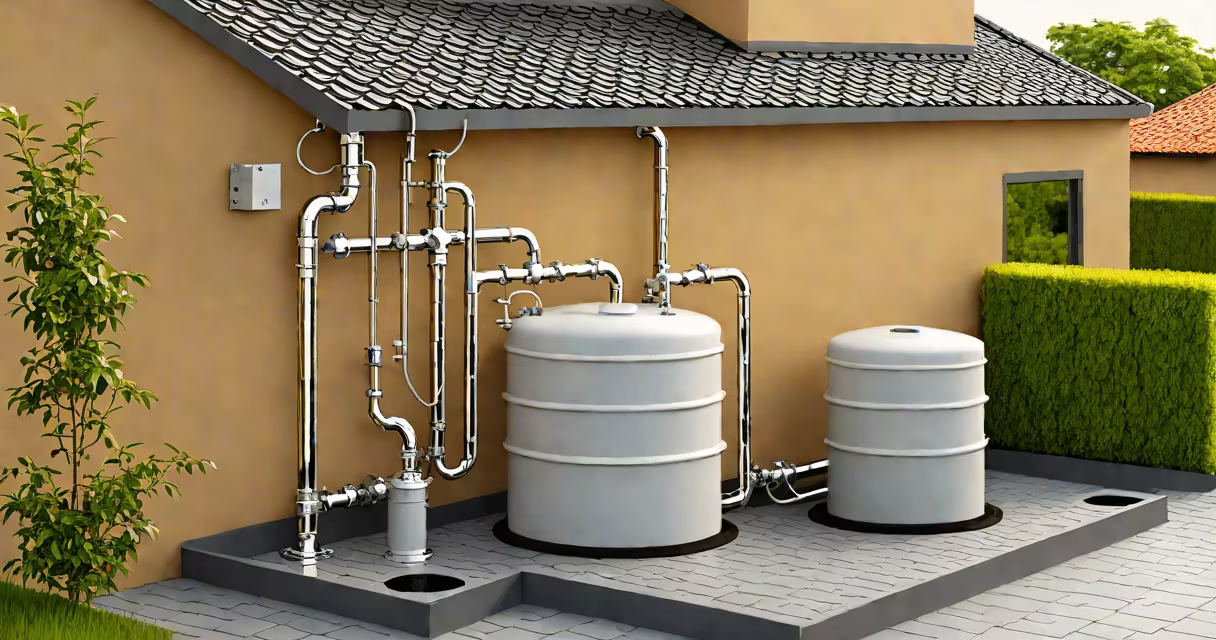
A water harvesting system captures and stores rainwater or greywater for reuse in irrigation, toilet flushing, laundry, or even potable supply after treatment. It reduces demand on public water systems and supports resilience during droughts.
These systems work by collecting precipitation from surfaces like roofs, directing it through gutters and downspouts into a filtration unit, then storing it in tanks or cisterns. When needed, pumps deliver the water to outlets. The process mimics natural water cycles but accelerates capture for human use.
According to the United Nations Environment Programme, rainwater harvesting can meet up to 30% of household water needs in urban areas with moderate rainfall. In rural India, over 1.2 million homes use rooftop harvesting systems to supplement drinking water supplies, especially during dry seasons.
Water harvesting begins when rain hits a catchment surface-typically a roof made of metal, tile, or asphalt. Gutters channel runoff into downspouts leading to a first-flush diverter, which discards the initial flow that carries dust, bird droppings, and debris.
After diversion, water enters a filter-often a mesh screen or sediment trap-to remove leaves and particulates. From there, it flows into a storage tank, usually made of polyethylene, fiberglass, or concrete. Tanks may be above ground or buried underground to save space and reduce evaporation.
Pumps activate when water is needed. For non-potable uses like garden irrigation or toilet flushing, gravity-fed systems often suffice. Potable systems require additional treatment: UV sterilization, carbon filtration, and periodic testing to ensure safety.
Water harvesting systems vary based on scale, purpose, and location. The most common types are rooftop harvesting, surface runoff collection, and greywater recycling.
| Type | Best For | Typical Capacity | Key Component |
|---|---|---|---|
| Rooftop harvesting | Irrigation, toilet flushing | 500-10,000 gallons | First-flush diverter |
| Surface runoff | Field recharge, farm irrigation | 1,000-50,000 gallons | Swales or infiltration trenches |
| Greywater recycling | Laundry, toilet flushing | 100-500 gallons/day | Biological filter or membrane system |
For residential use, a typical rooftop system includes a 1,000-gallon poly tank, a 10-micron filter, and a submersible pump rated at 10 GPM. In arid regions like Arizona, systems are sized to capture 80% of annual rainfall, which averages 12 inches per year.
One overlooked element is overflow management. Without proper drainage, excess water can erode soil, damage foundations, or cause flooding. A well-designed system routes overflow to bioswales or permeable paving instead of storm drains.
Many assume water harvesting systems eliminate water bills entirely. This is false. Even with full capture, usage patterns and seasonal variation limit savings. A home in Seattle using a 5,000-gallon tank can store about 60% of annual rainfall-but only during winter months. Summer shortages persist without supplemental supply.
Another error is equating "harvested" with "safe." Rainwater is not sterile. It contains bacteria, heavy metals from roofing materials, and organic compounds. The EPA states that untreated rainwater should not be used for drinking unless filtered and disinfected. A study in Environmental Science & Technology found that unfiltered rooftop runoff had coliform levels exceeding safe limits in 43% of samples.
Greywater systems are often confused with blackwater systems. Greywater comes from sinks, showers, and washing machines-low in pathogens and suitable for field use. Blackwater from toilets contains high pathogen loads and requires advanced treatment. Mixing them violates plumbing codes and risks contamination.
In 2022, a homeowner in Austin installed a 3,000-gallon underground tank fed by a 2,400 sq ft metal roof. The system included a 10-micron filter, a 12-volt submersible pump, and a timer-controlled drip irrigation line to a vegetable garden.
Over one year, the system collected 12,400 gallons of rainwater. The average monthly rainfall was 3.2 inches. With a 75% collection efficiency, the system met 88% of garden irrigation needs during spring and summer. During the dry season, supplemental city water was used for 12 days.
The homeowner reported a 30% reduction in water bills and no maintenance issues beyond cleaning the filter twice annually. The system cost $3,800 installed, including permits and labor. Payback time was estimated at 8 years based on local utility rates.
Water harvesting systems are often seen as tools for arid climates. But they're equally valuable in high-rainfall zones. In Miami, where annual rainfall exceeds 55 inches, a 2021 pilot project showed that rooftop harvesting reduced stormwater runoff by 40%, easing pressure on overwhelmed drainage systems.
Urban heat islands intensify flash floods. By capturing rain before it hits pavement, harvesting systems lower peak runoff volumes. The City of Philadelphia reports that green infrastructure-including rainwater harvesting-reduced combined sewer overflows by 27% between 2016 and 2020.
One non-obvious fact: harvested water often has lower mineral content than tap water. Rainwater is naturally soft and free of chlorine. This extends the life of appliances and reduces soap use. However, it can be corrosive to certain metals, requiring pH balancing in storage tanks.
Designing a water harvesting system requires matching capacity to local climate, building footprint, and intended use. A 1,000-gallon tank may suffice for a small garden in Oregon but fall short in California's dry summers.
Regulations vary widely. Some U.S. states, such as Colorado, restrict rainwater collection due to prior appropriation laws. Others, like California and Texas, offer rebates and tax credits for installation. Check local ordinances before beginning any project.
Water harvesting systems are not magic solutions. They require planning, maintenance, and realistic expectations. But when designed properly, they deliver measurable water savings, environmental benefits, and long-term resilience.