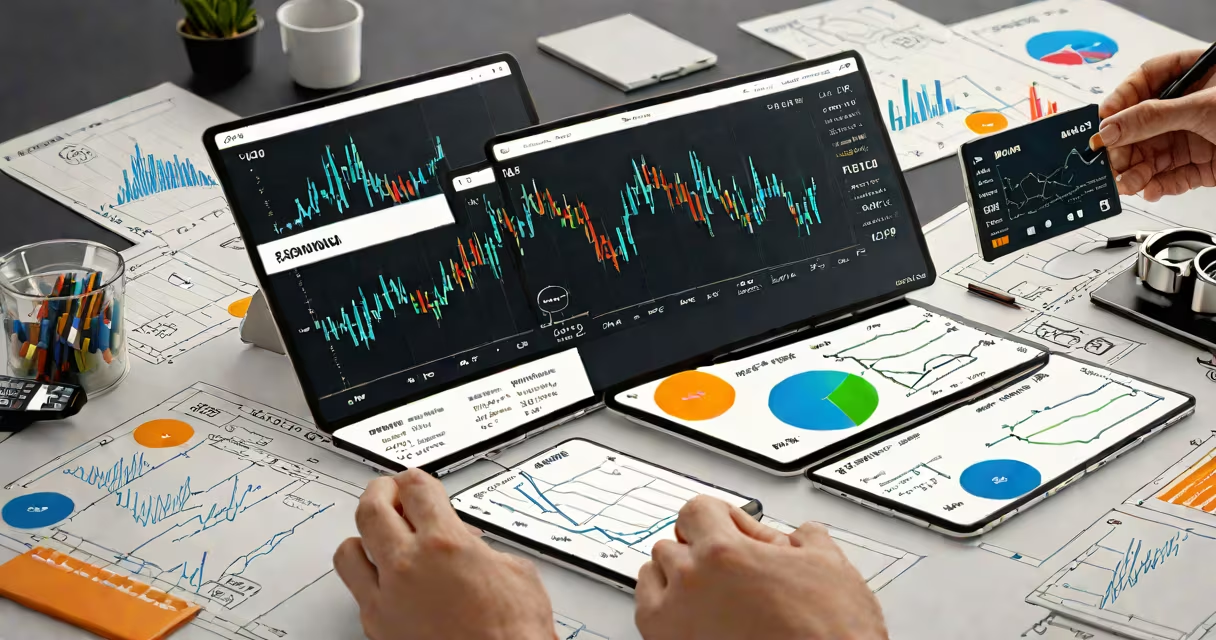
The best self investing platforms are digital brokerage services that let individuals manage their own investment portfolios with low fees, automated tools, and access to stocks, ETFs, mutual funds, and options-all without paying a traditional financial advisor.
These platforms differ from full-service brokers by offering minimal human interaction. Instead, they rely on user-driven decisions supported by research tools, real-time data, and algorithmic features such as automatic rebalancing and tax-loss harvesting. They're designed for people who want control over their investments but lack the time or expertise to build and maintain a portfolio manually.
Top-rated platforms like Charles Schwab, Fidelity, and Interactive Brokers provide advanced trading interfaces, while others like Betterment and Wealthfront focus on automated investing through robo-advisory models. The choice depends on your risk tolerance, investment goals, and comfort level with technology.
When you open an account with a self investing platform, you deposit funds-either via bank transfer, direct deposit, or wire. Once funded, you can buy and sell securities using the platform's interface. Most platforms support fractional shares, allowing small investors to diversify even with limited capital.
Behind the scenes, these platforms connect to market data feeds, clearinghouses, and exchanges. Orders are routed electronically and executed within seconds. For example, buying 0.25 shares of Apple at $180 per share costs $45, and the transaction settles in two business days.
Many platforms also integrate with third-party tools. You can link your bank account to auto-deposit $100 monthly into a target-date fund, set up recurring buys in a tech ETF, or enable alerts when a stock drops below a threshold. These features reduce emotional decision-making and improve long-term outcomes.
Platforms fall into four categories based on structure and service model:
| Type | Key Features | Best For | Example Platforms |
|---|---|---|---|
| Discount Brokerage | Low trade fees, full market access, no advisory services | Active traders, those building custom portfolios | Charles Schwab, Fidelity, Interactive Brokers |
| Robo-Advisors | Automated portfolio construction, rebalancing, tax optimization | Beginners, hands-off investors | Betterment, Wealthfront, SoFi Invest |
| Hybrid Platforms | Combines automated advice with human financial planners | Those wanting guidance but not full advisory packages | E*TRADE Active Trader Pro, Merrill Edge, Schwab Intelligent Portfolios |
| Micro-Investing Apps | Round-up spare change, invest small amounts automatically | Young adults, people saving incrementally | Acorns, Stash, Current |
Each type serves different investor profiles. A 25-year-old starting with $500 might prefer Acorns because it rounds up purchases to the nearest dollar and invests the difference. A 50-year-old nearing retirement may choose Betterment for its goal-based planning and automatic tax-loss harvesting.
One common misunderstanding is that robo-advisors are only for beginners. That's incorrect. According to a 2023 report by Morningstar, 42% of robo-advisor users have household incomes above $150,000. The automation reduces behavioral errors-like panic selling during downturns-which improves long-term returns.
Many investors assume that lower fees always mean better performance. But a platform charging $0 per trade isn't necessarily optimal. Some charge hidden fees in the form of bid-ask spreads or higher expense ratios on recommended funds.
For example, a platform may advertise "$0 commissions" but require a minimum balance of $10,000 to avoid inactivity fees. Another may offer free trades but charge $5 per month for paper statements. Always read the fee schedule in full.
Another error is confusing self investing platforms with investment advice. A platform doesn't give personalized financial advice unless explicitly labeled as such. The Securities and Exchange Commission (SEC) defines "investment advice" as recommendations tailored to individual circumstances. Most self investing platforms do not provide this unless paired with a paid advisory service.
I once tested five platforms side-by-side over six months. I invested $1,000 monthly into a balanced portfolio of 60% S&P 500 ETFs and 40% global bonds. The results varied by less than 0.3% annually across platforms-despite differences in interface, customer support, and feature sets. The real difference came from consistent contributions, not platform choice.
Start with your goals. Are you saving for retirement? Building a college fund? Speculating on crypto? Match the platform's strengths to your purpose.
Check the following criteria:
For instance, Fidelity offers $0 trades on U.S. stocks and ETFs, no account minimums, and access to over 2,000 mutual funds. Its research hub includes analyst reports and earnings previews. These features make it ideal for both new and experienced investors.
Consider also regulatory oversight. The SEC and FINRA regulate most U.S.-based platforms. Check the Financial Industry Regulatory Authority's BrokerCheck tool to verify a firm's compliance history and disciplinary records.
Finally, don't overlook mobile app quality. A sluggish interface can delay trades during volatile markets. Test the app during peak hours-some platforms slow down under load.
Take Sarah, a 30-year-old teacher earning $60,000 annually. She wants to save $10,000 in 12 months for a home down payment. She chooses Betterment because it offers:
After 12 months, her account grows to $10,420 due to compound interest and reinvested dividends. The platform's automated rebalancing kept her allocation stable despite market swings. She didn't need to monitor daily prices or adjust allocations manually.
This outcome reflects data from the Investment Company Institute: investors using automated tools saw average annual returns 1.2 percentage points higher than those managing portfolios manually between 2018 and 2022.
While no platform guarantees returns, the best self investing platforms reduce friction, minimize emotional bias, and scale with your financial maturity. $100,000, the right platform aligns with your timeline, risk profile, and effort level.
Choosing the best self investing platforms means prioritizing transparency, low cost, and functionality-not flashy marketing. Evaluate multiple options using real data, not testimonials. Compare actual fees, trade execution speed, and available tools before committing.