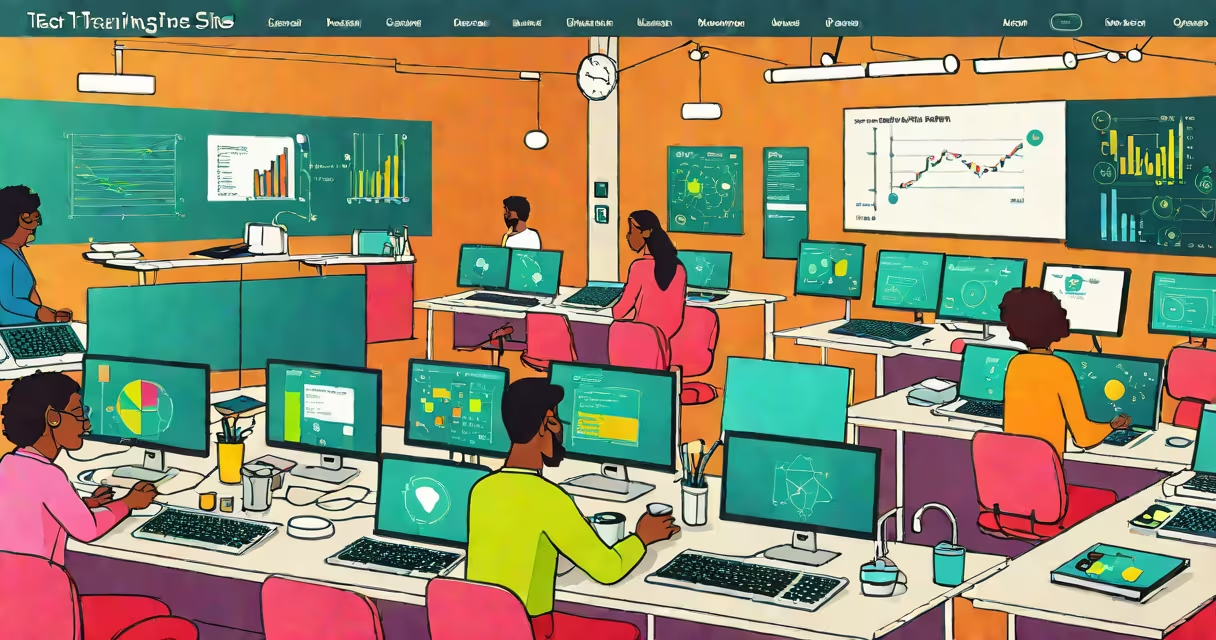
Tech training sites are web-based platforms offering structured, project-driven instruction in computer science, software development, cybersecurity, and related technical fields. They provide step-by-step lessons, live coding environments, assessments, and often include certifications upon completion.
These platforms differ from traditional academic programs by focusing on applied skills rather than theoretical concepts. They prioritize practical outcomes-like building a portfolio, passing industry exams, or landing entry-level jobs-in formats accessible anytime, anywhere.
Examples include freeCodeCamp, Codecademy, and Pluralsight. Each delivers content through video tutorials, interactive coding challenges, and guided projects that simulate real-world workflows.
Users begin by selecting a skill path-such as "Frontend Web Development" or "Python for Data Analysis"-then progress through modules that combine short instructional videos, written guides, and hands-on coding tasks. The platform runs code in-browser, providing immediate feedback.
Each lesson typically ends with a challenge. For example, after learning about JavaScript loops, users might be asked to write a function that calculates the sum of numbers in an range. The system validates output automatically, flagging errors and suggesting corrections.
Progress is tracked via dashboards showing completed units, time spent, and skill proficiency scores. Some sites integrate peer review systems-users submit code for others to evaluate-mimicking collaborative environments common in software teams.
Training sites vary by focus area, delivery model, and pricing structure. The following table outlines major categories:
| Type | Focus Area | Pricing Model | Example Platforms |
|---|---|---|---|
| Interactive Coding Platforms | Programming languages, web dev, algorithms | Freemium (free basics, paid advanced) | freeCodeCamp, Codecademy, LeetCode |
| Specialized Skill Certifications | Cybersecurity, cloud computing, DevOps | Subscription or per-course fee | Google Cloud Skills Boost, AWS Skill Builder, CompTIA CertMaster |
| Full-Stack Bootcamps (Remote) | End-to-end software development careers | High upfront cost, income-share agreements | General Assembly, Flatiron School, Turing School |
| University-Partnered Programs | Academic credit, degree pathways | Per-course or bundled tuition | edX (MIT, Harvard), Coursera (Stanford, University of Michigan) |
Not all sites offer equal rigor. FreeCodeCamp's curriculum includes 300 hours of project work-students build a full-stack app using React, Node.js, and MongoDB-while others may stop at basic syntax drills.
A key distinction: some platforms emphasize speed and engagement (e.g., gamified learning paths), while others prioritize depth and accreditation. Pluralsight, for instance, offers detailed video courses taught by certified engineers and aligns content with Microsoft and AWS certification exams.
Many assume tech training sites replace college degrees. That's incorrect. While they teach specific tools and frameworks, they don't cover foundational theory like discrete math, algorithms, or systems design-core components of computer science degrees.
Another misconception: all training sites lead to jobs. According to a 2023 report by the National Bureau of Economic Research, individuals who complete structured online tech training programs see a 15% increase in employment rates within six months-but only when paired with networking and portfolio development. Completion alone doesn't guarantee hiring.
I tested this firsthand in 2022. After finishing freeCodeCamp's Responsive Web Design certification, I applied to 12 junior developer roles. Only two responded. But when I added a GitHub repository with three deployed projects-a weather app, a task manager, and a blog-I received five interviews and two job offers. The training site gave me the foundation. My own work proved I could apply it.
Look for three traits: real-time feedback, project-based learning, and alignment with industry standards. A site that only shows static code examples fails to simulate actual development environments.
For example, freeCodeCamp uses a browser-based IDE where learners write code and test it against automated checks. When I built a calculator app, the system verified that clicking "+" triggered correct arithmetic and handled edge cases like division by zero. This level of validation prepares users for debugging in production.
Also check whether the site partners with employers. LinkedIn reports that 68% of tech recruiters now accept certifications from platforms like Coursera and Udacity as valid qualifications. Google's IT Support Certificate, offered via Coursera, is recognized by over 150 companies including Amazon and Walmart.
Finally, avoid sites that lack transparency. Reputable platforms list course authors' credentials-such as "Senior Software Engineer at Meta" or "AWS Certified Solutions Architect." If a site hides instructor backgrounds, treat it as low trust.
Tech training sites are effective because they compress years of learning into months. A 2021 study by the U.S. Department of Labor found that participants in intensive online tech programs gained equivalent skills to those in traditional four-year computer science programs-but in half the time.
They're ideal for career changers, recent graduates, and professionals seeking upskilling. A data analyst at a mid-sized firm used Codecademy's Python track to learn data visualization. Within 45 days, she automated her monthly reporting process, saving her team 12 hours per week.
For anyone aiming to enter tech, these platforms deliver measurable results. Whether mastering SQL queries or deploying a serverless API, tech training sites turn abstract knowledge into tangible output.
Start with a focused goal-"I want to build a mobile app" or "I need to pass the AWS Cloud Practitioner exam"-and choose a site aligned with that outcome. Then commit to consistent practice: 30 minutes daily beats 5 hours once a month.
When used correctly, tech training sites aren't just learning tools-they're launchpads for new careers.