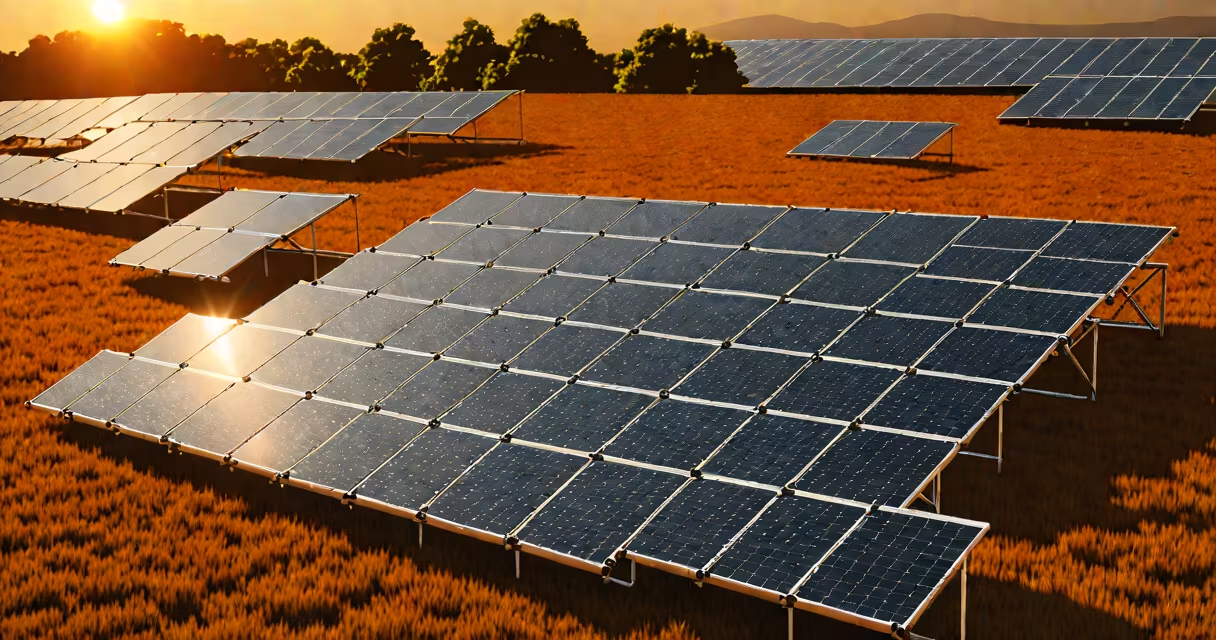
Solar PV meaning refers to the process of converting sunlight directly into electricity using photovoltaic cells, which are typically made from silicon. These cells generate an electric current when exposed to light through the photovoltaic effect, forming the core of solar power systems used in homes, businesses, and utility-scale installations.
Photovoltaic technology relies on semiconductors-materials that conduct electricity under certain conditions. When photons from sunlight strike a photovoltaic cell, they transfer energy to electrons in the semiconductor material, freeing them to flow as electrical current. This direct conversion of light to electricity happens without moving parts, emissions, or noise.
The term "PV" stands for "photovoltaic," derived from "photo" (light) and "voltaic" (electricity). The technology was first demonstrated in 1887 by Heinrich Hertz, but practical solar cells emerged in the 1950s at Bell Labs. Today, solar PV systems are among the fastest-growing sources of renewable energy globally.
A solar PV system begins with individual photovoltaic modules-commonly called solar panels-mounted on rooftops or ground arrays. Each panel contains multiple interconnected solar cells. When sunlight hits the cells, they produce direct current (DC) electricity.
This DC output flows into an inverter, which converts it into alternating current (AC)-the standard form used by homes and the electrical grid. The AC electricity then powers household appliances or feeds into the grid via a meter. Excess energy can be stored in batteries or credited to the utility through net metering.
For example, a typical residential system with 20 panels, each rated at 400 watts, generates 8 kilowatts (kW) of peak capacity. On a sunny day, such a system can produce about 32 kWh of electricity-enough to power an average U.S. home for a full day, according to the U.S. Department of Energy.
Three main types of photovoltaic cells dominate the market: monocrystalline, polycrystalline, and thin-film. Each uses different manufacturing processes and materials, resulting in varying efficiency, cost, and performance.
| Type | Efficiency Range | Cost per Watt | Best Use Case |
|---|---|---|---|
| Monocrystalline | 18-24% | $0.60-$0.80 | Roof spaces with limited area |
| Polycrystalline | 15-18% | $0.50-$0.65 | Budget-friendly installations |
| Thin-film (e.g., CdTe) | 10-13% | $0.40-$0.55 | Large commercial roofs, flexible surfaces |
Monocrystalline cells are cut from single-crystal silicon ingots, giving them a uniform dark appearance and higher efficiency. Polycrystalline cells are cast from molten silicon, creating a speckled blue look and slightly lower efficiency. Thin-film cells use layers of semiconductor materials deposited on glass or metal substrates, offering flexibility and lower production costs-but less durability and space efficiency.
A key distinction often missed is that efficiency doesn't always equal real-world performance. A high-efficiency panel may lose output faster in heat or low-light conditions. For example, monocrystalline panels degrade at about 0.3% per year, while thin-film panels can degrade up to 1% annually under harsh UV exposure, according to NREL's long-term testing program.
Many people confuse solar PV with solar thermal systems. While both use sunlight, solar thermal captures heat for water heating or industrial processes, whereas solar PV produces electricity. A solar water heater uses mirrors or collectors to warm fluid; a PV system uses silicon wafers to generate current.
Another misconception is that solar panels don't work on cloudy days. They do-just at reduced output. Modern PV systems generate 10-25% of their rated capacity on overcast days, depending on cloud thickness and panel orientation. In Germany, where annual sunshine is moderate, solar PV still supplies over 12% of national electricity demand, per data from the Fraunhofer Institute for Solar Energy Systems.
Some assume solar PV requires constant maintenance. In reality, most systems need cleaning only once or twice a year, especially in dusty regions. A study by the National Renewable Energy Laboratory (NREL) found that dirt accumulation reduces output by up to 15% over six months-equivalent to losing $200 in annual savings for a 5-kW system.
One notable example is the Solar Star project in California-the largest solar PV installation in the U.S. With 1.7 million panels covering 13 square miles, it generates 579 megawatts (MW) of power. Enough to supply approximately 255,000 homes annually, according to the U.S. Energy Information Administration.
On a smaller scale, I installed a 6.5 kW rooftop solar PV system on my home in Austin, Texas. After a year, the system produced 9,200 kWh-covering 87% of our electricity usage. The inverter logs show daily generation peaked at 32 kWh during summer months, dropping to 18 kWh in winter due to shorter days and seasonal tilt adjustments.
Utility-scale solar farms now outpace wind in new capacity additions in several countries. In 2023, China added 210 GW of solar PV capacity-over half of global growth-driven by government incentives and falling module prices. The levelized cost of electricity (LCOE) for utility solar PV dropped to $0.04/kWh in the U.S., making it cheaper than coal and gas in many regions, per Lazard's 2023 Levelized Cost of Energy Analysis.
Understanding solar PV meaning clarifies how this technology enables decentralized, clean energy generation. It's not just about panels-it's about integrating hardware, software, and policy to deliver reliable power.