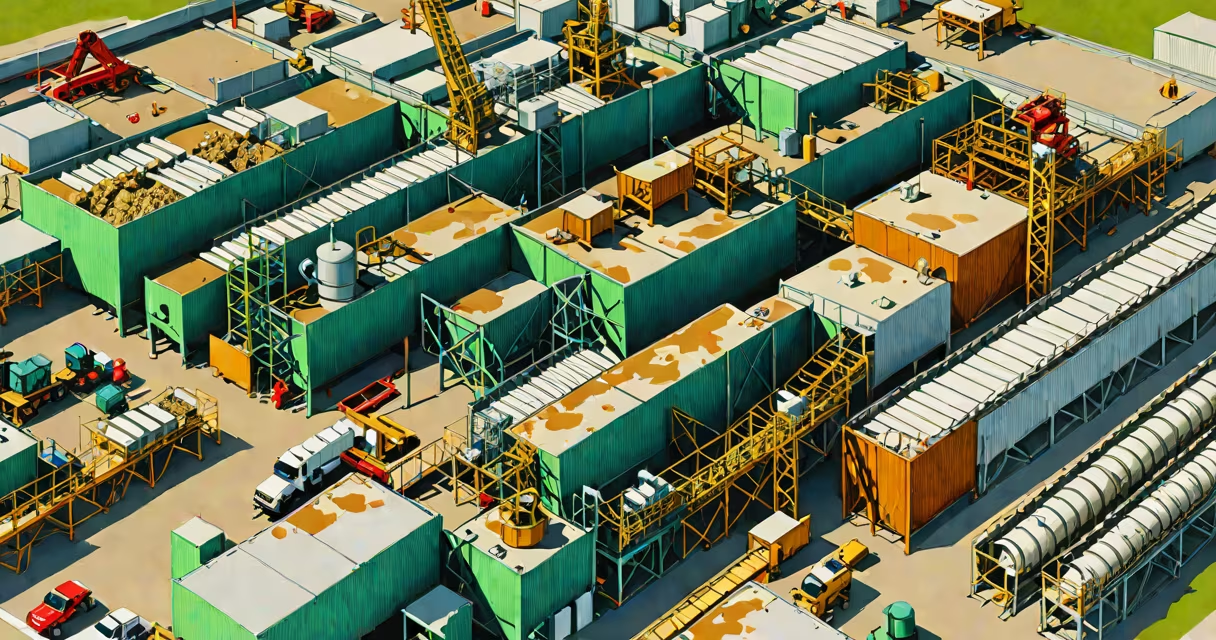
The meaning of waste management refers to the organized process of collecting, transporting, treating, and disposing of waste materials in ways that protect human health and the environment. It includes strategies to reduce waste generation, recover usable resources, and minimize pollution from landfills and incineration.
Waste management systems operate across urban and rural areas, handling household, industrial, medical, and electronic waste. The core goal is to manage waste safely while conserving natural resources and preventing contamination of air, water, and soil. According to the U.S. Environmental Protection Agency (EPA), effective waste management reduces greenhouse gas emissions and supports climate resilience.
Proper waste management begins with source separation-keeping recyclables, organics, and hazardous materials apart at home or in factories. This enables efficient processing downstream. For example, separating food waste allows it to be turned into compost or biogas, reducing reliance on chemical fertilizers and lowering methane emissions from landfills.
Waste management follows a sequence: generation, collection, transportation, treatment, and disposal. Each stage requires coordination between households, local governments, private haulers, and treatment facilities.
After waste is generated, it's collected via curbside bins, drop-off centers, or specialized services for e-waste or construction debris. Collection schedules vary by city-some communities collect trash weekly, others biweekly. In many U.S. cities, recycling is collected separately from garbage to avoid cross-contamination.
Once transported, waste moves to processing sites. Municipal solid waste typically goes to transfer stations before being sent to landfills or material recovery facilities (MRFs). MRFs use mechanical and manual sorting to extract metals, paper, plastics, and glass for reuse. A single ton of recycled aluminum saves about 14,000 kWh of energy compared to virgin production, according to the EPA.
Different waste streams require distinct handling approaches based on composition and risk level.
| Type | Common Sources | Treatment Method | Environmental Impact |
|---|---|---|---|
| Residential | Households | Landfill, recycling, composting | Methane emissions if landfilled; reduced if diverted |
| Industrial | Factories, refineries | Specialized treatment, reuse in processes | Potential heavy metal leaching if improperly stored |
| Medical | Hospitals, clinics | Autoclaving, incineration, chemical neutralization | High risk of infection if mishandled |
| E-waste | Old electronics | Manual disassembly, smelting, component recovery | Contains lead, mercury; toxic if burned improperly |
For instance, in 2022, the European Union reported that 45% of e-waste was formally collected and recycled-up from 30% in 2015-thanks to stricter regulations under the Waste Electrical and Electronic Equipment (WEEE) Directive.
Without structured waste management, communities face rising pollution levels, increased disease transmission, and degraded ecosystems. Open dumping and uncontrolled burning release dioxins, furans, and particulate matter linked to respiratory illness and cancer.
Landfill space is finite. In the U.S., over 140 million tons of municipal solid waste were disposed of in landfills in 2021, occupying nearly 60,000 acres-equivalent to 42,000 football fields. Landfills also emit methane, a greenhouse gas 28 times more potent than CO₂ over 100 years.
A key insight often missed: waste is not inherently waste. The meaning of waste management shifts when viewed through a circular economy lens. Instead of linear "take-make-dispose," circular models aim to keep materials in use longer. For example, a company in Portland, Oregon, recycles 95% of its manufacturing scrap into new products, reducing raw material costs by 30% annually.
Many assume recycling equals sustainability. But recycling alone doesn't solve systemic issues. Contaminated batches-like greasy pizza boxes mixed with clean paper-can render entire loads unusable. In 2020, U.S. recycling facilities rejected 25% of incoming material due to contamination, per the Institute of Scrap Recycling Industries (ISRI).
Another misconception: all waste ends up in landfills. In reality, about 32% of U.S. municipal waste is recycled or composted, and 12% is incinerated with energy recovery. The rest-56%-goes to landfills. These numbers show gaps in infrastructure and public participation.
Some confuse waste management with waste reduction. While both are important, they differ in timing. Reduction happens before waste is created-through design changes, reusable packaging, or product-as-a-service models. Management deals with what remains after consumption.
In 2019, Athens launched a city-wide waste management overhaul. They introduced color-coded bins for organic, recyclable, and residual waste. Automated sensors in bins alerted crews when full, improving route efficiency by 22%. Over three years, the city achieved a 41% increase in recycling rates and cut landfill use by 37%.
This success came from combining policy, technology, and education. Residents received tailored feedback via a mobile app showing their waste habits and suggesting improvements. The system demonstrated that behavioral change, supported by infrastructure, drives measurable results.
The meaning of waste management extends beyond disposal-it's a system designed to protect people, preserve resources, and support long-term environmental health. Effective programs integrate prevention, recovery, and responsible disposal. Cities like Athens show that investment in infrastructure and public engagement yields tangible benefits.
When waste is managed well, it becomes a resource, not a burden. The shift from linear to circular thinking defines modern waste management. It's not just about cleaning up after ourselves-it's about designing smarter systems from the start.