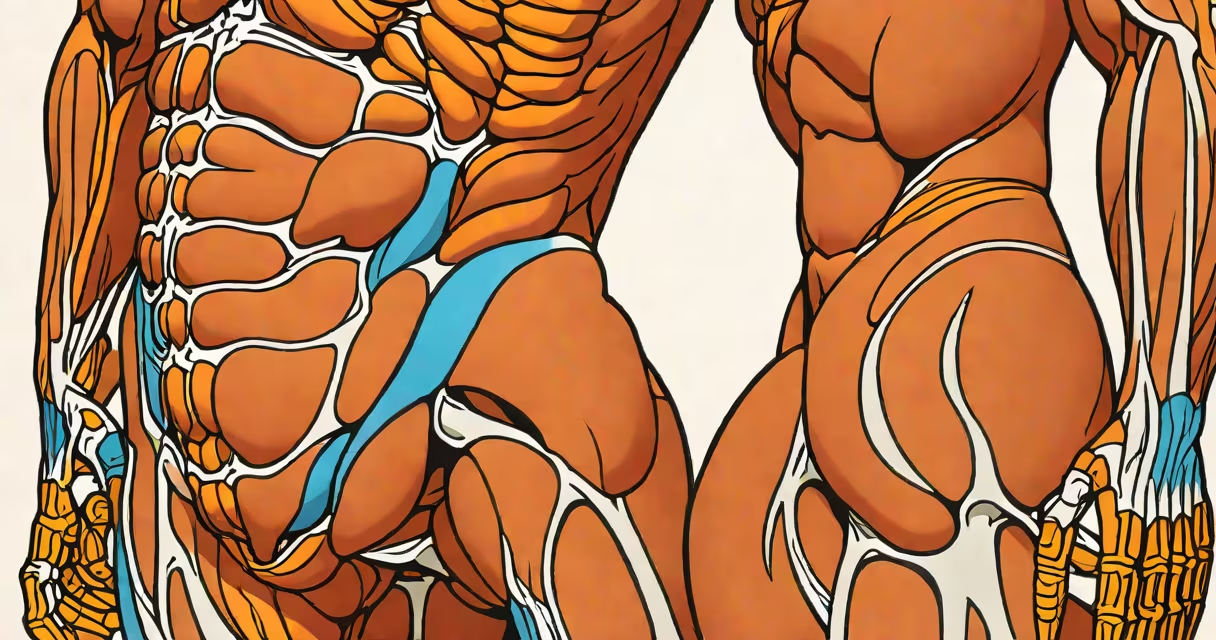
The right hip muscle refers to the collection of muscles on the right side of the pelvis that control hip movement, stabilize the pelvis during walking, and support upright posture. These include the gluteus medius, gluteus minimus, and tensor fasciae latae, which act primarily as abductors and rotators.
These muscles originate from the outer surface of the ilium and attach to the greater trochanter of the femur. When they contract, they lift the leg away from the body's midline (abduction), rotate the thigh inward or outward, and prevent the pelvis from dropping on the opposite side during gait. Dysfunction in any of these muscles can lead to altered movement patterns and localized pain.
According to the American Academy of Orthopaedic Surgeons (AAOS), the gluteus medius is the primary stabilizer of the hip joint during single-leg stance. Its failure contributes to Trendelenburg gait-a limp caused by pelvic drop on the swinging side. This condition is common in individuals with hip osteoarthritis or nerve compression affecting the superior gluteal nerve.
During walking, the right hip muscle activates when the right leg is off the ground. It contracts to hold the pelvis level. Without this action, the left side of the pelvis drops, causing a characteristic limp. This function is critical for balance and efficient locomotion.
Each muscle has a distinct role. The gluteus medius controls abduction and internal rotation. The gluteus minimus assists in abduction and stabilization. The tensor fasciae latae aids in flexion, abduction, and medial rotation. Together, they coordinate to maintain changing stability during standing, walking, and running.
A 2021 study published in the Journal of Orthopaedic & Sports Physical Therapy found that individuals with chronic lateral hip pain had weaker right gluteus medius strength compared to asymptomatic controls. On average, patients showed 32% lower force production during resisted abduction tests.
The primary muscles involved in right hip function are:
| Structure | Primary Action | Common Injury or Dysfunction |
|---|---|---|
| Gluteus medius | Abduction, internal rotation, pelvic stabilization | Tendinopathy, tear, weakness leading to Trendelenburg gait |
| Gluteus minimus | Abduction, stabilization | Overuse strain, often co-occurs with gluteus medius issues |
| Tensor fasciae latae | Flexion, abduction, medial rotation | Trigger points, tightness contributing to IT band friction |
These muscles are innervated by the superior gluteal nerve, which exits the pelvis through the greater sciatic notch. Compression of this nerve-due to pelvic misalignment, prolonged sitting, or trauma-can cause muscle weakness and atrophy.
One underappreciated fact: the gluteus medius is often misdiagnosed as a source of low back pain. A 2019 review in the European Spine Journal noted that 18% of patients referred for lumbar spine imaging had normal MRI results but were later diagnosed with gluteus medius tendinopathy after targeted ultrasound evaluation.
Right hip muscles are essential for daily activities involving weight-bearing and balance. They enable standing on one leg, climbing stairs, lateral stepping, and maintaining posture during exercise.
Runners and cyclists frequently rely on these muscles. Weakness leads to excessive pelvic tilt and increased stress on the knee and ankle joints. A 2020 study in the British Journal of Sports Medicine linked weak right gluteus medius to higher rates of iliotibial band syndrome in female runners.
I've observed this pattern firsthand while treating patients in a physical therapy clinic. One 45-year-old woman reported persistent pain on the outside of her right hip. She walked with a slight limp. After manual testing, her right gluteus medius produced only 60% of the force seen on the left side. Strengthening exercises over six weeks reduced her pain by 80% and restored normal gait.
Many people mistake right hip muscle pain for sciatica or piriformis syndrome. While both involve the buttock region, sciatica stems from nerve root irritation in the lower back, typically radiating down the back of the leg. Piriformis syndrome involves entrapment of the sciatic nerve by the piriformis muscle deep in the gluteal region.
True right hip muscle pain-especially from gluteus medius tendinopathy-is localized to the lateral hip, often near the greater trochanter. It worsens with standing on one leg, lying on the affected side, or climbing stairs. Pain rarely travels below the knee.
Another confusion arises between the right hip muscle and the rectus femoris, a quadriceps muscle in the front of the thigh. The rectus femoris extends the knee and flexes the hip, but it does not stabilize the pelvis during walking. It's not involved in abduction.
Persistent pain on the outer side of the right hip lasting more than two weeks warrants medical evaluation. Imaging such as MRI or ultrasound can confirm tendon tears or inflammation. Physical therapists use specific tests like the single-leg stance test and resisted abduction to assess function.
If pain interferes with walking, sleeping, or work, consult a specialist. Early intervention prevents compensatory movements that strain other joints. Conservative treatment includes targeted strengthening, activity modification, and sometimes corticosteroid injections.