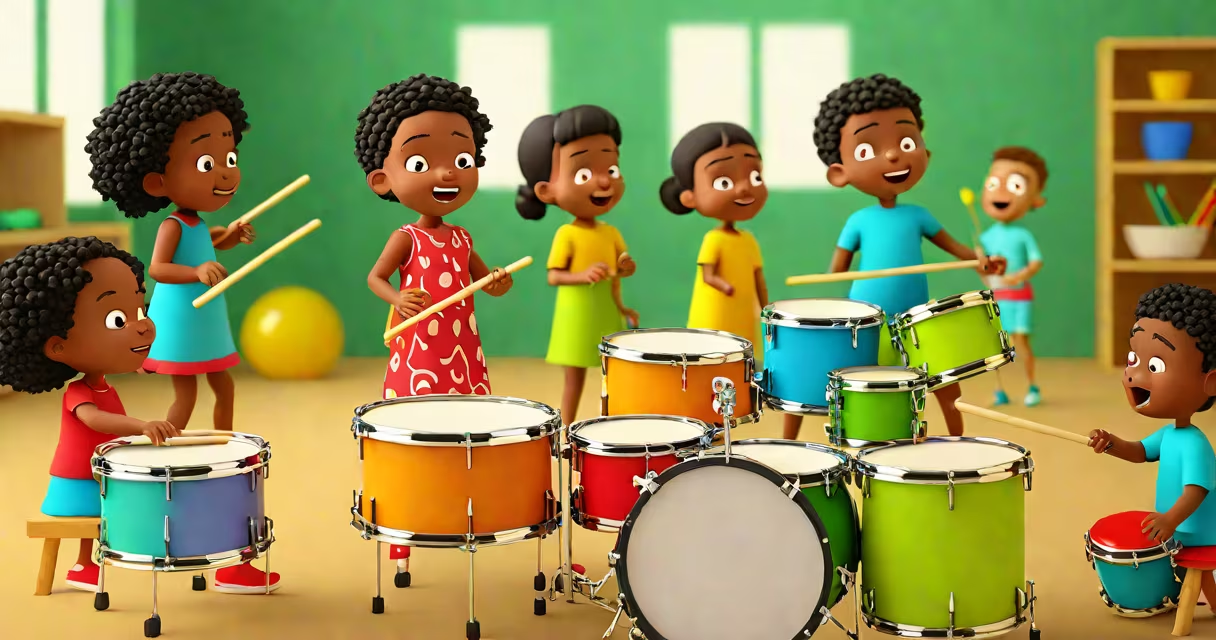
Preschool music class is a structured, play-based program using songs, rhythms, instruments, and movement to support cognitive, emotional, and physical development in children aged 3 to 5. Classes typically run 30-45 minutes weekly and integrate repetition, predictable patterns, and responsive interaction.
These classes are not about performance or musical mastery. They focus on sensory engagement and joyful participation. Children learn through doing-clapping beats, shaking maracas, marching in time, and responding to changes in tempo. The environment is low-pressure, inclusive, and designed around developmental milestones rather than skill benchmarks.
According to the National Association for Music Education (NAfME), consistent exposure to music in early childhood strengthens neural pathways linked to memory, language acquisition, and executive function. A 2021 study published in *Frontiers in Psychology* found that preschoolers who attended twice-weekly music sessions showed 20% greater improvement in sustained attention compared to peers in non-music programs.
Each session follows a predictable structure: greeting song, warm-up movement, core activity (like instrument exploration or call-and-response), and closing circle. This rhythm supports emotional security and helps children anticipate transitions.
For example, a typical 35-minute class might begin with "The Wheels on the Bus" sung slowly while children mimic pushing their hands forward. Next, they pass rhythm sticks around the circle, tapping in unison. Then, they listen to a recording of a drumbeat and respond by stomping or clapping. The session ends with a goodbye song and a high-five circle.
Teachers use visual cues, gestures, and facial expressions to reinforce meaning. When singing "Head, Shoulders, Knees, and Toes," they touch each body part while naming it. This multisensory approach embeds vocabulary and body awareness simultaneously.
Every effective preschool music class includes five key elements:
Classes avoid complex notation or formal technique. Instead, they rely on natural speech patterns, exaggerated intonation, and playful sounds. A teacher might whisper "shhh" during a quiet section of a song, then suddenly shout "BOOM!" when a drum is struck-teaching dynamics through surprise and delight.
Preschool music classes vary by format and provider. Common models include:
| Type | Duration | Focus | Typical Setting |
|---|---|---|---|
| Weekly drop-off | 30-45 min | Group participation, routine | Community centers, studios |
| Parent-child co-op | 45-60 min | Shared bonding, joint movement | Home-based, church halls |
| Thematic series | 6-8 weeks | Seasonal or cultural themes | Libraries, schools |
Some programs center on specific themes-ocean animals, space travel, or seasonal holidays. A winter-themed class might feature songs about snowflakes, use blue scarves to represent falling snow, and incorporate slow-motion movements to simulate drifting down.
One common misconception is that music class requires prior experience. In reality, most programs welcome children with no musical background. A 2022 report from Zero to Three noted that even infants as young as 6 months show increased vocalization and turn-taking after just four weeks of regular music exposure.
Music is not just entertainment-it's a tool for growth. Research confirms that preschool music class enhances multiple domains:
A 2019 longitudinal study by the University of Washington tracked 120 preschoolers over two years. Those attending music classes three times per week demonstrated higher scores on standardized assessments of working memory and impulse control than those in non-music groups.
Music class doesn't replace speech therapy or early intervention services. But it complements them. For children with delayed language development, the repetitive structure of songs provides a scaffold for verbal practice. A child who struggles to say "ball" may reliably sing it in a familiar tune.
Many parents assume preschool music class is just "singing time." That's incomplete. While singing is central, the goal is not vocal performance. It's about listening, responding, and engaging with sound.
Another misunderstanding is that children must "get it right." In fact, missteps are expected and welcomed. A child who stomps out of sync isn't failing-they're practicing timing. A teacher might say, "I love how you're moving your feet! Let's try it again with the beat."
One non-obvious fact: music class can reduce behavioral challenges in group settings. A 2020 study in *Early Childhood Research Quarterly* found that classrooms integrating music routines had 37% fewer incidents of conflict during transitions. The predictability of song structures helped children regulate emotions and transition smoothly between activities.
In Seattle, the "Little Beats" program runs biweekly sessions for 3- to 5-year-olds at public libraries. Each session begins with a "sound hunt"-children close their eyes and identify noises from a recorded set (dog bark, car horn, rain). After identifying, they mimic the sounds with their voices or instruments.
One participant, Maya (age 4), entered the program unable to follow multi-step instructions. After eight weeks, her teacher reported she could now sequence actions: "First clap, then spin, then sit down." Her mother noted improved eye contact and willingness to join group games at home.
Maya's progress wasn't due to memorizing songs. It came from repeated exposure to structured auditory input, physical response, and positive reinforcement-all hallmarks of a well-designed preschool music class.
Preschool music class is not a luxury. It's a research-backed method for nurturing foundational skills in young children. When done right, it creates safe spaces where kids explore sound, movement, and connection-building brains and hearts one song at a time.