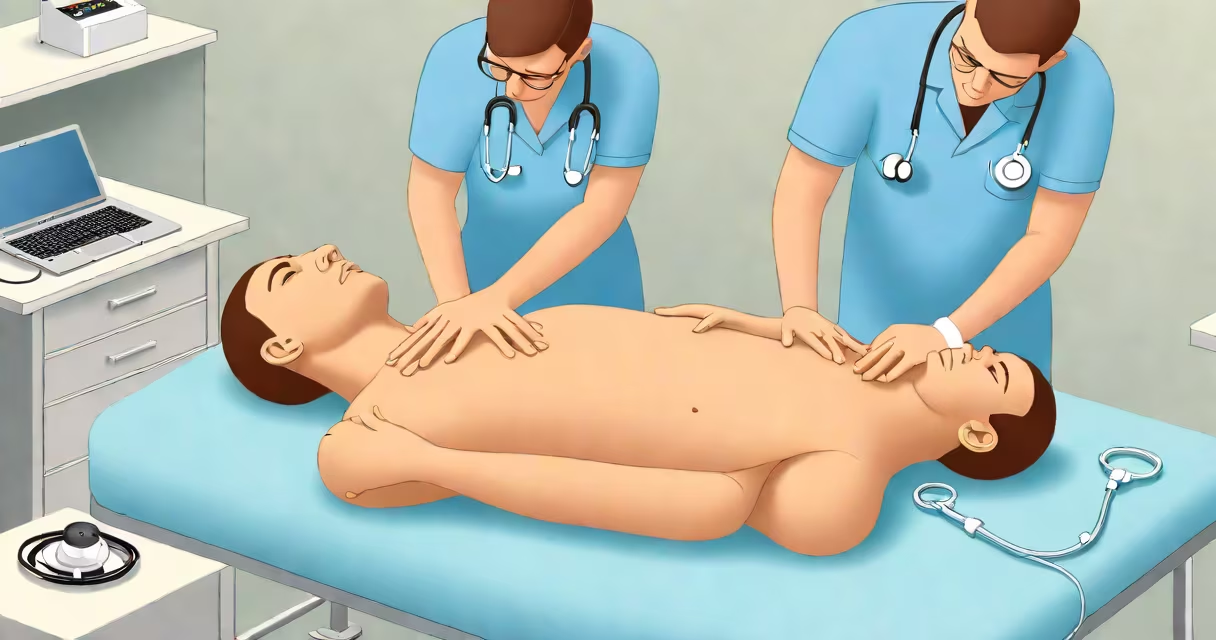
Basic Life Support (BLS) for healthcare providers is a nationally recognized training program that equips clinical staff with the skills to manage cardiac arrest, airway obstruction, and respiratory failure in adult, child, and infant patients. It covers high-quality CPR, automated external defibrillator (AED) use, and effective team dynamics during resuscitation events.
BLS for healthcare providers is not a general public awareness course. It is designed specifically for individuals who work in clinical environments-nurses, physicians, paramedics, respiratory therapists, and allied health professionals-and is required for licensure and credentialing in most U.S. hospitals and clinics.
The American Heart Association (AHA) and the International Liaison Committee on Resuscitation (ILCOR) jointly develop the current guidelines. The AHA's 2020 BLS Guidelines emphasize continuous chest compressions, minimizing pauses, and using real-time feedback devices during CPR. These standards are updated every five years based on peer-reviewed evidence.
During a BLS scenario, providers follow a sequence of actions: assess responsiveness, activate emergency response, obtain an AED, begin high-quality chest compressions at 100-120 per minute, deliver rescue breaths at a 30:2 ratio (for single rescuer), and analyze heart rhythms using an AED. If ventricular fibrillation or pulseless ventricular tachycardia is detected, a shock is delivered and CPR resumes immediately.
Team roles are assigned during actual resuscitation attempts. One provider performs compressions, another manages the airway and delivers breaths, a third operates the AED, and a fourth monitors the patient and coordinates communication. This division ensures consistent performance under stress.
Training includes simulation drills using high-fidelity mannequins. Scenarios mimic real hospital events-such as sudden cardiac arrest in a post-op recovery room or respiratory failure in a pediatric ward-to build muscle memory and decision-making speed. Providers must demonstrate proficiency in all steps before receiving certification.
BLS for healthcare providers focuses on four key areas: chest compression technique, airway management, AED operation, and team coordination. Each component is tested through both written exams and hands-on skill stations.
| Component | Key Skill | Performance Standard |
|---|---|---|
| Chest Compressions | Depth: 5-6 cm (2-2.4 inches), Rate: 100-120/min | Minimize interruptions; allow full chest recoil |
| Airway Management | Head-tilt chin-lift or jaw-thrust maneuver | Open airway without neck hyperextension |
| Rescue Breaths | Deliver breaths over 1 second, visible chest rise | Use bag-valve-mask (BVM) with 100% oxygen when available |
| AED Use | Apply pads correctly, follow voice prompts | Shock delivered only if indicated; resume CPR immediately |
Providers must complete a BLS course every two years to maintain certification. The AHA requires a minimum of 15 minutes of hands-on practice per session. Courses are offered in-person, hybrid, or online with proctored skills testing.
BLS for healthcare providers is mandated in all accredited U.S. hospitals, ambulatory surgery centers, and long-term care facilities. The Joint Commission requires all clinical staff to be certified in BLS as part of accreditation standards.
In a real-world example, a nurse in a surgical ICU noticed a patient's SpO₂ drop from 98% to 82% within 30 seconds. She called for help, initiated BLS protocols, and began chest compressions while a respiratory therapist secured the airway. Within two minutes, the code team arrived, the AED was applied, and the patient regained a perfusing rhythm. Post-event review confirmed that adherence to BLS protocols reduced time to first shock by 47 seconds compared to historical averages.
Without BLS training, providers lack the standardized structure needed to respond quickly and effectively during emergencies. Studies show that hospitals with mandatory BLS certification have a 23% higher survival rate for in-hospital cardiac arrests than those without structured training programs (AHA, 2021).
Many assume BLS for healthcare providers is identical to public BLS. It is not. Public BLS teaches laypeople to recognize emergencies and perform basic CPR. Healthcare BLS includes advanced airway techniques, team leadership, and integration with other emergency systems like rapid response teams.
Another misconception is that AEDs are dangerous if used incorrectly. In reality, AEDs are designed to analyze heart rhythm and only deliver shocks when appropriate. They cannot shock a patient in asystole or normal sinus rhythm. A study published in *Circulation* found that AEDs were used correctly in 96% of cases during simulated cardiac arrests, even by novice users.
Some providers believe they can skip BLS training if they've done CPR in the past. This is incorrect. BLS is not a refresher-it is a formal assessment of competency. The AHA states that "retraining is necessary because skills degrade rapidly without regular practice."
I once observed a new resident attempt to intubate a mannequin during a BLS drill. He misaligned the laryngoscope blade and failed to visualize the vocal cords. After a debrief, he realized his technique had been taught incorrectly. Only after repeating the airway module did he pass. That moment underscored how critical proper training is-even for experienced clinicians.
BLS for healthcare providers is distinct from Advanced Cardiovascular Life Support (ACLS), which builds on BLS skills and includes pharmacological interventions, rhythm interpretation, and advanced airway management. ACLS is required for critical care staff, while BLS is foundational for all clinical roles.
It is also different from Pediatric Advanced Life Support (PALS), which addresses pediatric-specific emergencies such as septic shock, anaphylaxis, and congenital heart defects. PALS requires additional training and is typically taken after BLS and ACLS.
For providers working in remote or mobile settings-such as flight nurses or wilderness medics-BLS may be adapted with portable AEDs and telemedicine support. However, the core principles remain unchanged: early recognition, prompt intervention, and coordinated team action.
Understanding BLS for healthcare providers is essential for anyone involved in direct patient care. It is not optional. It is a standard of care. When a patient collapses, the ability to act swiftly and correctly can mean the difference between life and death.