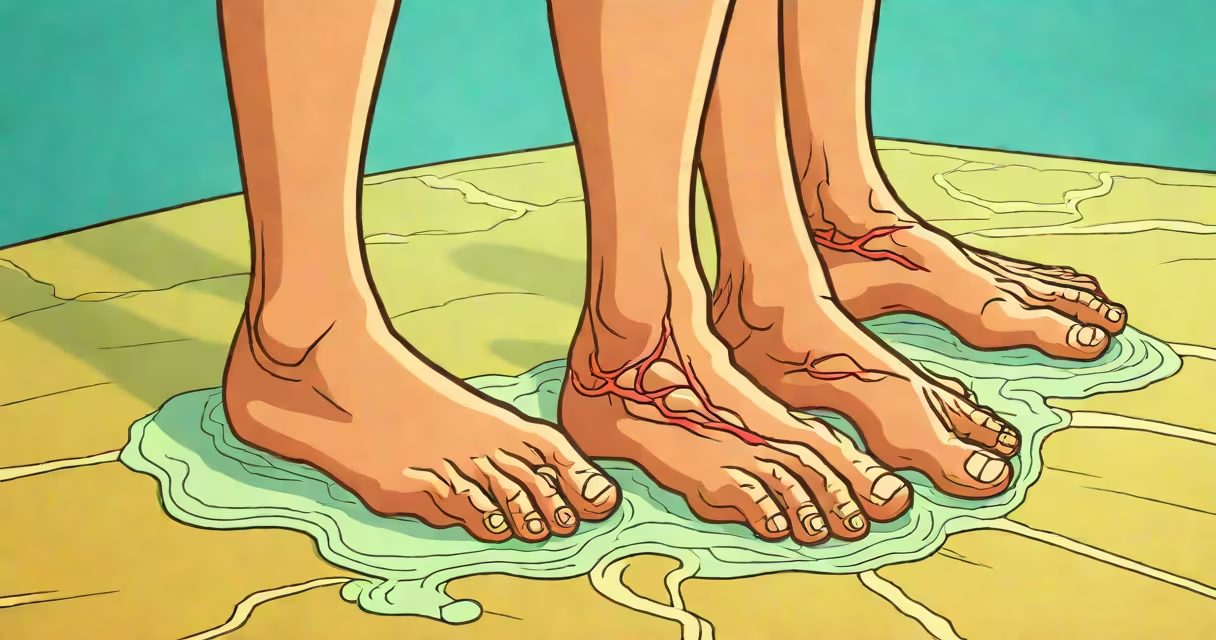
Swollen ankles caused by liver disease result from fluid accumulation due to impaired protein production and increased pressure in the portal vein system. This condition often indicates advanced liver damage such as cirrhosis.
Liver swollen ankles occur when the organ fails to produce enough albumin, a protein that maintains fluid balance in blood vessels. Without sufficient albumin, fluid leaks into tissues, particularly the legs and feet. The liver's reduced ability to process toxins and regulate blood flow further increases pressure in the portal vein, forcing fluid into surrounding areas. This combination leads to pitting edema-indentations that remain after pressing the skin.
When the liver is damaged, typically by long-term alcohol use, viral hepatitis B or C, or fatty liver disease, its function declines. As fibrosis replaces healthy tissue, blood flow through the liver slows. This backs up pressure in the portal venous system, leading to ascites (abdominal fluid) and peripheral edema. Swelling in the ankles is often one of the earliest signs of decompensated cirrhosis.
The liver synthesizes about 90% of plasma albumin. When liver cells are injured, albumin levels drop below 3.5 g/dL, which correlates strongly with edema development. A study published in Gastroenterology found that patients with serum albumin under 3.0 g/dL had a 67% higher risk of developing lower-limb edema compared to those above 3.5 g/dL.
Portal hypertension-the elevated pressure in the portal vein-also drives fluid leakage. The spleen enlarges, and collateral vessels form to bypass the blocked liver. These changes increase hydrostatic pressure in capillaries, pushing fluid into interstitial spaces. Swelling begins in dependent areas: ankles, feet, and eventually the abdomen.
Diuretic therapy is commonly prescribed to reduce fluid volume. Spironolactone and furosemide work by increasing sodium and water excretion. However, they do not reverse underlying liver dysfunction. Misuse can lead to electrolyte imbalances or kidney strain, especially in older adults.
Edema related to liver disease differs from other forms. It is typically bilateral, symmetrical, and pitting. Unlike lymphedema or venous insufficiency, it doesn't improve with elevation alone. In early stages, swelling may disappear overnight but return after standing during the day.
| Type | Origin | Key Features | Common Triggers |
|---|---|---|---|
| Liver-related | Reduced albumin, portal hypertension | Bilateral, pitting, often with ascites | Cirrhosis, chronic hepatitis, alcohol abuse |
| Cardiac | Right heart failure | Pitting, may start in feet, progresses upward | Heart failure, pulmonary hypertension |
| Renal | Glomerular filtration loss | Periorbital swelling, pitting, foamy urine | Nephrotic syndrome, diabetes, hypertension |
| Lymphatic | Blockage in lymph drainage | Non-pitting, firm, often unilateral | Post-surgical, infection, cancer |
A key distinction is that liver-related edema rarely presents with sudden onset. It develops gradually over weeks. In contrast, acute renal or cardiac causes can worsen rapidly within hours. Persistent swelling despite rest or elevation suggests systemic illness rather than temporary strain.
Many assume swollen ankles are simply due to prolonged standing or aging. But when swelling persists beyond 48 hours, especially with fatigue, jaundice, or abdominal distension, liver disease must be ruled out. A 2021 review in Journal of Hepatology reported that 41% of patients with newly diagnosed cirrhosis presented initially with peripheral edema.
Some confuse liver-induced edema with varicose veins or deep vein thrombosis (DVT). DVT causes unilateral swelling, warmth, and redness. Ultrasound confirms it. Liver-related swelling is symmetric and lacks inflammatory signs. Misdiagnosis delays treatment-patients may receive anticoagulants instead of diuretics and dietary sodium restriction.
Another misconception is that weight gain causes swelling. While fluid retention increases body weight, the primary driver is pathophysiological, not caloric. A patient with a 5 kg weight gain over two weeks due to edema may have lost muscle mass and gained only fluid-this is not obesity.
A 58-year-old man with a 30-year history of daily alcohol consumption presented with bilateral ankle swelling and a 7 kg weight gain over six weeks. He denied shortness of breath or chest pain. Physical exam revealed pitting edema up to his shins, a distended abdomen with shifting dullness, and spider angiomas on his chest.
Laboratory tests showed: serum albumin 2.8 g/dL, INR 1.8, AST 120 U/L, ALT 65 U/L. An ultrasound confirmed a nodular liver with portal vein diameter of 1.4 cm and splenomegaly. Diagnosis: alcoholic cirrhosis with decompensation. He was started on spironolactone 100 mg daily and a low-sodium diet. After four weeks, ankle swelling decreased by 60%, though full resolution required ongoing management.
This case illustrates that liver swollen ankles are not isolated symptoms-they reflect systemic failure. Early recognition prevents progression to hepatic encephalopathy or spontaneous bacterial peritonitis.
Swollen ankles are not normal. They are a red flag for serious underlying conditions. When accompanied by fatigue, dark urine, pale stools, or easy bruising, liver disease is likely. Blood tests measuring bilirubin, albumin, and coagulation factors are essential.
Do not ignore swelling that returns after elevation. Do not self-treat with over-the-counter diuretics. Seek care if swelling lasts more than a week or worsens. Early diagnosis improves survival in cirrhosis, with 5-year survival rates exceeding 70% when managed proactively.