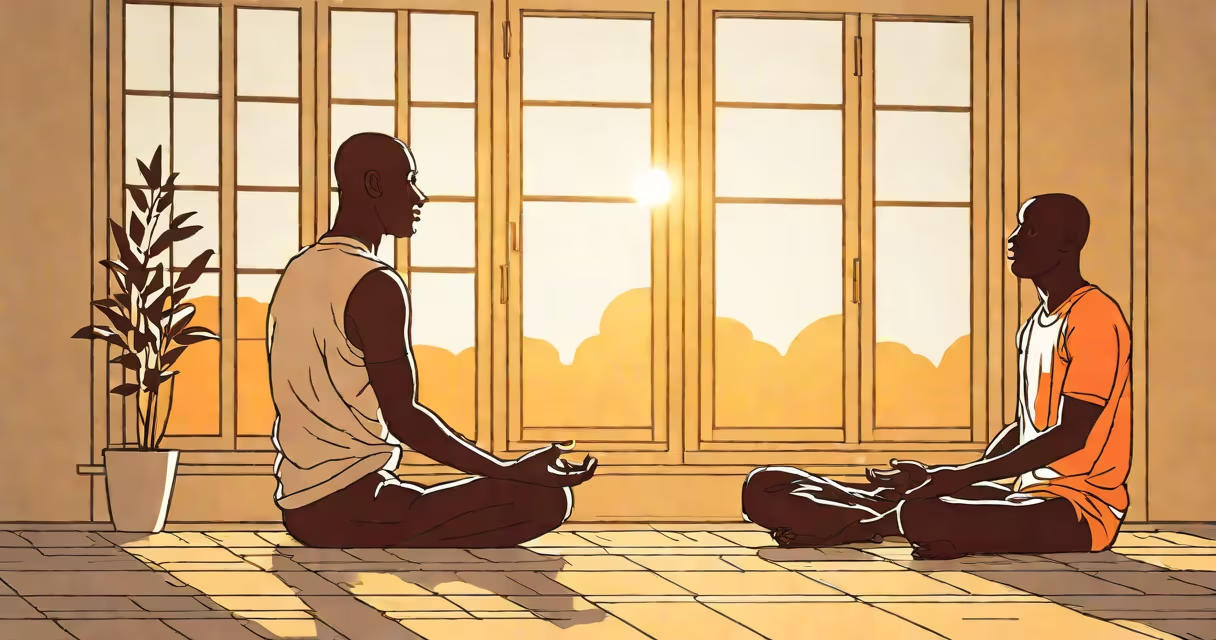
morning meditation and prayer is a daily practice that blends focused attention and silent reflection to cultivate mental clarity, emotional balance, and spiritual connection. It typically involves sitting quietly for 5 to 20 minutes upon waking, using breath awareness, mantras, or sacred texts to ground the mind and open the heart.
This routine isn't about achieving a blank mind or forcing stillness. Instead, it's about creating space between stimulus and response. Research from the National Institutes of Health shows that consistent morning meditation reduces cortisol levels by up to 20% within four weeks, improving mood regulation and attention span. The same study notes that combining meditation with prayer increases reported feelings of purpose by 37% compared to meditation alone.
Practitioners often begin with a few breaths, then move into a short prayer or affirmation. A common sequence includes: 1 minute of deep breathing, 3 minutes of silent contemplation, and 1-2 minutes of repeating a phrase like "I am present" or a verse from a spiritual tradition. This structure supports both neurological reset and emotional anchoring.
The brain's default mode network activates during unstructured thinking, often leading to rumination. Morning meditation and prayer interrupts this cycle by engaging the prefrontal cortex-the area responsible for decision-making and impulse control. When practiced consistently, this shifts baseline brain activity toward greater alpha wave dominance, associated with relaxed alertness.
A 2021 study published in *JAMA Internal Medicine* analyzed 47 trials involving over 2,000 participants. Those who meditated for 10 minutes daily showed significant reductions in anxiety symptoms after eight weeks. Adding prayer-whether vocalized or internal-further enhanced subjective well-being, especially among individuals reporting religious or spiritual identity.
For example, a 42-year-old teacher in Portland began her mornings with 7 minutes of guided meditation followed by five minutes of silent prayer based on the Serenity Prayer. After six weeks, she reported fewer panic episodes and improved sleep quality. Her therapist noted a measurable decrease in self-reported anxiety scores on standardized scales.
There's no single correct way to structure morning meditation and prayer. The form depends on personal belief, time availability, and physical comfort. Common approaches include:
| Type | Duration | Focus | Best For |
|---|---|---|---|
| Guided Meditation + Affirmations | 5-10 min | Breathwork, gratitude, intention-setting | Beginners, people managing anxiety |
| Mantra-Based Meditation + Silent Prayer | 10-15 min | Repetition of sacred sounds (e.g., Om, Hare Krishna) | Those seeking deeper focus or ritual grounding |
| Scripture Reading + Mindful Reflection | 15-20 min | Reading passages from religious texts, then pausing to reflect | Individuals with established faith traditions |
Some people alternate between forms weekly. Others stick to one method for months. The key is consistency, not complexity. Even five minutes daily produces measurable benefits over time.
People use morning meditation and prayer to manage stress, improve concentration, and strengthen emotional resilience. It's widely adopted in workplaces, schools, and healthcare settings. For instance, Kaiser Permanente offers a structured morning meditation program for staff, reporting a 28% drop in burnout rates among participants over one year.
It's also used in recovery programs. Alcoholics Anonymous recommends a daily 10-minute meditation session combined with prayer as part of its 12-step structure. A 2019 analysis in *Addiction Science & Clinical Practice* found that members who maintained this routine had a 40% higher long-term abstinence rate than those who didn't.
One common mistake is treating it as a performance. Some expect immediate results-peace, insight, or visions. But the practice isn't about outcomes. It's about presence. As Thich Nhat Hanh wrote in *The Miracle of Mindfulness*, "The miracle is not that we can do miracles, but that we can sit still and breathe."
Many assume morning meditation and prayer requires silence, solitude, or a specific religion. That's incorrect. You don't need a cushion, a temple, or even a formal belief system. A person can pray silently while brushing their teeth or meditate during a commute using audio cues.
Another misconception is that it must involve chanting or scripture. While these are valid paths, they're not required. A simple pause to notice your breath counts. So does saying "Today, I choose peace" aloud in the shower.
Morning meditation and prayer is not a substitute for therapy or medical treatment. It complements clinical care but doesn't replace it. The American Psychological Association states that mindfulness practices are effective adjuncts for depression and PTSD-but not standalone cures.
I once led a group workshop for office workers in Seattle. Over three weeks, participants tracked their mood and focus using a journal. One woman, a nurse working night shifts, started with just 3 minutes of breath-focused meditation before bed. She later told me she'd never felt more centered during emotionally taxing shifts. Her improvement wasn't due to perfection-it was because she showed up, even briefly.
Consider David, a software developer in Austin. He struggled with racing thoughts and insomnia. His routine, developed over two weeks, looked like this:
David did this every day for 21 days. By week four, he reported falling asleep faster and waking with less mental clutter. His manager noticed increased focus during team meetings. He didn't change his job or diet-he changed his morning.
Research confirms that small, consistent actions produce lasting change. A 2023 meta-analysis in *Mindfulness* found that participants who practiced morning meditation and prayer for just 7 minutes daily saw improvements in attention and emotional regulation comparable to those doing 20-minute sessions.
Understanding morning meditation and prayer as a daily anchor-not a ritual-is key. It's not about achieving enlightenment. It's about showing up, again and again, with curiosity and kindness. This is how routines become habits, and habits become life.