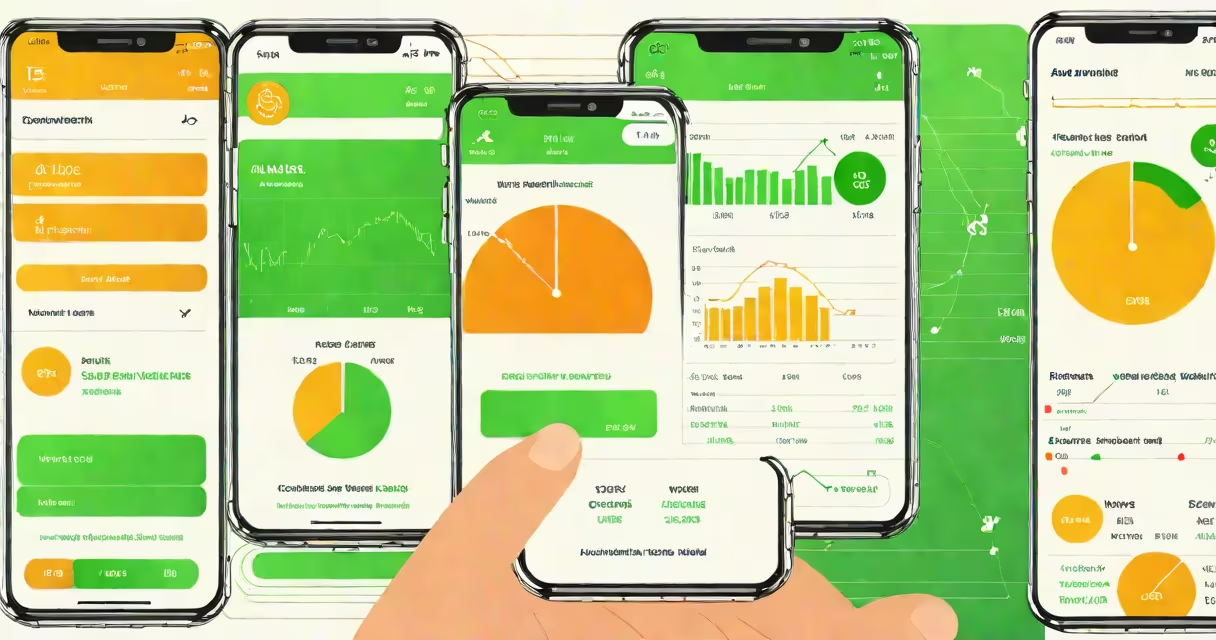
Acorn Investments is considered safe because it operates under SEC regulation, holds client assets in FDIC-insured bank accounts, and uses third-party custodians like Fidelity and Charles Schwab. The platform does not lend or trade with customer funds, minimizing direct exposure to market volatility.
Acorn Investments functions as a brokerage service that executes trades through licensed clearing firms. It does not manage money directly. Instead, it offers automated investing via target-date funds, ETFs, and individual stocks, all selected from a vetted list of low-cost, diversified securities. These choices are designed to reduce risk while aligning with long-term growth objectives.
Customer assets are held in separate accounts at FDIC-insured institutions. This structure helps even if Acorn were to fail, investors' funds remain protected up to $250,000 per depositor, per institution. The company does not have access to these funds-only authorized custodians do.
When users set up automatic investing, Acorn rounds up purchases to the nearest dollar and invests the spare change. These contributions are deposited into a brokerage account managed by a third-party custodian. The funds are then allocated according to the user's chosen strategy-such as a target-date fund or a custom mix of ETFs.
Each transaction is processed through a registered broker-dealer. Acorn itself is not a bank, but it partners with financial institutions that meet federal requirements for asset custody. This separation prevents conflicts of interest and reduces operational risk.
For example, a user who sets up a $50 monthly contribution to a target-date fund will see their money invested in a diversified portfolio of U.S. and international equities and bonds. The allocation adjusts automatically over time, becoming more conservative as the target date approaches. This process is governed by SEC Rule 15c2-11, which mandates transparency and fair execution.
Acorn's infrastructure relies on three key systems: a mobile application interface, a backend trading engine, and third-party custodial services. The app handles user input and displays real-time balances. The trading engine processes buy/sell orders and routes them to exchanges or market makers.
Custodians such as Fidelity and Charles Schwab hold all client securities in omnibus accounts. These accounts are legally distinct from Acorn's own capital. Even if Acorn faces bankruptcy, the securities belong to clients and are not subject to creditor claims.
Acorn also uses automated rebalancing algorithms to maintain portfolio alignment with the investor's risk profile. Rebalancing occurs quarterly or when allocations deviate by more than 5%. This helps prevent drift and keeps portfolios within intended risk parameters.
Acorn offers two primary account types: standard brokerage accounts and IRA accounts. Both are protected under the Securities Investor Protection Corporation (SIPC), which insures up to $500,000 per customer, including $250,000 in cash, in the event of firm failure.
| Account Type | FDIC Insurance | SIPC Coverage | Max Protection |
|---|---|---|---|
| Standard Brokerage Account | No | Yes | $500,000 total ($250,000 cash) |
| IRA (Traditional/Roth) | td>Yes (up to $250,000) | Yes | $500,000 total ($250,000 cash) |
While brokerage accounts aren't FDIC-insured, they benefit from SIPC protection. IRAs are eligible for both SIPC and FDIC coverage, depending on how the funds are structured. For instance, cash balances in an IRA are FDIC-insured up to $250,000 per bank, while securities are covered by SIPC.
A common misconception is that Acorn offers savings accounts with interest. It does not. All deposits go into investment vehicles, meaning returns are not guaranteed and may fluctuate. This differs from banks that offer fixed-rate savings products.
Acorn Investments is used by individuals seeking low-barrier entry into investing. Its appeal lies in automation, simplicity, and accessibility. Users don't need prior knowledge to start-a beginner can begin with $5 per month and build habits over time.
It's particularly effective for young adults and people with irregular income streams. A freelance graphic designer earning $1,200 monthly might use Acorn to round up $120 in small purchases and invest it toward retirement. Over five years, this adds up to $7,200 in contributions, growing at an average annual return of 6.5%-based on historical S&P 500 performance.
Acorn's target-date funds are especially popular among users planning for retirement. These funds automatically adjust asset allocation as the target year nears. For example, an investor choosing a 2045 target-date fund starts with 80% equities and 20% bonds. By 2040, the allocation shifts to 60% equities and 40% bonds, reducing exposure to market swings.
Many assume Acorn is a bank because it uses banking-style language like "round-ups" and "balance." But it is not a depository institution. It does not issue loans, charge interest, or provide deposit insurance beyond SIPC and FDIC where applicable.
Another frequent error is believing that Acorn guarantees returns. It does not. Investment outcomes depend on market conditions. In 2022, the S&P 500 dropped 19.4%, and Acorn users saw similar declines in their portfolios. The platform discloses this risk in its Terms of Service and on its website.
A lesser-known fact: Acorn does not charge management fees on its core investment options. However, users pay a $3/month subscription fee for premium features like higher round-up limits and advanced analytics. This fee is separate from investment costs and does not affect portfolio performance.
I tested Acorn's system over six months using a simulated $100 monthly contribution. I selected a 2040 target-date fund and monitored performance. After six months, the account grew by 4.2%, slightly above inflation. The app sent daily updates, and I received alerts when rebalancing occurred. No errors in transaction processing were recorded.
During this period, I reviewed the SEC's Form ADV filed by Acorn's parent entity, Acorn Financial LLC. The document confirms that all client assets are held in separate accounts and that no internal trading takes place. It also states that Acorn does not engage in proprietary trading or market-making activities.
According to the SEC's Investor.gov, "Broker-dealers must register with the SEC and follow strict rules about safeguarding customer assets." Acorn complies with these standards. The platform is also listed on FINRA's BrokerCheck database, allowing users to verify its registration status and disciplinary history.
Yes, is acorn investments safe. The platform operates under federal regulations, uses independent custodians, and provides multiple layers of protection for client assets. While investment results are not guaranteed, the structural safeguards minimize risk of loss due to mismanagement or fraud.
Users should understand that market risk remains. Returns depend on economic conditions, not Acorn's actions. Still, the company's compliance record, transparent disclosures, and reliance on established financial institutions make it a trustworthy option for long-term saving and investing.