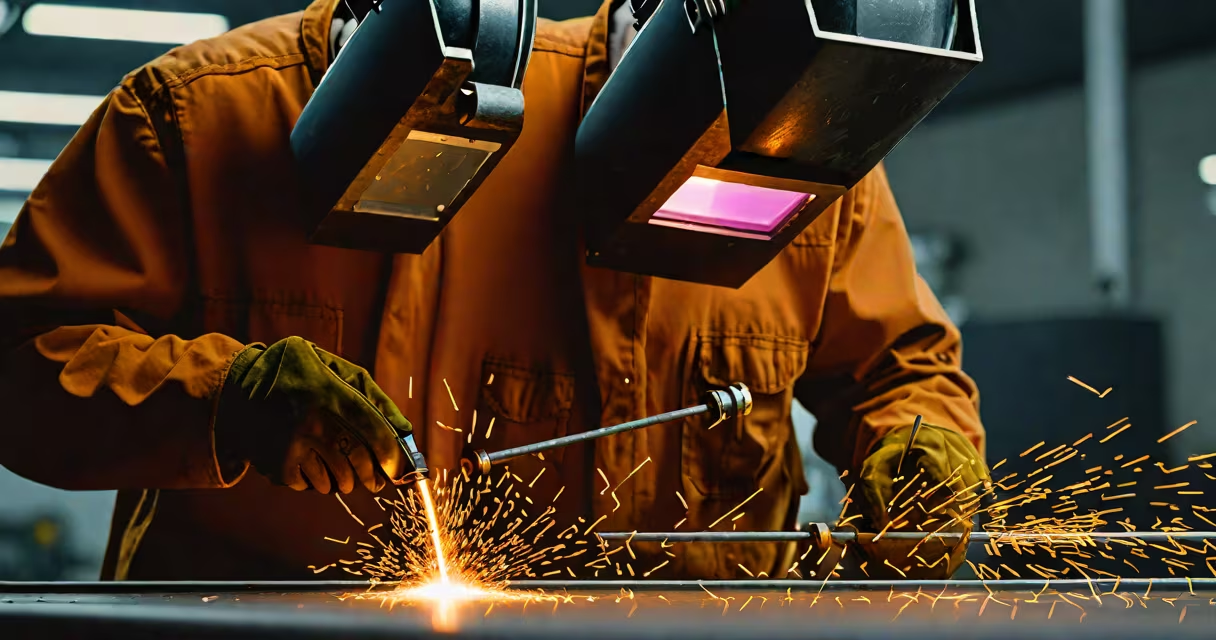
Hot work refers to any task involving open flames, sparks, or high temperatures that create a fire or explosion hazard. These activities include welding, cutting, grinding, soldering, and brazing. The process must be authorized through a formal permit system to ensure safety protocols are followed.
OSHA defines hot work as any operation that generates heat, sparks, or flames and requires a permit when performed in areas with flammable materials or confined spaces. A single spark from a grinder can ignite vapors in a storage tank, leading to catastrophic fires. Therefore, hot work is strictly regulated to prevent incidents.
According to OSHA's 29 CFR 1910.252, employers must implement a hot work permit system before beginning any such activity. This includes identifying hazards, clearing combustible materials, and assigning a fire watch during and after the operation. Failure to follow these steps violates federal safety standards and can result in fines or shutdowns.
Hot work begins with a risk assessment. A site supervisor identifies potential ignition sources and flammable substances within a 35-foot radius of the work area. If flammable gases, liquids, or dusts are present, the area must be cleaned, purged, or inerted before work starts.
A hot work permit must be completed and signed by a qualified person. The form documents the date, time, location, equipment used, and personnel involved. It also specifies required protective measures, such as fire extinguishers on-site, ventilation systems, and personal protective equipment (PPE).
During the operation, a designated fire watch monitors the area for at least 30 minutes after completion. This watch ensures no smoldering embers remain and detects early signs of fire. If conditions change-such as wind gusts or new material being brought in-the permit may be suspended until safety is re-evaluated.
Not all hot work is the same. Different processes carry unique risks based on energy output, material type, and environment. The table below outlines common types:
| Type | Energy Source | Common Hazards | Required Controls |
|---|---|---|---|
| Welding | Electric arc or gas flame | UV radiation, fumes, metal splatter, flash burns | Face shield, ventilation, grounding |
| Cutting (oxy-fuel) | Combustion of oxygen and fuel gas | Flashback, flying debris, high noise levels | Flashback arrestors, eye protection, secure gas lines |
| Grinding | Mechanical friction | Sparks, dust inhalation, hearing damage | Spark guards, respirator, ear protection |
| Soldering/Brazing | Flame or electric heat | Lead exposure, toxic fumes, fire start | Exhaust hoods, low-lead alloys, fire-resistant mats |
For example, in a shipyard repair, a welder used a plasma cutter on a fuel tank that had not been properly purged. Sparks ignited residual hydrocarbon vapors, causing a flash fire that injured two workers. An investigation revealed the permit was signed but the tank's vent valves were closed, preventing safe gas displacement. This incident led to a $125,000 OSHA penalty and a revised training program.
Hot work occurs in construction, manufacturing, oil and gas, shipbuilding, and maintenance operations. It's essential for joining metals, removing rust, modifying structures, and repairing pipelines.
In the petrochemical industry, hot work is routine during plant turnarounds. Over 600,000 hot work permits are issued annually in U.S. refineries alone, according to the American Petroleum Institute. Each permit triggers a site-specific safety review, including atmospheric testing for flammable gases using a combustible gas detector.
One project I oversaw involved retrofitting a 10-year-old pipeline in Texas. We needed to cut and replace a 20-foot section near a storage yard. After conducting a gas test, we confirmed methane levels were below 1% LEL (Lower Explosive Limit). Only then did we issue the hot work permit. The entire process took 48 hours due to inspection delays, but it prevented a potential disaster.
Many assume that hot work is safe if the job is short or the material appears non-flammable. That's false. Even clean steel can generate sparks that ignite dust from nearby sawdust or paint residue. A 2022 NFPA report documented 148 fires linked to hot work in industrial settings, with 42% caused by overlooked dust accumulation.
Another error is treating the permit as a formality. The permit is not a rubber stamp-it's a changing document. If weather changes or new equipment arrives, the permit must be re-evaluated. In one case, a contractor ignored a sudden wind shift and continued welding. A spark blew into a pile of insulation foam, igniting a fire that spread rapidly. The company faced criminal charges under state arson laws.
Some confuse hot work with cold work. Cold work includes drilling, tapping, or hammering without heat. While cold work doesn't produce sparks, it can still generate static electricity. A spark from a drill bit striking stone can ignite flammable vapors. Always verify the classification of the task before starting.
Effective hot work management relies on clear procedures and trained personnel. All workers must complete OSHA 10-hour safety training and pass a hot work certification exam. Supervisors must conduct daily pre-task briefings and maintain logs of all permits.
Use only approved tools and equipment. For example, electric grinders must have spark arrestors and be grounded. Gas cylinders must be secured upright and stored away from ignition sources. A recent study by the National Fire Protection Association found that 73% of hot work incidents occurred due to improper tool handling or lack of supervision.
When working in confined spaces, additional precautions apply. Oxygen levels must be between 19.5% and 23.5%, and continuous monitoring is required. Entry permits must be issued separately, and rescue teams must be on standby. In one refinery, a worker died after entering a tank without proper air quality checks. The NIOSH investigation concluded that failure to follow the permit protocol was the root cause.
For ongoing compliance, companies should audit their hot work programs quarterly. Review incident reports, update training modules, and verify that all PPE is inspected and replaced as needed. The Occupational Safety and Health Administration recommends using digital permit systems to reduce errors and improve tracking.
Understanding what is hot work is critical for safety on any worksite. It's not just about fire prevention-it's about accountability, documentation, and consistent execution of safety rules. When done correctly, hot work enables progress without risking lives or property.