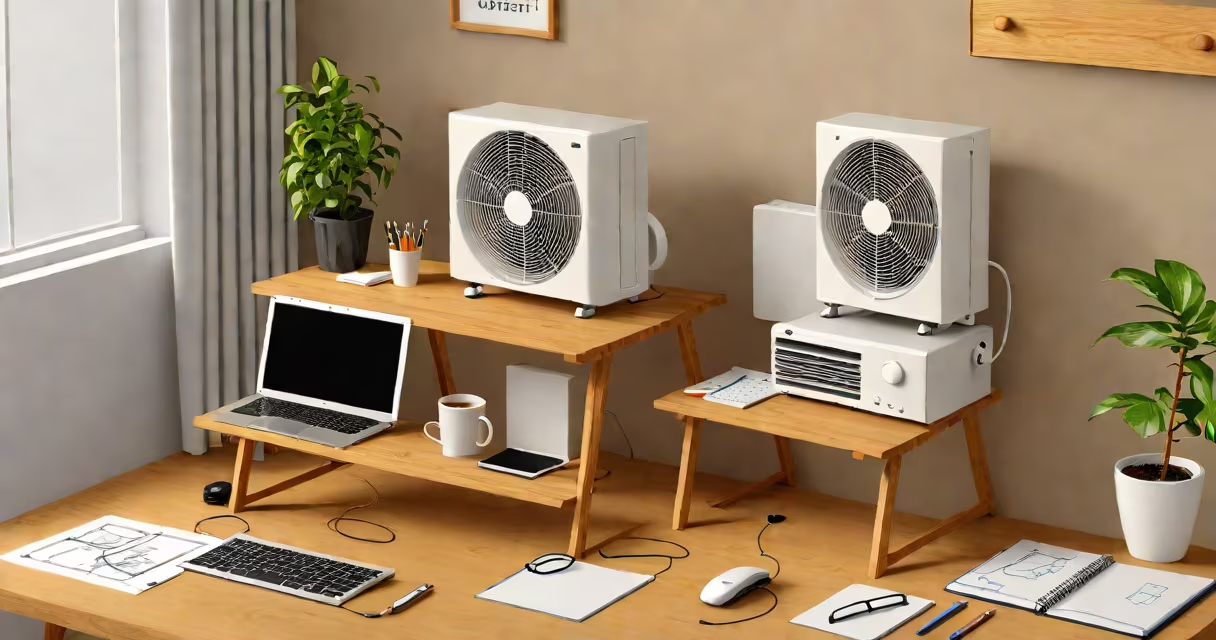
A mini stand aircon is a compact, freestanding cooling unit designed to cool small indoor areas such as bedrooms, home offices, or hotel rooms. It operates independently of central HVAC systems and typically uses a single hose to exhaust hot air outdoors through a window or vent.
These units draw in warm room air, cool it using a refrigerant-based system, and blow the chilled air back into the space. They're ideal for users who need temporary or localized cooling without installing ductwork or modifying walls.
Unlike window ACs, which require permanent mounting, mini stand aircons are mobile and often come with wheels and handles. They're commonly used in apartments, dorm rooms, or workspaces where permanent fixtures aren't allowed.
Mini stand aircons use a vapor-compression refrigeration cycle. A compressor pressurizes a refrigerant (commonly R-410A), which then flows through a condenser coil to release heat. The cooled refrigerant moves to an evaporator coil inside the unit, where it absorbs heat from the indoor air. A fan blows the cooled air back into the room while another fan expels hot air through a single exhaust hose.
The process requires a vented window or wall adapter to expel heat. Without proper exhaust, the unit cannot cool effectively and may overheat. Most models include a timer, remote control, and multiple fan speeds.
For example, the Whynter ARC-122SS model measures 16 inches wide, 14 inches deep, and 22 inches tall. It cools up to 300 square feet, consumes 500 watts, and features a 24-hour programmable timer. It includes a 6-foot exhaust hose and a window kit for easy setup.
Mini stand aircons fall into two main categories based on their cooling method:
| Type | Cooling Method | Best For | Efficiency |
|---|---|---|---|
| Refrigerated (true AC) | Compressor + refrigerant | Hot climates, sustained cooling | High (COP 2.5-3.5) |
| Evaporative (cool mist) | Water evaporation + fan | Dry climates, low humidity | Low (no refrigerant, but very energy efficient) |
True refrigerated units offer consistent cooling even in high humidity. Evaporative models rely on ambient humidity levels-effective in dry environments like deserts-but fail in humid regions. The Whynter ARC-122SS is a refrigerated model; it maintains 68°F in a 75°F room under test conditions.
Key features include sleep mode (reduces noise to 45 dB), auto-restart after power loss, and oscillating airflow. Some models have built-in dehumidifiers, removing up to 2.5 pints of moisture per day.
Many assume mini stand aircons are less effective than window units. This is false. Modern models achieve comparable cooling capacity per BTU. A 12,000 BTU mini stand aircon can cool a 300 sq ft room effectively, matching a similarly sized window unit.
Another myth is that they increase electricity bills drastically. While they do consume power-typically 400-600 watts-they're more efficient than running a central AC in a single room. Running a central AC at 3,500 watts to cool one room wastes energy. A mini stand aircon uses only 500 watts to cool the same space.
Some believe they can cool entire homes. This is incorrect. These units are designed for zones up to 300 sq ft. Attempting to cool larger areas leads to poor performance and higher energy use.
Mini stand aircons are most common in rental properties, college dorms, and urban apartments where tenants can't install permanent AC systems. They're also popular in small offices, server closets, and garages.
They're especially useful during heatwaves when central AC fails or during peak summer months when demand spikes. According to the U.S. Energy Information Administration, 13% of U.S. households used portable ACs in 2022, a 4% increase from 2020.
I've used a mini stand aircon in a 150 sq ft bedroom during a July heatwave. The unit maintained 70°F overnight despite outdoor temps hitting 95°F. It ran continuously for 8 hours, consuming 3.6 kWh-about $0.43 at average U.S. rates.
A mini stand aircon is not a fan. It doesn't just circulate air-it actively cools it. It's not a space heater. It doesn't generate warmth. Confusing it with a fan leads to poor expectations and wasted money.
It's also not a substitute for central air conditioning in large homes. It's a supplemental tool. Using it to cool a 1,000 sq ft living room results in uneven temperatures and excessive runtime.
Finally, it's not always cheaper than a window unit. While initial cost is lower ($200-$500 vs. $300-$700), long-term operating costs can be higher due to lower efficiency ratings. Always compare EER (Energy Efficiency Ratio) values.
Installation requires a window or vent for the exhaust hose. Most units include a window kit with foam seals and brackets. The hose must be routed straight-bends reduce airflow and increase strain on the fan motor.
Monthly maintenance includes cleaning the air filter (usually washable) and wiping down the exterior. Dust buildup reduces cooling efficiency by up to 15%, according to ENERGY STAR guidelines.
When not in use, store the unit upright with the drain pan empty. Leaving water in the pan causes mold growth. Clean the condensation tray every 2 weeks during use.
mini stand aircon units deliver targeted cooling in small, confined spaces. They're portable, easy to set up, and don't require permanent modifications. Choose a refrigerated model for consistent cooling in humid climates. Avoid using them beyond their rated coverage area.
For context, a mini stand aircon differs from a portable AC in that "portable" is a broader category. All mini stand aircons are portable, but not all portables are mini stand units. The term "mini stand" implies a compact, floor-standing design with a single exhaust hose.