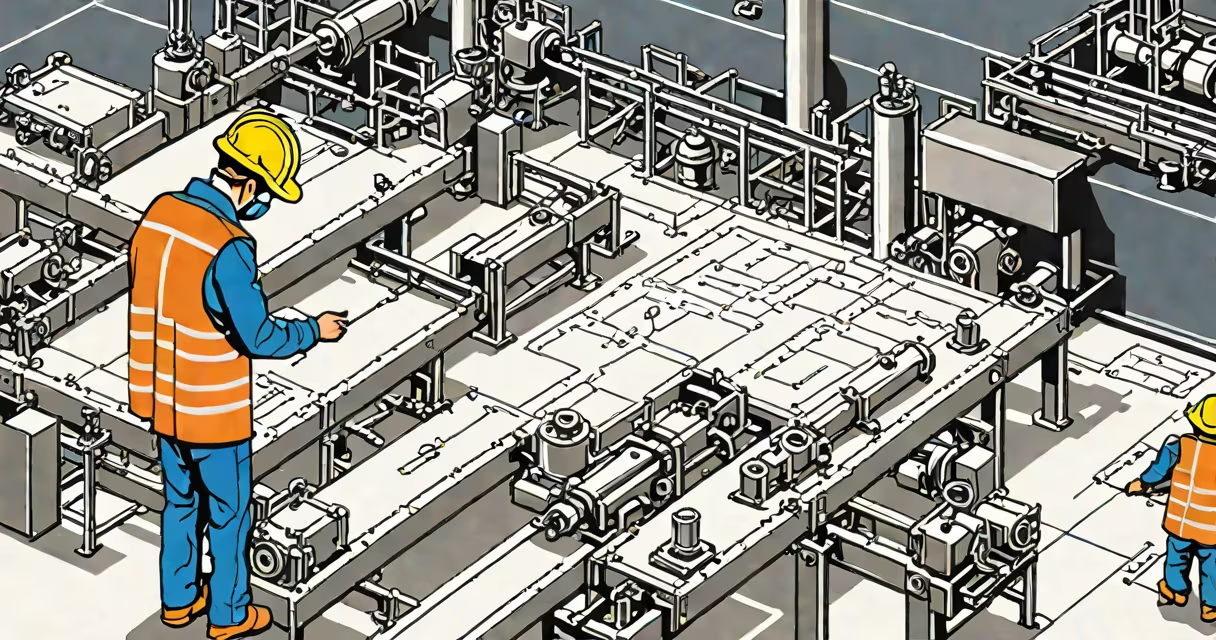
An industrial maintenance technician diagnoses, repairs, and maintains heavy machinery and automated systems in manufacturing plants, processing facilities, and production environments. They prevent downtime by performing routine checks, replacing worn parts, and troubleshooting electrical, hydraulic, and mechanical failures.
These professionals ensure that complex systems operate safely and efficiently. Their work supports continuous production lines, reduces costly breakdowns, and extends equipment lifespan. A typical day involves reading schematics, using precision tools, and coordinating with operators and supervisors to schedule maintenance during planned shutdowns.
According to the U.S. Bureau of Labor Statistics (BLS), employment for industrial maintenance technicians is projected to grow 6% from 2022 to 2032-faster than average for all occupations-driven by aging infrastructure and increasing automation in factories. The median annual wage was $58,770 in May 2023, with higher pay in energy, chemical, and automotive sectors.
Technicians follow a structured workflow: identify a malfunction, isolate the root cause, perform repairs, test functionality, and document findings. This process often begins with operator reports of unusual noises, vibrations, or performance drops.
For example, if a CNC machine stops mid-cycle due to a motor failure, the technician checks the control panel for error codes, verifies power supply integrity, tests motor windings with a multimeter, and replaces faulty components. After reassembly, they run a diagnostic cycle to confirm proper operation before returning the machine to service.
Many facilities use computerized maintenance management systems (CMMS) to log issues, assign tasks, track part usage, and schedule future maintenance. Technicians enter data on repairs, including time spent, parts replaced, and notes on recurring problems. This creates a historical record that informs predictive maintenance strategies.
Successful industrial maintenance technicians combine hands-on mechanical ability with electronic and software literacy. They must understand how motors, gears, belts, sensors, PLCs (programmable logic controllers), and pneumatic systems interact.
Key competencies include:
Many employers require certification from organizations such as the International Maintenance Institute (IMI) or the National Institute for Metalworking Skills (NIMS). These credentials validate proficiency in areas like precision machining, hydraulics, and welding.
While all industrial maintenance technicians support production operations, specific roles vary by industry and system complexity.
| Type | Focus Area | Typical Work Environment | Specialized Tools/Systems |
|---|---|---|---|
| Mechanical Technician | Rotating equipment, bearings, couplings, pumps | Oil refineries, water treatment plants | Alignment lasers, ultrasonic thickness gauges |
| Electrical Technician | Motor controls, relays, circuit breakers, wiring | Automotive assembly lines, food processing | Insulation testers, oscilloscopes, thermal imaging cameras |
| Instrumentation & Control Technician | Sensors, transmitters, PID controllers, SCADA systems | Pharmaceutical plants, chemical processing | Calibration tools, loop check software |
| Preventive Maintenance Specialist | Scheduled inspections, lubrication, condition monitoring | Steel mills, paper mills | Vibration analysis software, oil sampling kits |
A common misconception is that all maintenance roles involve fixing broken machines. In reality, over 60% of a technician's time is spent on preventive tasks. For instance, at a bottling plant, a technician might spend 4 hours cleaning and greasing conveyor rollers, checking belt tension, and testing emergency stop circuits-activities that prevent 9 out of 10 potential jams.
Industrial maintenance technicians are essential in any facility where production depends on machinery. They work in steel mills, semiconductor fabs, food packaging lines, and wastewater treatment centers. Their presence ensures consistent output, regulatory compliance, and worker safety.
Without them, unplanned downtime costs manufacturers an average of $260,000 per hour, according to a 2022 study by Deloitte. A single failed bearing in a high-speed turbine can lead to cascading damage, requiring weeks of replacement and recalibration. Technicians reduce this risk through early detection and timely intervention.
One plant manager reported that after implementing a technician-led vibration monitoring program, unplanned outages dropped by 41% over 18 months. The team caught early signs of imbalance in a centrifugal pump before it seized-saving $180,000 in repair and lost production costs.
People often mistake industrial maintenance technicians for general laborers or electricians. While both may handle tools and wiring, industrial technicians specialize in integrated systems within regulated, high-risk environments.
Unlike a nursing technician who assists healthcare providers with patient care and medical equipment, or a pharmacy technician who prepares prescriptions under pharmacist supervision, an industrial maintenance technician operates independently in hazardous zones. They must pass rigorous safety training, including confined space entry, fall protection, and arc flash awareness.
Another key difference lies in the scope of responsibility. A maintenance technician doesn't just replace a broken part-they analyze why it failed. Was it misalignment? Overheating? Material fatigue? They document findings and recommend design or procedural changes to prevent recurrence.
I once observed a technician at a plastics extrusion plant diagnose a recurring gear failure. After reviewing maintenance logs and measuring backlash, he discovered improper shaft alignment caused uneven wear. He adjusted the mounting base using shims and recalibrated the drive motor. The same issue hadn't recurred in 14 months-a result not achievable through reactive fixes alone.
An industrial maintenance technician is a skilled tradesperson responsible for keeping industrial machinery operational through inspection, repair, and proactive maintenance. They work across diverse sectors, applying mechanical, electrical, and control systems expertise to minimize downtime and maximize efficiency. Their role is distinct from other technician fields, requiring specialized training and a focus on system reliability. Understanding this role helps clarify why it's critical to modern manufacturing and infrastructure.