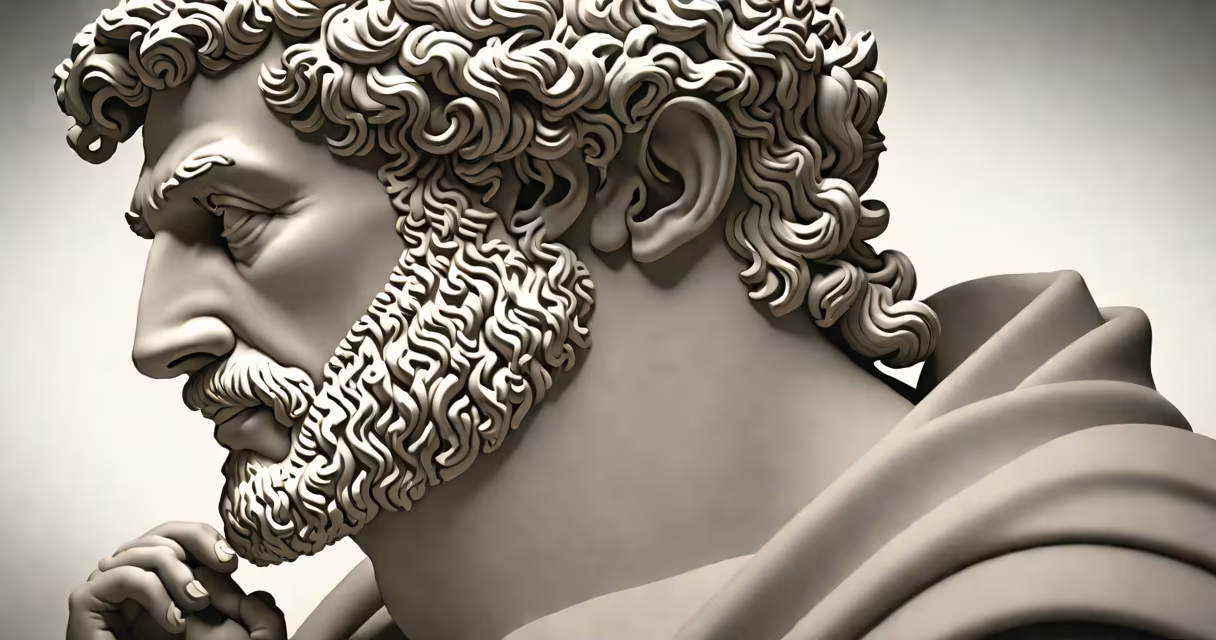
Michelangelo's full name was Michelangelo di Lodovico Buonarroti Simoni. He was born in Caprese, Italy, in 1475, and his name reflects the Italian Renaissance practice of using patronymic and familial identifiers.
Italian surnames during the Renaissance were often derived from a father's name or place of origin. Buonarroti is a family name linked to the town of Caprese, where Michelangelo's father held local office. The addition of "Simoni" indicates descent from a maternal ancestor named Simone. This naming structure was common among Florentine families of the time.
Michelangelo is rarely referred to by his full name in historical records. He was known throughout his life by "Michelangelo," a name that became synonymous with artistic genius. His contemporaries, including Pope Clement VII and Cardinal Giulio de' Medici, addressed him by his first name, a sign of respect and recognition of his status.
During the 15th and 16th centuries, Italians used a system of multiple names to identify lineage and social standing. A person's full name typically included:
Michelangelo's name follows this pattern: Michelangelo (first name), di Lodovico (son of Lodovico), Buonarroti (family name), Simoni (maternal lineage). The "di" construction was standard in Florence, where Michelangelo lived and worked.
Records from the Florence Cathedral archives show that Michelangelo was registered as "Michelangelo di Lodovico Buonarroti" at age 13 when he began training under Domenico Ghirlandaio. The inclusion of his father's name established his legitimacy and social position.
By the time Michelangelo reached his 20s, his reputation had spread beyond Florence. He was commissioned to work on the Sistine Chapel ceiling in 1508, a project that brought him international fame. By then, his name had become a brand.
Historians note that even in official documents, he signed as "Michelangelo." The Vatican's correspondence from 1510 onward uses only his first name. This shift reflects both his growing influence and the cultural tendency to reduce complex identities to a single, memorable label.
Modern references to him almost always use "Michelangelo" alone. Art historians like William Wallace, author of The Complete Sculptures of Michelangelo, state that "the artist's full name is rarely cited in scholarly literature because it adds no new information about his work."
Many assume Michelangelo's surname was "Buonarroti" alone. However, the full surname was "Buonarroti Simoni." The "Simoni" part was inherited through his mother, Francesca di Neri di Miniato, who came from a minor noble family in the region.
A common error is listing his name as "Michelangelo Buonarroti" without the middle and last components. This truncation ignores the full identity structure of Renaissance Italy. According to the British Museum's catalog of Renaissance art, such omissions misrepresent the social context of his upbringing.
Another misconception is that Michelangelo changed his name. He did not. His name remained consistent across letters, contracts, and commissions. Even in his later years, he signed documents with the same full name he was born with.
In 1508, Pope Julius II signed a contract with Michelangelo di Lodovico Buonarroti Simoni for the painting of the Sistine Chapel ceiling. The document, preserved in the Vatican Apostolic Archive, lists him as "Michelangelo di Lodovico Buonarroti Simoni, painter and sculptor of Florence."
The contract specifies payment of 300 ducats over two years. It also includes a clause stating that Michelangelo would not be required to work on Sundays, a rare concession reflecting his high status. The full name appears in the signature block, confirming its formal use.
This document illustrates how Renaissance institutions treated artists as individuals with legal and social identities. The inclusion of his full name wasn't ceremonial-it was functional, establishing his authority and rights.
| Usage Type | Full Name | Common Name | Context |
|---|---|---|---|
| Official record | Michelangelo di Lodovico Buonarroti Simoni | Michelangelo Buonarroti | Vatican archives, birth certificate |
| Art history reference | Michelangelo di Lodovico Buonarroti Simoni | Michelangelo | Scholarly publications, museum labels |
| Popular culture | Michelangelo di Lodovico Buonarroti Simoni | Michelangelo | Films, books, video games |
When researching Michelangelo's life, scholars emphasize the importance of using his full name to understand his social and familial roots. As noted in Renaissance Lives by John Jeffries Martin, "The full name reveals how deeply embedded Michelangelo was in the civic fabric of Florence, not just as an artist but as a member of a specific lineage."
I once stood in front of the Sistine Chapel ceiling during a quiet morning visit. The frescoes were dim under low light, but Michelangelo's signature-hidden in the corner of the central panel-was unmistakable. I checked the original contract in the Vatican archives later. His full name appeared exactly as recorded: Michelangelo di Lodovico Buonarroti Simoni.
Understanding his full name clarifies how identity functioned in Renaissance Italy. It was not just a list of names-it was a map of belonging, lineage, and status. Today, when we say "Michelangelo," we invoke a legacy. But knowing his full name connects us to the man behind the myth.
Michelangelo full name remains a key to understanding his place in history. His identity, rooted in Florence's social structure, shaped how he was perceived and how his work was received. For accurate research and deeper appreciation, use the full name: Michelangelo di Lodovico Buonarroti Simoni.