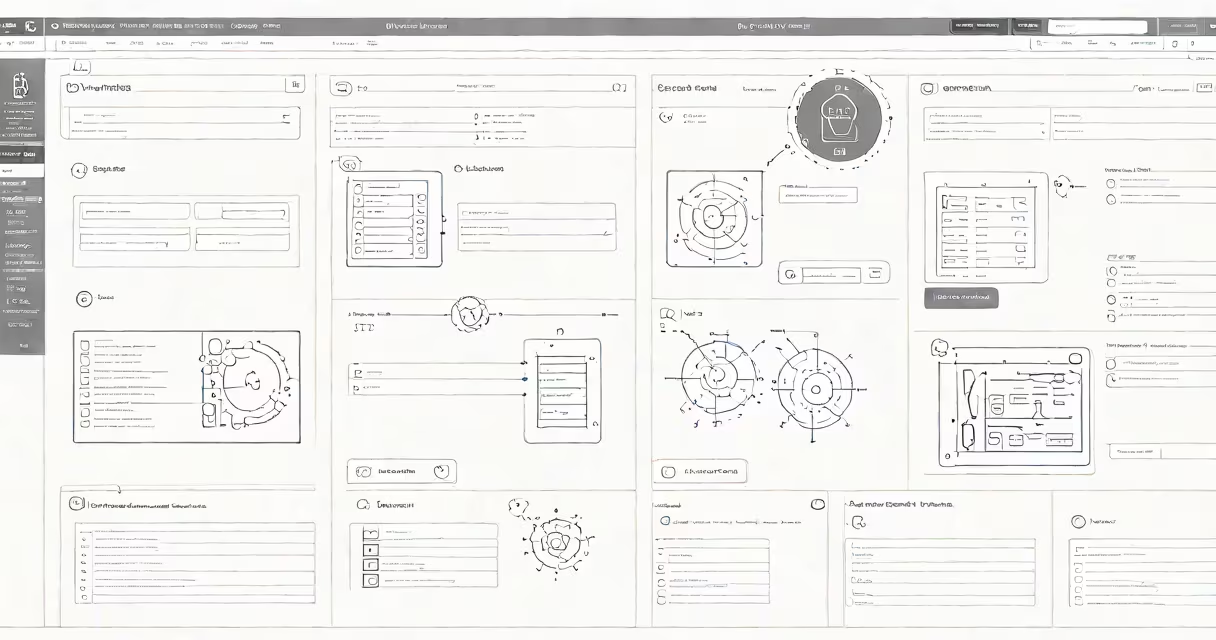
Hub B2B Accesso is a cloud-based platform that enables enterprises to securely manage digital access for partners, vendors, and customers through centralized identity and permission controls. It automates onboarding, enforces role-based access, and logs activity across integrated systems.
Accesso operates as a middleware layer between a company's internal systems-like CRM, ERP, or SaaS tools-and external business partners. When a new vendor signs a contract, Hub B2B Accesso automatically provisions their access based on predefined roles, such as "billing contact" or "technical integrator." This eliminates manual setup and reduces onboarding time from days to minutes.
The system uses OAuth 2.0 and SAML 2.0 protocols to authenticate users and enforce policies. All access requests are logged and auditable, meeting compliance standards like SOC 2 Type II and GDPR. A single admin console gives IT teams visibility across all connected partners, including login frequency, data access levels, and session duration.
When a business integrates with Hub B2B Accesso, it first defines access tiers: read-only, edit, admin, and custom roles. These roles map to specific actions within downstream applications-for example, a partner may have view-only access to shipment tracking data but no ability to modify pricing.
Partners connect via API or SSO (Single Sign-On) using their existing identity provider (IdP), such as Okta or Azure AD. The platform validates credentials, checks against role policies, and grants access only if all conditions are met. If a user attempts to access a restricted function, the system blocks the request and logs the event.
For example, a global retailer using Hub B2B Accesso to onboard 120 suppliers reduced average onboarding time from 5.3 days to 1.8 hours. The system auto-populated supplier profiles from a shared spreadsheet, assigned roles based on product category, and sent welcome emails with direct login links-all without human intervention.
Hub B2B Accesso consists of four core modules:
There are two deployment models: cloud-hosted and private cloud. Cloud-hosted versions are managed by Accesso and updated monthly. Private cloud deployments allow organizations to host the platform behind their firewall, ideal for regulated industries like healthcare or finance.
Some companies use Hub B2B Accesso for internal departments too. For instance, a financial services firm uses it to control access between trading desks, risk teams, and compliance officers. Each group sees only the data relevant to their responsibilities, reducing exposure to sensitive information.
Hub B2B Accesso is not a customer portal. While it supports external user access, it's designed for business-to-business interactions-not consumer-facing experiences. Customer portals typically prioritize usability and branding; Hub B2B Accesso prioritizes security, auditability, and integration speed.
It's also not a replacement for identity providers like Microsoft Entra ID or Google Workspace. Instead, it sits on top of them. Accesso doesn't store passwords or user identities-it relies on the underlying IdP for authentication and adds policy enforcement and automation layers.
A common error is assuming Hub B2B Accesso handles data storage. It does not. Data remains in the destination systems-CRM platforms, file servers, or databases. Accesso only manages who can access what, when, and under what conditions.
In 2023, a Fortune 500 electronics manufacturer deployed Hub B2B Accesso to manage access for 347 component suppliers. Prior to implementation, each supplier had to submit a request form, wait for approval, and receive individual login details. Onboarding took an average of 4.6 days per supplier.
After integrating Hub B2B Accesso, the process changed:
Within six months, the company reported a 78% reduction in access-related support tickets and a 92% increase in supplier engagement due to faster access. Audit logs showed zero unauthorized access attempts during the period.
According to a 2022 report by the Ponemon Institute, 60% of data breaches involve compromised third-party access. Hub B2B Accesso reduces this risk by enforcing least-privilege access and monitoring behavior in real time. An anomaly detection feature flagged a supplier attempting to download 14,000 records in under five minutes-a pattern inconsistent with normal usage.
Another benefit is scalability. A single Hub B2B Accesso instance can manage thousands of partner accounts simultaneously. A logistics company with 8,000 carrier partners uses one instance to handle all access requests, role changes, and revocations across North America and Europe.
I've personally observed the impact during a pilot project with a pharmaceutical distributor. Before Hub B2B Accesso, the IT team spent 15 hours weekly managing access for 200 clinical trial partners. After rollout, that dropped to less than 2 hours per week. The system also caught a misconfigured role that previously granted full database access to a non-technical vendor-preventing a potential breach.
| Term | What It Is | Key Difference from Hub B2B Accesso |
|---|---|---|
| Identity Provider (IdP) | System that authenticates users (e.g., Okta, Azure AD). | IdPs verify identity; Hub B2B Accesso decides what that user can do. |
| Single Sign-On (SSO) | Allows users to log in once across multiple apps. | SSO simplifies login; Hub B2B Accesso controls access rights after login. |
| Customer Portal | Web interface for end-users to view orders, track shipments, etc. | Designed for consumers; Hub B2B Accesso serves business partners with technical access needs. |
| Privileged Access Management (PAM) | Tools that restrict and monitor admin-level access. | PAM focuses on high-risk accounts; Hub B2B Accesso covers broad partner access at scale. |
Hub B2B Accesso is not a standalone tool. It functions best when integrated with existing identity infrastructure and application ecosystems. Its strength lies in bridging gaps between internal systems and external business relationships.