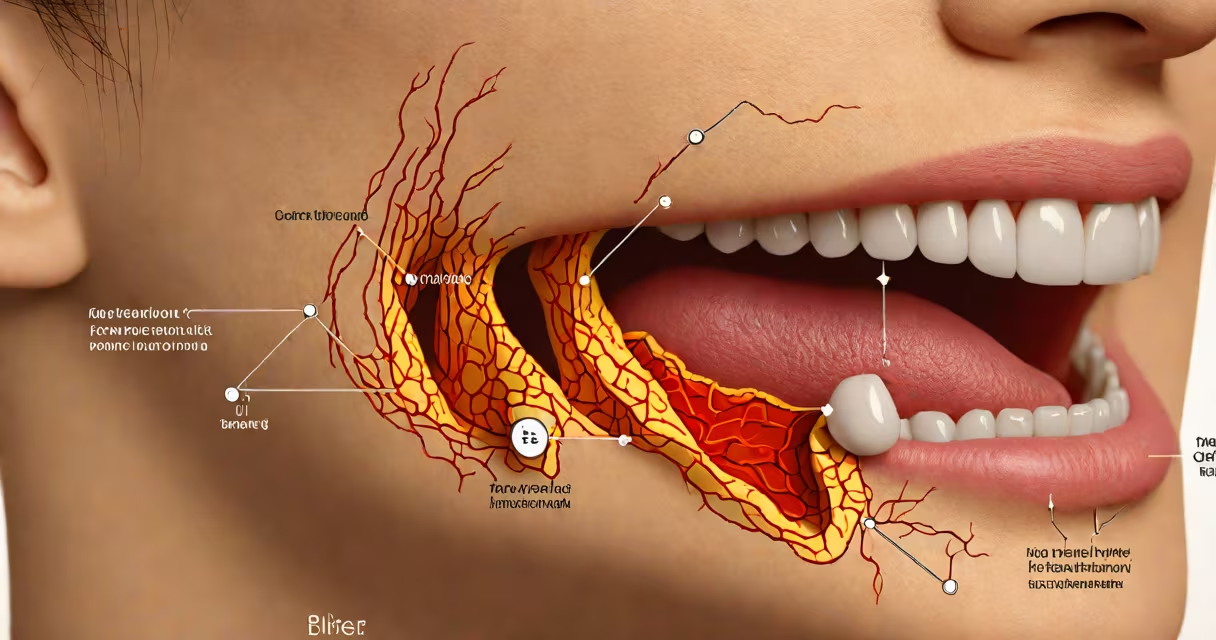
Blisters inside the mouth form when the mucous membrane lining the cheeks, tongue, or gums becomes damaged, triggering fluid buildup under the surface. They often appear as small, painful, clear or white sacs that may rupture and leave a sore. These are typically caused by physical injury, viral infections, autoimmune reactions, or nutritional deficiencies.
Most oral blisters result from minor trauma-biting the cheek, brushing too hard, or eating sharp foods like chips or crusty bread. The body responds by filling the damaged area with fluid to protect underlying tissue. This process is similar to how skin blisters form after friction, but in the mouth, the lining is thinner and more sensitive.
When a blister appears repeatedly in the same spot, especially on the tongue or inner lip, it may indicate a recurring condition such as aphthous stomatitis (canker sores). These are not contagious and are linked to immune system overreaction, stress, hormonal shifts, or food sensitivities. According to the American Academy of Oral Medicine, about 20% of people experience recurrent canker sores, often beginning in adolescence.
Oral blisters begin when the epithelial layer-the thin protective covering of the mouth's interior-breaks. This breach allows fluid from capillaries beneath to seep into the space between layers, forming a blister. The fluid is mostly plasma, rich in proteins and antibodies meant to fight infection and initiate healing.
As the blister matures, it may turn yellow or gray if dead cells accumulate. If it bursts, it exposes raw tissue, leading to pain during eating, drinking, or speaking. The exposed area is vulnerable to bacteria and further irritation until new tissue grows over it, usually within 7-10 days.
A key factor in blister formation is moisture balance. Saliva normally protects the mouth's lining, but reduced flow-due to dehydration, medications, or conditions like Sjögren's syndrome-can dry out tissues and make them more prone to tearing and blistering.
Not all mouth blisters are the same. Some are temporary and harmless; others signal systemic issues. The most common types include:
| Type | Appearance | Common Causes | Duration |
|---|---|---|---|
| Minor Trauma Blister | Clear or white, 2-5 mm diameter | Biting, hot food, dental work, aggressive brushing | 3-7 days |
| Canker Sore (Aphthous Ulcer) | Red base with white/yellow center, oval | Stress, vitamin B12/folate deficiency, gluten sensitivity | 7-14 days |
| Herpes Simplex Virus (HSV-1) | Multiple small blisters, may cluster | Reactivation of latent virus, often triggered by illness or sun exposure | 7-10 days; can recur |
| Hand-Foot-Mouth Disease (in children) | Small, painful blisters on tongue, gums, palms, soles | Enterovirus 71 or Coxsackievirus A16 | 5-10 days |
One overlooked cause is contact dermatitis from toothpaste or mouthwash. Sodium lauryl sulfate (SLS), a foaming agent in many products, irritates the mucosa in sensitive individuals. A 2018 study published in *The Journal of Clinical and Experimental Dentistry* found that switching to SLS-free toothpaste reduced recurrence of mouth ulcers in 68% of participants.
Another common misdiagnosis is confusing cold sores (herpes labialis) with internal blisters. Cold sores appear on the lips or around the mouth, not inside. They are highly contagious and spread through saliva or shared utensils. Internal blisters, however, are not infectious unless caused by a virus like HSV-1, which can affect both inside and outside the mouth.
Most mouth blisters heal on their own. But persistent sores lasting longer than two weeks, especially those growing larger or not improving with home care, require evaluation. Sores that bleed easily, don't close, or are accompanied by fever, swollen lymph nodes, or difficulty swallowing may indicate a more serious issue, such as oral cancer or an autoimmune disorder.
I once treated a patient who had a persistent ulcer on the side of his tongue. After two months of no improvement, a biopsy revealed early-stage squamous cell carcinoma. He'd ignored it because he assumed it was a canker sore. Early detection is critical-oral cancers have a 5-year survival rate of 83% when caught early, according to the National Cancer Institute.
Other red flags include multiple blisters in different areas, frequent recurrences, or sores that appear after starting a new medication. Drugs like NSAIDs, beta-blockers, and some antidepressants are known to trigger oral mucosal reactions. If you suspect a medication is the cause, consult your doctor before stopping it.
Preventing blisters involves minimizing trauma and supporting oral health. Use a soft-bristled toothbrush and brush gently. Avoid biting your cheek while chewing. If you wear dentures, ensure they fit properly-ill-fitting ones cause constant rubbing and blistering.
Diet plays a role. Deficiencies in iron, zinc, vitamin B12, and folate are linked to recurrent mouth ulcers. A 2020 review in *Nutrients* showed that supplementing B12 and folic acid reduced ulcer frequency by 40% in deficient patients. Eating a balanced diet rich in leafy greens, eggs, fish, and fortified grains helps maintain mucosal integrity.
For relief during outbreaks, rinse with salt water (1/2 tsp in 8 oz warm water) several times daily. Over-the-counter gels containing benzocaine or lidocaine can numb pain temporarily. Avoid spicy, acidic, or crunchy foods that irritate the area.
Some people report a metallic taste in their mouth alongside blisters. While this symptom can stem from the same causes-such as nutrient deficiencies or medication side effects-it's rarely a direct sign of blister formation. For more on that, see this guide.
Understanding what causes blisters inside your mouth helps you distinguish normal irritation from a warning sign. Most cases resolve quickly with basic care. When they don't, timely medical input prevents complications.