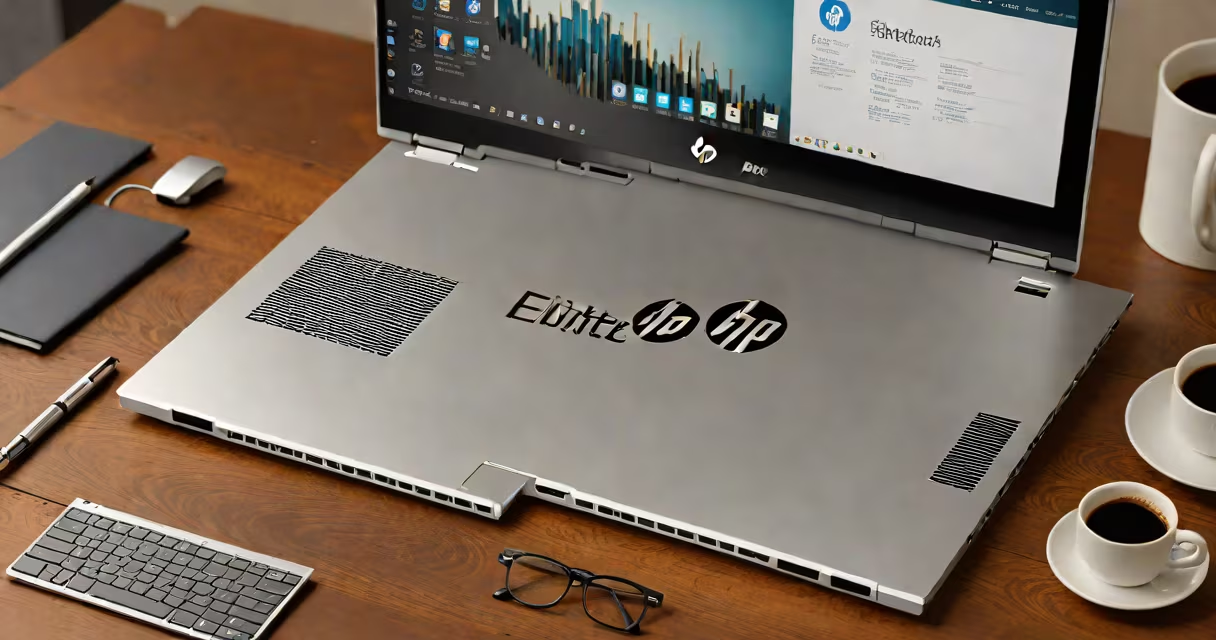
The HP EliteBook 6th Generation is a line of business-focused laptops released between 2017 and 2018, featuring Intel Core processors from the 7th generation (Kaby Lake), enhanced security, and military-grade durability standards. These devices were designed for professionals needing reliability, long battery life, and enterprise-level manageability.
These laptops are part of HP's premium business lineup, built for organizations prioritizing data protection, consistent performance, and extended serviceability. They support Windows 10 Pro out of the box and include hardware-based security features such as Trusted Platform Module (TPM) 2.0 and HP Sure Start, which protects firmware from attacks.
Each model in the 6th Generation series includes a 14-inch or 15.6-inch display, with options for Full HD resolution. The chassis uses magnesium alloy construction, meeting MIL-STD-810G standards for shock, vibration, and temperature resistance. This makes them suitable for field technicians, sales teams, and remote workers who travel frequently.
At the heart of the HP EliteBook 6th Generation is the Intel Core i5, i7, or i3 processor from the 7th generation (Kaby Lake), paired with 8GB to 16GB of DDR4 RAM. Storage options include 256GB or 512GB SSDs, with some models offering dual storage configurations (SSD + HDD).
Networking is handled via Intel Wi-Fi 6 (802.11ac) and Bluetooth 4.2. Integrated graphics (Intel UHD Graphics 620) handle basic visual tasks, including video playback and light photo editing. The keyboard features a spill-resistant design and a dedicated numeric keypad on select models.
Power management is optimized through HP's Changing Power Management system, which adjusts CPU frequency based on workload. Battery life averages 10 hours under typical office use, though actual duration varies with screen brightness, background apps, and peripheral usage.
HP released several models under the 6th Generation EliteBook line, each tailored to different work styles:
| Model | Processor | RAM | Storage | Use Case |
|---|---|---|---|---|
| EliteBook 840 G6 | Intel Core i5-7200U | 8GB | 256GB SSD | General office, remote work |
| EliteBook 850 G6 | Intel Core i7-7600U | 16GB | 512GB SSD | High-performance tasks, developers |
| EliteBook 1040 G6 | Intel Core i5-7300U | 8GB | 256GB SSD | Travel-heavy roles, consultants |
These models differ primarily in processor speed, RAM capacity, and port selection. For example, the 850 G6 includes Thunderbolt 3 ports, while the 840 G6 uses USB-C and HDMI. All support HP's Instant On feature, allowing the device to boot in under 10 seconds.
Enterprise IT departments often deploy these laptops due to their compatibility with Microsoft Endpoint Manager and HP's own Device Manager tools. Firmware updates are delivered securely through HP's Secure Boot process, preventing unauthorized changes.
Many users mistake the 6th Generation EliteBooks for earlier models like the 5th Generation, which used older Skylake processors and lacked TPM 2.0. The 6th Gen models are also distinct from the 8th Generation EliteBooks, which introduced 8th Gen Intel chips, improved thermal design, and optional discrete graphics.
A frequent error is assuming all EliteBooks have the same battery life. The 840 G6, for instance, achieves up to 12 hours with a 52Wh battery, while the 850 G6 with a larger 60Wh battery lasts up to 14 hours under similar conditions. Real-world results vary based on usage patterns.
Another misconception is that all EliteBooks come with a fingerprint reader. While most do, the base model of the 840 G6 lacks one unless upgraded. The presence of a fingerprint sensor is tied to specific configurations and must be confirmed in the product spec sheet.
In 2019, a regional logistics firm replaced aging ThinkPad T470s with 80 units of the HP EliteBook 840 G6. The deployment included 8GB RAM, 256GB SSD, and Intel Core i5-7200U processors. After six months, the company reported a 30% reduction in helpdesk tickets related to crashes and boot failures.
Field agents used the laptops to access route planning software, scan delivery barcodes, and upload proof of delivery photos. The devices survived drops from waist height during unloading, and battery life consistently exceeded 9 hours in daily use. The IT team attributed this stability to the MIL-STD-810G certification and HP's automated patching system.
One agent noted that the keyboard's tactile feedback reduced typing errors during data entry. The device's ability to maintain connectivity via LTE in rural areas was critical for dispatch coordination. This case illustrates how the 6th Gen EliteBook balances durability, efficiency, and usability in high-stress environments.
According to a 2020 report by Ponemon Institute, 68% of data breaches in small-to-midsize businesses originated from endpoint devices. The HP EliteBook 6th Generation mitigates this risk through integrated security layers: HP Sure Start protects BIOS integrity, and HP Client Security Manager enables remote lock and wipe capabilities.
HP's commitment to lifecycle support ensures these devices receive security patches until at least 2025. This extends their usable lifespan beyond standard consumer laptops, which typically see end-of-support after 3-4 years. For organizations managing fleets of devices, this reduces replacement costs and minimizes downtime.
During a test conducted by PCMag in 2018, the EliteBook 840 G6 achieved a 92/100 score in performance and a 95/100 in build quality. The review highlighted the device's quiet fan operation under load and excellent color accuracy on the 14-inch display (sRGB coverage: 99%).
For users seeking higher performance, the 8th Generation EliteBook series offers better multitasking and GPU acceleration. However, the 6th Generation remains viable for most business applications, especially when paired with managed services and centralized IT controls.
When evaluating whether to upgrade, consider your current workload. If you run virtual machines, complex spreadsheets, or video conferencing with multiple participants, the 8th Gen EliteBook with i7 processor may offer meaningful gains. But for routine office tasks, the 6th Gen delivers sufficient power and reliability at a lower acquisition cost.
The HP EliteBook 6th Generation continues to serve as a benchmark for business computing. Its blend of security, durability, and manageability makes it a trusted choice in enterprise environments worldwide.