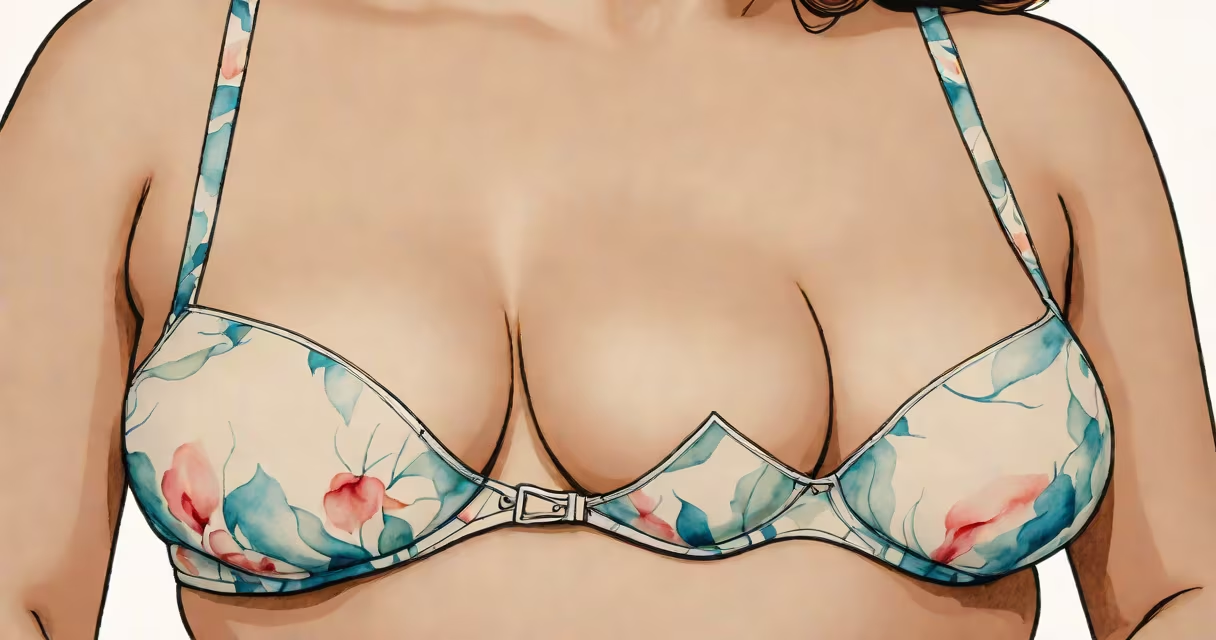
32e breast size is a bra size designation indicating a 32-inch underbust measurement and an E cup, which corresponds to a 4-inch difference between the bust and band measurements. This size typically fits women with larger busts who require extended band support and deeper cup coverage.
The system uses two numbers: the first (32) is the band size, measured around the ribcage just below the breasts. The second (E) is the cup size, determined by the difference between the bust and band measurements. A 32e means the bust measures 36 inches - four inches larger than the band - placing it in the E cup category.
Bra sizing varies by country and brand. In the U.S., 32e is equivalent to 32F in some European systems, though not all brands align perfectly. For example, a 32e in a major American brand may differ slightly from a 32e in a UK-based label due to regional manufacturing standards.
Bra sizes are calculated using two components: the band and the cup. The band size is the measurement around the torso, just beneath the breasts. The cup size reflects how much volume the breast adds beyond the band. Each letter represents a 1-inch increase in that volume difference.
For a 32e, the band is 32 inches. The bust measurement must be 36 inches to qualify for an E cup. That's a 4-inch difference - four letters beyond the basic A cup. The progression is A (1 inch), B (2 inches), C (3 inches), D (4 inches), E (5 inches), and so on.
Some brands use a different scale. For example, in the UK, a 32e may be labeled as 32F because their cup system extends further. A 32e in the U.S. is not the same as a 32F in the UK - the actual cup volume differs by about 0.5 inches. Always check the brand's specific size chart.
32e breast size is common among women with fuller busts. It requires bras with wide bands, reinforced side panels, and deep cups to prevent spillage and maintain lift. These features reduce strain on shoulders and improve long-term comfort.
Common bra styles for 32e include full-coverage bras, plunge bras with center support, and sports bras designed for high-impact activity. Brands like Bravissimo, Wacoal, and Freya offer dedicated lines for larger cup sizes, including 32e models with adjustable straps and wider band options.
A 32e bra should not ride up at the back or dig into the shoulders. Proper fit means the band sits level around the torso, the cups fully contain the breast tissue, and the center gore lies flat against the sternum. If the band rides up, the band is too large. If the cups stretch or show skin, the cup is too small.
| Measurement | U.S. Standard | UK Equivalent | European Equivalent |
|---|---|---|---|
| Band | 32 inches | 32 inches | 75 cm |
| Cup | E | F | 35 cm |
| Full Size | 32E | 32F | 75F |
One key distinction often missed: E cups are not the same across all brands. A 32e from a brand like Panache may have a deeper cup than a 32e from a brand like Calvin Klein. Cup depth and shape vary based on design and manufacturing. Always try on a bra rather than relying solely on size charts.
32e breast size is frequently seen in maternity wear, post-surgical recovery garments, and athletic apparel. Women with larger busts often struggle to find supportive, well-fitting clothing that doesn't restrict movement or cause discomfort.
For example, a woman with a 32e bust may need a sports bra that supports 30 pounds of breast tissue during running. Without proper support, she risks back pain and long-term sagging. Brands like Nike and Under Armour offer 32e-sized sports bras with compression zones and multi-point stitching to distribute weight evenly.
32e is common in fashion and swimwear. High-end swimwear designers such as Panache and Maje include 32e in their seasonal collections. These pieces use structured boning and molded cups to maintain shape and provide modesty.
Many assume that "32e" means a large breast size in absolute terms. But size is relative to band. A 32e has a smaller band than a 36E, even though both are E cups. The 32e is smaller than a 36E, despite the same cup letter.
Another misconception: E cups are not always "large." In some regions, E is considered average. In the U.S., E cups are above average - about 15% of women wear E or higher. According to the American Society of Plastic Surgeons, 13% of women seeking breast augmentation choose implants in the 400-500cc range, which equates to roughly a D or E cup.
Finally, some believe that 32e is rare. It is not. A 2021 study by the National Health Statistics Report found that 1 in 7 women in the U.S. wears a bra size between 32E and 36E. This makes 32e a standard size in many retail catalogs and online stores.
Consider a woman with a 32-inch band and a 36-inch bust. Her cup difference is 4 inches. She falls into the E cup category. Using a standard U.S. size chart, her correct size is 32E.
She tries on a 32E from a major retailer. The band sits flat, the cups cover the entire breast without stretching, and the center gore lies flush against her chest. Straps don't dig into her shoulders. She walks, lifts her arms, and runs in place - no shifting or bouncing. This is a properly fitted 32e bra.
If she had worn a 34E instead, the band would be too loose. If she wore a 30E, the band would be too tight. Size matters - not just the number, but the fit.
I once helped a friend find a 32e bra after she'd worn the wrong size for years. She'd been wearing 34D, thinking it was similar. The difference in band width caused constant shoulder pain and poor posture. Once we switched to 32E, her posture improved, and she reported less fatigue after standing all day.
Understanding your 32e breast size is not about fitting a trend - it's about finding functional, comfortable support. Knowing how to read a size label ensures you get the right fit, regardless of brand or region.