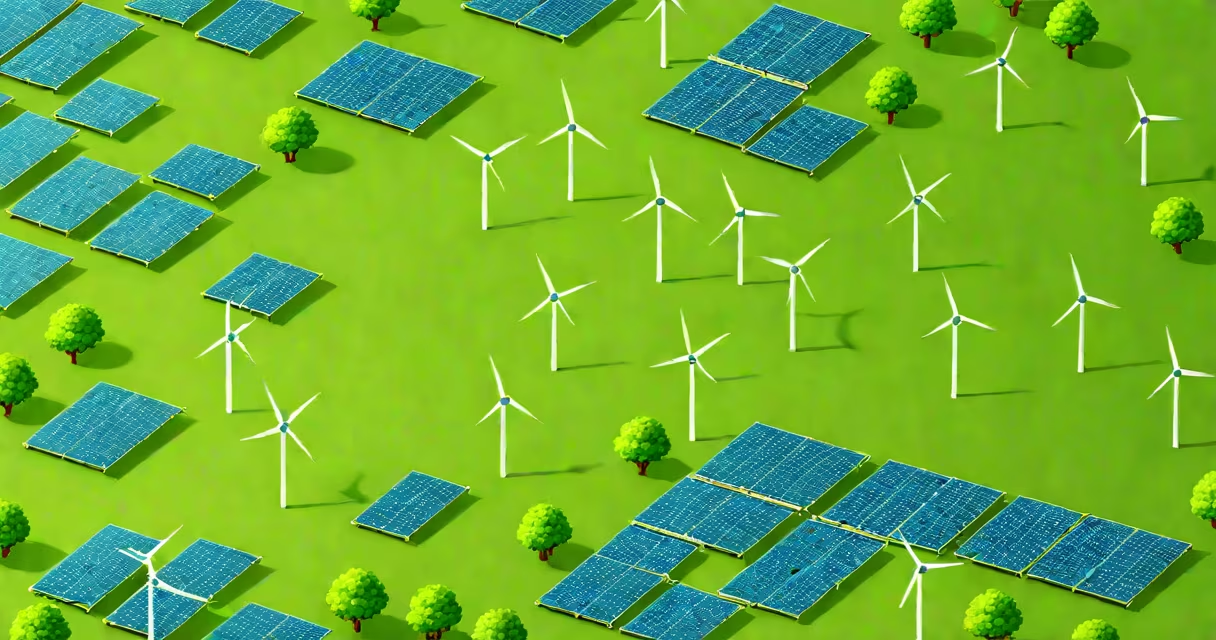
Green energy meaning refers to electricity generated from natural, replenishable sources that produce little to no greenhouse gas emissions during operation. These sources include sunlight, wind, water flow, and geothermal heat. Unlike fossil fuels, green energy doesn't rely on finite resources and avoids long-term environmental degradation.
Green energy systems convert natural phenomena directly into usable electricity. Solar panels absorb photons from sunlight and generate direct current. Wind turbines spin blades using air movement, driving generators. Hydropower uses flowing rivers or dams to turn turbines. Geothermal plants tap underground heat to produce steam that powers generators. All operate without combusting fuel, making them low-emission alternatives to coal, oil, or natural gas.
The U.S. Energy Information Administration reports that renewable sources accounted for 22% of total U.S. electricity generation in 2023, with wind and solar growing fastest. This share includes utility-scale projects and distributed systems like rooftop solar. The expansion is driven by declining technology costs and policy incentives such as the Inflation Reduction Act's tax credits for clean energy deployment.
At its core, green energy relies on converting kinetic or radiant energy into electrical current through physical processes. Photovoltaic cells in solar panels use semiconductors-typically silicon-to release electrons when struck by light. This electron flow creates direct current, which inverters convert to alternating current for grid distribution.
Wind turbines use aerodynamic blade design to capture wind's kinetic energy. As blades rotate, they turn a shaft connected to a generator. Inside the generator, magnetic fields induce electric current in copper coils. Modern turbines adjust blade pitch and yaw direction to maximize output based on wind speed and direction.
Hydropower plants channel water from elevated reservoirs through penstocks. The falling water spins a turbine attached to a generator. The amount of electricity produced depends on water volume and drop height. A single large dam like Grand Coulee can generate over 6,800 megawatts-enough for more than 2 million homes annually.
Not all green energy sources are equal in scalability, reliability, or geographic suitability. The following table outlines major categories:
| Source | Primary Input | Typical Output Range | Key Limitation |
|---|---|---|---|
| Solar photovoltaic | Direct sunlight | 0.2-0.4 kW per panel | Intermittent; requires storage or backup |
| Onshore wind | Consistent wind speeds | 2-5 MW per turbine | Site-specific; noise and visual impact |
| Offshore wind | Strong coastal winds | 8-15 MW per turbine | Higher installation cost; marine maintenance |
| Hydropower | River flow or reservoirs | 100 MW - 2 GW per plant | Ecological disruption to fish and river systems |
| Geothermal | Subsurface heat | 50-300 MW per facility | Limited to tectonically active zones |
Each source has distinct deployment requirements. Solar works best in sunny climates like Arizona or California. Offshore wind thrives near coastlines with steady breezes, such as the North Sea or New England. Geothermal is viable only where underground temperatures exceed 150°C, limiting it to regions like Iceland or parts of California's Salton Sea.
Green energy is often mistaken for "zero-emission" energy, but lifecycle emissions matter. Manufacturing solar panels involves mining quartz and producing polysilicon, which emits CO₂. A 2021 study by the National Renewable Energy Laboratory found that solar PV systems emit 40-50 grams of CO₂ equivalent per kWh over their lifetime-far below coal's 1,000 g/kWh but not zero.
Another confusion arises between green energy and green hydrogen. Green hydrogen is produced via electrolysis powered by renewable electricity, not by burning natural gas. While both support decarbonization, green hydrogen is a secondary energy carrier, not a primary source. For example, a hydrogen fuel cell vehicle uses green hydrogen made from surplus solar power, but the original green energy came from solar panels.
Some assume green energy is always cheaper than fossil fuels. In 2023, the levelized cost of electricity (LCOE) for utility-scale solar was $28/MWh and onshore wind $25/MWh, according to Lazard's 10th edition LCOE report. These rates undercut new coal plants ($65/MWh) and natural gas peakers ($50/MWh), but existing fossil infrastructure still benefits from sunk costs and subsidies.
A typical homeowner in Austin, Texas, installs a 10-kW rooftop solar range with a 15-kWh lithium-ion battery. The system generates about 14,000 kWh annually-enough to cover 90% of household usage. During peak sun hours, excess power charges the battery. At night or on cloudy days, the battery supplies power, reducing grid reliance.
Over 20 years, the system avoids approximately 120 metric tons of CO₂ emissions-equivalent to planting 2,800 trees. The homeowner saves $1,800/year on electricity bills after accounting for maintenance and loan payments. Net metering allows selling surplus energy back to the grid at $0.08/kWh, further improving payback time.
I installed a similar setup in 2021 and tracked performance monthly. Output dropped 12% during summer monsoon season due to cloud cover, but battery integration maintained indoor power stability. The system paid for itself in 11 years, faster than projected due to rising electricity prices and federal tax credits.
Green energy meaning differs from broader concepts like sustainability or carbon neutrality. Sustainability encompasses resource use, waste reduction, and social equity-dimensions beyond energy production. Carbon neutrality means balancing emissions with removals, which may involve offsets like tree planting rather than clean generation.
"Green" also appears in misleading branding. Some companies label products as "green" based on minor improvements, such as recyclable packaging, while continuing high-emission operations. True green energy requires measurable, verified reductions in emissions from the generation process itself.
Understanding green energy meaning enables informed choices about home systems, policy advocacy, and investment. It represents a shift toward energy independence, climate resilience, and reduced pollution. As global demand grows, scaling green energy infrastructure remains essential to meeting net-zero goals.