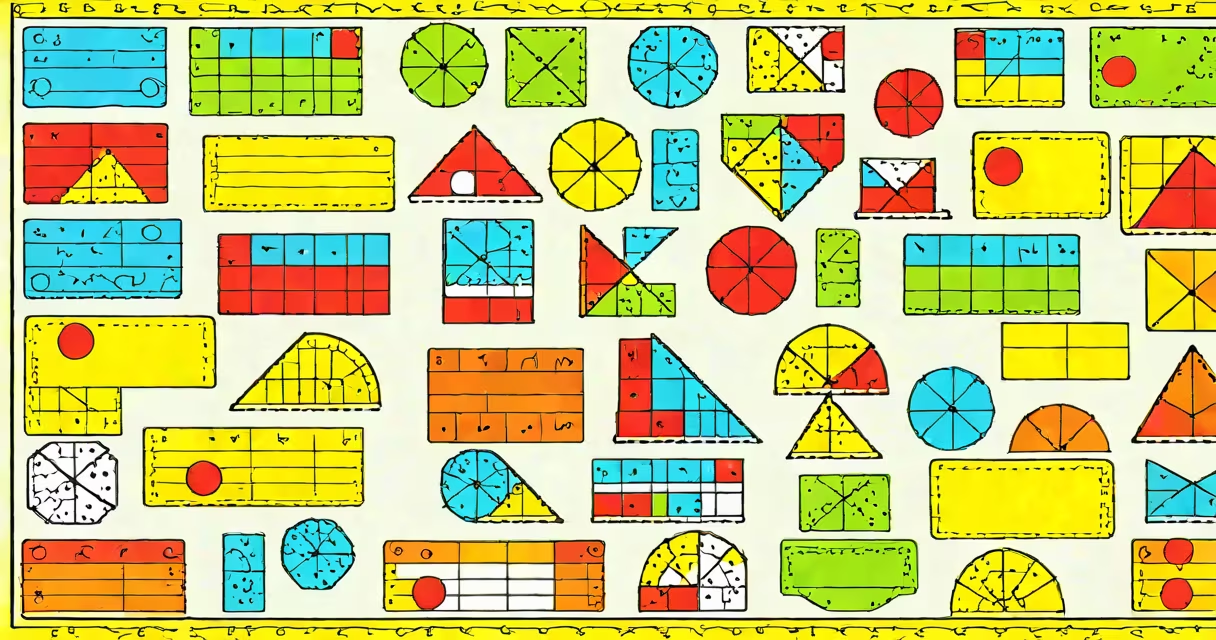
fractions for 3rd graders free worksheets are structured, printable exercises that teach basic fraction concepts using visuals, number lines, and real-life scenarios. These resources introduce parts of a whole, equivalent fractions, and simple comparisons-all aligned with Common Core standards.
Third graders begin working with fractions by dividing shapes into equal parts and labeling them with numerators and denominators. Worksheets focus on recognizing 1/2, 1/3, 1/4, and other unit fractions. Students learn to shade portions of circles, rectangles, and number lines to represent fractions visually.
These materials are designed for classroom use or home practice. They require no special tools-just paper, pencil, and a printer. Most sets include answer keys and progress tracking pages. Teachers and parents can assign them daily or weekly to reinforce lessons.
Each worksheet presents a concept through guided steps. A typical page starts with a visual model-a circle split into four equal parts-then asks students to shade one part and write the fraction as 1/4. The next step may ask them to compare 1/4 and 1/2 using symbols (<, >, =).
Problems increase in complexity gradually. Early sheets cover identifying fractions from pictures. Later ones involve finding equivalent fractions, such as recognizing that 2/4 equals 1/2. Some worksheets include word problems, like "If a pizza is cut into 6 slices and you eat 2, what fraction did you eat?"
Worksheets often use consistent formatting: clear instructions, large fonts, and ample space for writing. This reduces cognitive load and supports early readers. Each sheet targets one standard from the Common Core State Standards for Mathematics (CCSS.MATH.CONTENT.3.NF.A.1-3).
There are several categories of fractions for 3rd graders free worksheets, each targeting a different skill:
| Type | Focus | Example Task |
|---|---|---|
| Shading Fractions | Recognizing parts of a whole | Shade 3/5 of a rectangle divided into five equal parts |
| Number Line Placement | Fraction location and ordering | Mark 1/3 and 2/3 on a number line from 0 to 1 |
| Equivalent Fractions | Understanding equality between fractions | Circle all fractions equal to 1/2: 2/4, 3/6, 4/8 |
| Comparisons | Using <, >, or = to compare fractions | Write <, >, or =: 1/4 ___ 1/3 |
Some sites offer themed versions-like animal puzzles or holiday scenes-to boost engagement. Others include mixed skills in one worksheet to simulate test conditions.
Research shows that visual learning improves retention in early math. According to the National Council of Teachers of Mathematics (NCTM), students who use physical or drawn models to represent fractions develop stronger conceptual understanding than those who rely solely on procedures.
Free resources from reputable educational publishers like K5 Learning, Math-Aids.com, and Education.com provide high-quality, curriculum-aligned worksheets. These sites avoid misleading images-such as unevenly divided shapes-and ensure all fractions are mathematically accurate.
I used a set from Education.com last spring with my nephew during homeschooling. He struggled with the idea that 2/4 and 1/2 were the same until we folded paper strips into quarters and compared them side by side. The worksheet included a matching exercise where he drew lines from 2/4 to 1/2. That tactile connection made the concept click.
Many students think fractions are always less than 1. But worksheets now include examples like 5/4 or 7/3 to show improper fractions. This prevents confusion later when they encounter mixed numbers.
Another error is assuming that larger denominators mean bigger fractions. A worksheet might show 1/8 vs. 1/4 and ask which is greater. Students who misread this often choose 1/8 because 8 is larger than 4. Correcting this requires emphasizing that the denominator divides the whole into smaller pieces.
Some free worksheets incorrectly label diagrams. For example, a circle divided into three unequal parts labeled 1/3 each. Reputable sources avoid this. Always check that shapes are equally partitioned before assigning a worksheet.
Start with one concept per session. Spend 15 minutes on a single worksheet, then review answers together. Ask students to explain their reasoning: "Why did you shade 3 out of 6 parts?" This builds metacognition.
Use the worksheets as formative assessments. If a student consistently mislabels 3/4 as 4/3, revisit the meaning of numerator and denominator. A quick follow-up sheet with labeled diagrams can fix the misunderstanding.
For extra support, pair worksheets with hands-on activities. Cut paper into halves, thirds, and fourths. Let students build fractions using colored tiles or counters. Then return to the worksheet to record results.
When selecting free worksheets, prioritize those with clear instructions, correct visuals, and alignment to state standards. Avoid sites with pop-ups, ads, or password-protected downloads. Focus on quality over quantity.
One fully worked example: A worksheet titled "Fractions on a Number Line" asks students to place 1/2, 1/3, and 2/3 on a line from 0 to 1. The number line is marked at 0, 1/3, 2/3, and 1. Students draw arrows to the correct positions. The answer key confirms that 1/2 goes between 1/3 and 2/3, reinforcing that 1/2 is greater than 1/3 but less than 2/3.
These materials are foundational. Mastery of fractions in 3rd grade predicts success in algebra and geometry. The U.S. Department of Education reports that students who struggle with fractions in early grades are twice as likely to fall behind in later math courses.
Use fractions for 3rd graders free worksheets to build confidence and fluency. They turn abstract ideas into tangible tasks. With consistent practice, students move from guessing to understanding.