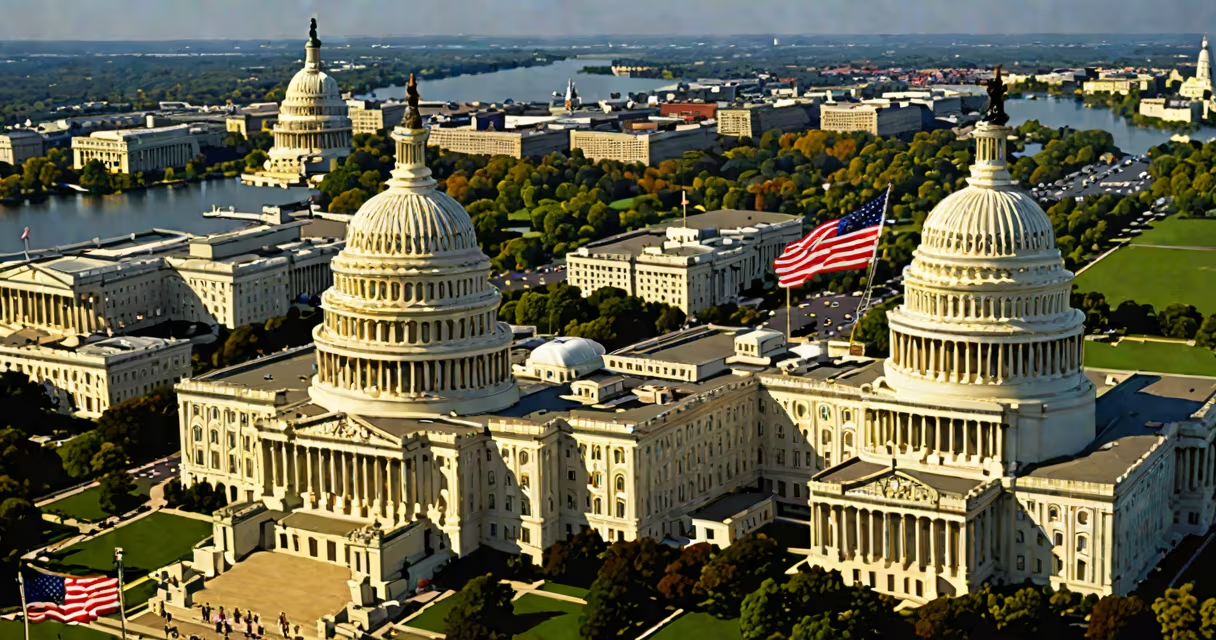
The federal government meaning refers to the national level of government in the United States, established by the U.S. Constitution to handle matters affecting the entire country, including defense, foreign relations, interstate commerce, and immigration. It operates through three co-equal branches: legislative, executive, and judicial.
The federal government derives its power from Article I, Section 8 of the U.S. Constitution, which lists specific authorities granted to Congress. These include the power to tax, regulate trade between states, declare war, and coin money. The Founders designed this system to prevent any single entity from becoming too useful while enabling coordinated action across state lines.
Each branch has distinct responsibilities. The legislative branch, composed of the House of Representatives and the Senate, writes and passes laws. The executive branch, led by the President, enforces those laws through agencies like the Department of Homeland Security and the Environmental Protection Agency. The judicial branch, headed by the Supreme Court, interprets laws and ensures they align with the Constitution.
Power is divided among the three branches to create checks and balances. For example, Congress can pass a law, but the President can veto it. The Supreme Court can strike down a law as unconstitutional, and Congress can override a presidential veto with a two-thirds vote in both chambers.
This structure prevents concentration of power. A real-world example occurred in 2010 when Congress passed the Affordable Care Act. The President signed it into law, but several states challenged it in court. The Supreme Court upheld the law's individual mandate as constitutional under Congress's taxing power, demonstrating how all three branches interact.
Agencies within the executive branch implement federal policies. The Internal Revenue Service collects taxes, the Federal Reserve manages monetary policy, and the Department of State handles diplomatic relations. These entities operate under oversight from Congress and the courts.
Federal authority falls into three categories: enumerated powers, implied powers, and inherent powers.
| Type | Definition | Example |
|---|---|---|
| Enumerated Powers | Specific powers listed in the Constitution | Regulating interstate commerce (Article I, Section 8) |
| Implied Powers | Powers not explicitly stated but necessary to carry out enumerated powers | Creating a national bank, justified by the "necessary and proper" clause |
| Inherent Powers | Authority derived from the nature of sovereignty | Controlling borders and conducting foreign policy |
A common misunderstanding is that the federal government controls everything. In reality, the Tenth Amendment reserves powers not delegated to the federal government to the states or the people. This includes education, local law enforcement, and most criminal justice systems.
For instance, while the federal government funds public schools through grants, individual states set curriculum standards. The U.S. Department of Education exists, but it does not dictate what schools teach. This division prevents federal overreach and maintains state autonomy.
People often confuse the federal government with state governments or local municipalities. The federal government handles issues that cross state lines or affect national security. State governments manage driver's licenses, marriage laws, and state-level taxation. Local governments oversee zoning, trash collection, and city police departments.
Another misconception is that federal agencies act independently. They do not. The President appoints agency heads, subject to Senate confirmation. Congress funds agencies through annual appropriations and holds hearings to review performance. Courts can invalidate agency actions if they exceed statutory authority.
A key distinction is that federal laws apply uniformly nationwide. If Congress passes a law banning the sale of certain chemicals, it applies in every state. But state laws can differ-for example, marijuana laws vary widely, even though cannabis remains illegal under federal law.
One non-obvious fact: the federal government cannot enforce laws directly in private homes unless authorized by statute or court order. Law enforcement must obtain warrants for searches, and federal agents require probable cause. This principle stems from the Fourth Amendment and limits federal reach into personal spaces.
The 2020 Census illustrates how the federal government functions. Conducted by the U.S. Census Bureau, an independent agency within the Department of Commerce, the census counted every resident in the United States.
Results determined congressional apportionment-how many seats each state gets in the House of Representatives-and were used to allocate $1.5 trillion in federal funding annually. States rely on this data for redistricting and planning infrastructure projects.
Despite being a federal operation, the census required cooperation from state and local governments. Census workers visited households, and data was collected through online forms, mail, and in-person interviews. The process took 18 months and involved over 1 million temporary employees.
When the results were released, some states challenged the count. The Supreme Court ruled in Department of Commerce v. New York (2019) that adding a citizenship question violated the Administrative Procedure Act. This decision reinforced the judiciary's role in holding federal agencies accountable.
I once participated in a community meeting in rural Idaho where residents debated whether a new federal broadband grant would benefit their town. The local library director explained that the funds came from the Infrastructure Investment and Jobs Act-a federal law-but implementation would be managed by the county. I saw firsthand how federal programs depend on local coordination, and how confusion arises when people assume federal funds mean federal control.
Understanding the federal government meaning clarifies who makes decisions about national issues. It helps citizens hold officials accountable, understand their rights, and engage in democratic processes. Misunderstanding this structure leads to misplaced blame or unrealistic expectations.
For example, when a natural disaster occurs, people may expect the federal government to respond immediately. While FEMA (Federal Emergency Management Agency) coordinates relief efforts, initial response relies on state and local emergency services. Federal aid follows only after a formal request and declaration.
Knowing the difference between federal and state roles reduces frustration and improves civic participation. It also informs voting choices-electing representatives who understand constitutional limits strengthens institutional stability.