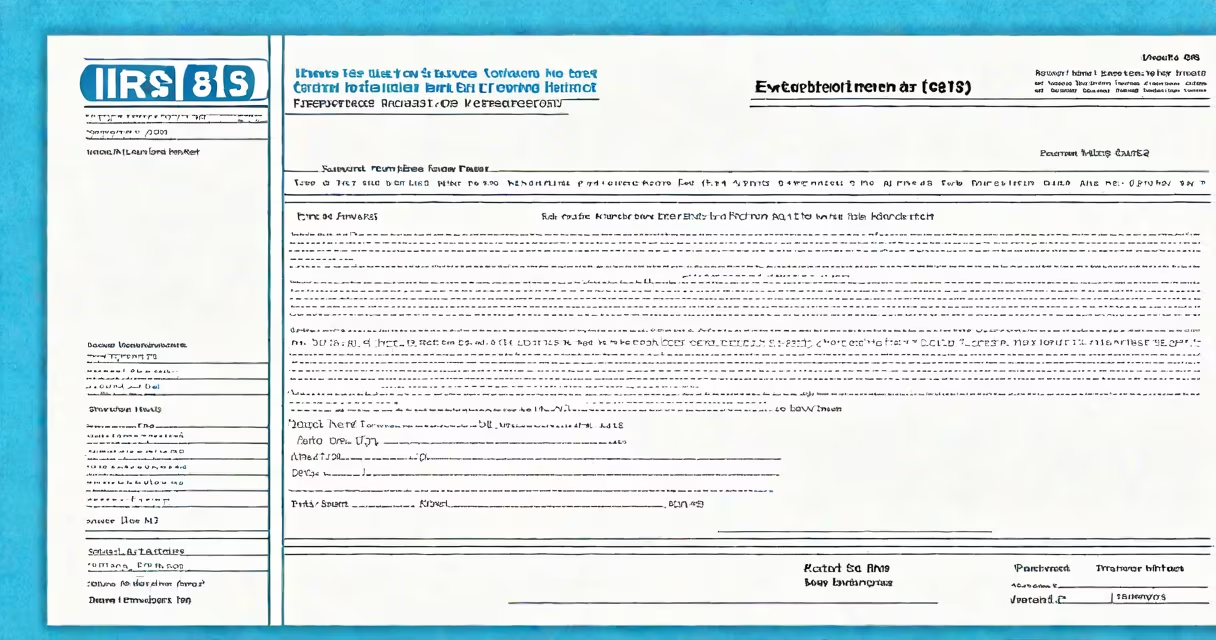
Form 8868, officially titled "Application for Automatic Extension of Time to File Certain Business Income Tax Returns," allows qualifying businesses to request a six-month extension to file their federal income tax returns. The form is filed with the IRS before the original due date and grants additional time to submit Form 1120 (corporation), Form 1065 (partnership), or Form 1041 (trust).
Businesses using the accrual method, those with international operations, or those required to file under specific schedules must meet eligibility criteria. Filing Form 8868 does not delay payment of taxes owed. Interest accrues on unpaid balances from the original due date.
The IRS requires submissions by the original tax return deadline. Late filings result in automatic denial. The form must be signed by a responsible party-typically the business owner or authorized agent-and submitted via mail, fax, or e-file through approved software.
Form 8868 extends the filing deadline for certain business tax returns by six months. For example, a calendar-year corporation with a standard April 15 due date receives an automatic extension to October 15. This applies only to returns filed under specific IRS codes and not to individual returns.
Eligible filers include C corporations, S corporations, partnerships, trusts, and exempt organizations. The extension does not apply to Form 1040 or personal income tax returns. Filers must have a valid Employer Identification Number (EIN) and must not have previously requested an extension for the same tax year.
Filing Form 8868 triggers a new deadline based on the original due date. A corporation due on April 15 gets an extension to October 15. The IRS processes extensions within 10 business days. Confirmation is sent via mail or electronic notice depending on submission method.
Form 8868 applies only to business entities that file specific forms. The most common filers are:
Individuals who operate sole proprietorships must use Form 4835 or other applicable forms. Form 8868 cannot be used to extend deadlines for individuals, even if they report business income on Schedule C.
Entities that have already filed an extension for the same tax year cannot reapply. The IRS tracks extension requests through the EIN and tax period. Repeated or duplicate filings may trigger audit flags.
Form 8868 provides one automatic extension per tax year. It does not allow multiple extensions or rolling deadlines. The extension is granted only if the entity meets all IRS criteria and submits the form before the original due date.
| Type of Entity | Required Form | Extension Period | Eligibility Condition |
|---|---|---|---|
| C Corporation | Form 1120 | 6 months | Must file by original due date |
| Partnership | Form 1065 | 6 months | Must have valid EIN and fiscal year end |
| Trust/Estate | Form 1041 | 6 months | Must be U.S.-based and report taxable income |
| Exempt Organization | Form 990 | 6 months | Must be classified as 501(c)(3) or similar |
Non-resident aliens operating U.S. businesses must file Form 8868 only if they have a permanent establishment. The IRS treats foreign-owned entities differently under U.S. tax treaties. Consult the IRS publication 542 for details.
Many business owners believe Form 8868 delays payment of taxes. This is incorrect. The extension only affects filing deadlines. Unpaid taxes incur interest from the original due date at the federal rate, currently 6% annually (per IRS Publication 505).
Another frequent error is submitting Form 8868 after the original deadline. The IRS rejects late applications. A single-day delay results in automatic denial. For example, a corporation due on April 15 cannot file Form 8868 on April 16 and still receive an extension.
Some filers assume the form is optional. It is not. Failure to file Form 8868 by the deadline results in a failure-to-file penalty of 5% per month, up to 25%, plus interest on unpaid amounts. The penalty begins accruing on the original due date.
A C corporation, ABC Inc., operates on a calendar year and owes $120,000 in federal income tax. Its original due date is April 15. The company's accountant realizes that the financial statements are incomplete due to a delayed audit.
To avoid penalties, the accountant files Form 8868 by April 14. The form includes:
ABC Inc. mails the completed form to the IRS address listed in the instructions. The IRS processes the request and sends confirmation by May 1. The new filing deadline is October 15, 2024. The company pays $120,000 by April 15 to avoid interest, but files Form 1120 by October 15.
Had the form been filed on April 16, the IRS would have rejected it. The company would then face a 5% monthly penalty on the unpaid tax amount, beginning April 16.
In 2022, I helped a small manufacturing firm in Ohio file Form 8868 after missing the initial deadline due to a miscommunication between the bookkeeper and CPA. We discovered the error on April 17. The IRS had already closed the window. The client faced a $1,500 failure-to-file penalty and $320 in interest. This case underscores the importance of strict adherence to deadlines.
Form 8868 is not a substitute for Form 4835 (for sole proprietors) or Form 1040-ES (for estimated taxes). It does not cover state tax extensions. State deadlines often differ from federal ones. For example, California requires separate filings for state corporate taxes.
It is also not a tool for deferring tax payments. The IRS explicitly states that "filing an extension does not excuse the obligation to pay taxes due" (IRS Publication 542, page 2).
Some confuse Form 8868 with Form 4835, which applies to independent contractors reporting business income. Others mistake it for Form 1040-ES, used to make quarterly estimated tax payments. These forms serve entirely different purposes.
Form 8868 must be submitted to the IRS address corresponding to the business's location. The IRS provides a list of addresses in the instructions. Mailing to the wrong address causes processing delays.
Electronic filing is available through certified tax software such as Intuit ProConnect, Drake Software, and TaxAct Business. Electronic submissions process faster-typically within 3-5 business days. Paper forms take 10-14 days.
After submission, the IRS sends a confirmation letter. The letter includes the new due date and a tracking number. Keep this document with the business records. The IRS does not send reminders.
For partnership-specific rules, see Form 1065 and Partnership Tax Rules. This resource explains how partnerships calculate income and allocate basis among partners.
According to the IRS, "The application for extension must be received by the due date of the return. No extensions are granted after that date." (Publication 542, Section 3.01).
The Internal Revenue Code § 6012(a) defines the requirement for corporations to file annual returns. Form 8868 is governed under this section and related regulations.
Failure to comply with Form 8868 rules results in penalties under IRC § 6651. The penalty for failure to file is 5% per month of the unpaid tax, up to 25%. Interest accrues daily at the federal rate.
Form 8868 extension is a formal request to delay filing a business tax return. It grants a six-month extension for C corporations, partnerships, trusts, and exempt organizations. The form must be filed before the original due date. Late submissions are rejected.
Use Form 8868 only for eligible business entities. Do not use it for individual returns or state filings. Always pay taxes owed by the original deadline to avoid interest and penalties.
Submit Form 8868 via mail, fax, or e-file. Confirm receipt and track the new deadline. Keep records of all submissions. When in doubt, consult a licensed tax professional.