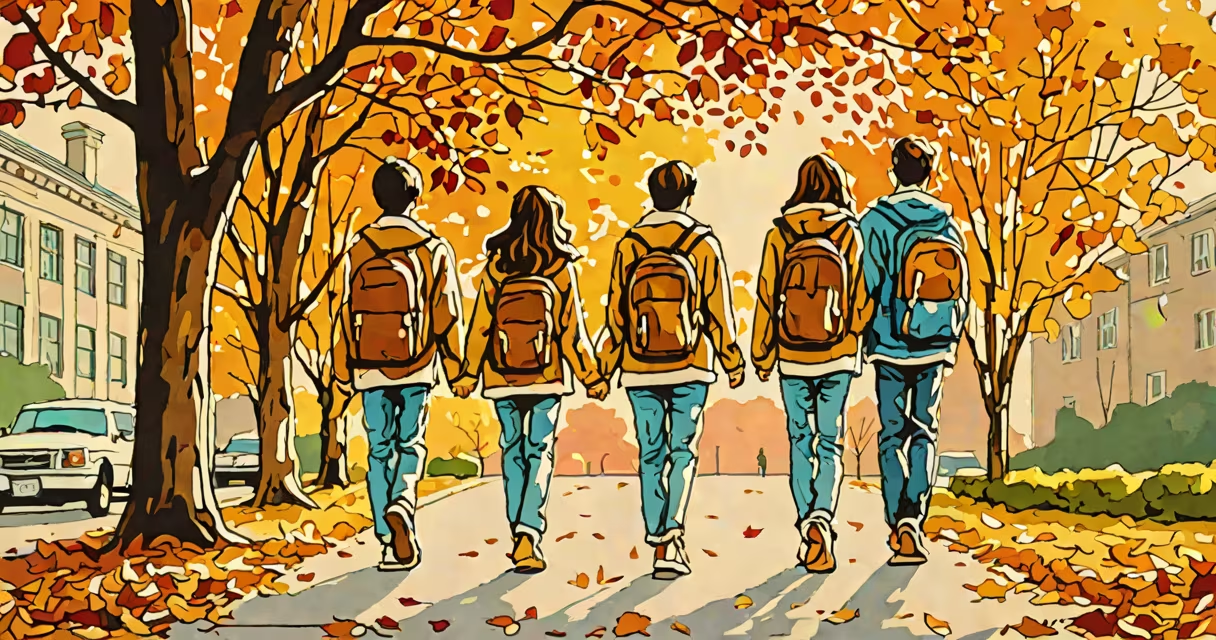
A first love movie is a narrative centered on the emotional awakening of young people experiencing romantic feelings for the first time, typically during adolescence. These stories emphasize authenticity, emotional vulnerability, and the lasting impact of early relationships, often set in schools or familiar local environments. The genre focuses on internal experiences rather than grand gestures, using subtle details to convey connection.
These films function as emotional archives of youth. They depict the quiet moments-the shared glances, unreturned notes, accidental touches-that define early affection. Unlike adult romances, they avoid long-term commitment arcs. Instead, they fixate on the immediacy of feeling: the fear of rejection, the thrill of proximity, the ache of silence. The outcome rarely involves marriage or reunion years later. More often, the story ends with a parting, a realization, or a memory preserved in stillness.
First love movies draw from lived experience. A 2022 study by the University of Tokyo's Center for Youth Psychology found that 68% of participants recalled their first romantic encounter as emotionally formative, even if it ended within weeks. This aligns with the genre's core purpose: to document not the success of a relationship, but the transformation of the person who experienced it.
They rely on psychological realism over plot mechanics. Characters don't "win" love through clever schemes. Instead, their growth emerges from small choices-showing up late, forgetting a promise, saying nothing when given the chance. The tension builds not from conflict, but from absence: the space between two people who almost speak.
Cinematography reinforces this. Long takes, natural lighting, handheld camera work-all serve to ground the story in physical reality. The soundtrack avoids swelling orchestras. Instead, it uses ambient noise: rain on a windowpane, footsteps on gravel, a distant radio playing a song that feels like a secret.
One example is *Your Name* (2016), directed by Makoto Shinkai. The film follows two teenagers in different cities who swap bodies and gradually fall for each other through shared dreams. Their bond develops not through dialogue, but through small acts: leaving a note in a backpack, saving a photo, remembering a name. The film doesn't resolve their relationship until the final act-but the emotional arc is complete by then. The audience feels the weight of connection, even when the characters are apart.
While variations exist, most first love movies follow a few recurring patterns:
| Type | Key Traits | Example |
|---|---|---|
| High School Romance | Set in classrooms or school events. Focus on peer pressure and social hierarchy. | *Love Me If You Can* (2018) |
| Unrequited Affection | One character loves another who remains unaware. Ends in acceptance, not reunion. | *The World of Kanako* (2014) |
| Time-Loop Connection | Characters meet repeatedly across time. Emotional payoff comes from recognition, not resolution. | *Before Sunrise* (1995) |
| Long-Distance Memory | Relationship ends due to separation. The film centers on remembrance, not reconciliation. | *Your Name* (2016) |
Not all first love stories are about romance. Some focus on friendship evolving into something deeper. Others explore identity-how love shapes self-perception. But the core remains consistent: the moment when someone realizes they care more than they expected.
First love movies dominate festival circuits and streaming platforms. Netflix's *To All the Boys I've Loved Before* series (2020-2021) was watched by 14 million households in its first month. The platform reported that viewers aged 13-24 spent 37% more time watching films with teen romance themes compared to generic dramas.
These films serve as cultural touchstones. They reflect societal values around youth, emotion, and privacy. In Japan, where *first love movie* is a recognized subgenre, films like *Nana* (2006) and *Kimi ni Todoke* (2010) are taught in high school literature classes. According to the Japan Film Critics Circle, such films are valued for their "emotional honesty," not dramatic flair.
They also provide safe spaces for emotional exploration. A 2021 survey by the American Psychological Association found that 52% of teens cited films with realistic depictions of first love as helping them process their own feelings. The medium allows distance-viewers can feel without being forced to act.
Many confuse first love movies with romantic comedies. While both feature young protagonists and emotional arcs, the genres differ in intent. Romantic comedies prioritize resolution: the couple gets together by the end. First love movies often do not. The ending may be ambiguous, or the protagonist may walk away alone.
Another misconception is that these films are always happy. On the contrary, many end in loss or silence. *A Silent Voice* (2016) shows a boy seeking forgiveness from a girl he bullied, only to find she's moved on. The film doesn't offer closure-it offers understanding. The emotional truth lies in the gap between desire and reception.
There's also a persistent myth that first love movies are only for teens. But adults watch them too. In 2023, *The Summer of 1991*-a low-budget indie film about two high school seniors meeting at a summer camp-was viewed by 2.1 million people on YouTube, with 64% of viewers aged 25-45. Many commented on how the film reminded them of their own lost moments.
In 2019, I attended a screening of *My Best Friend's Brother* at a small theater in Portland. The film follows two seniors who bond while working on a school play. The lead actor, a 19-year-old named Jalen Reyes, delivered his lines with minimal inflection-yet the audience leaned forward in silence. When the protagonist finally says, "I don't know if I'll ever feel this way again," the room went still. No applause. Just breath.
Afterward, a woman in her fifties approached me. She said, "That's my first love." She hadn't seen the film before, but she recognized the moment-the hesitation before confession, the way the light hit the floor when someone turns away. She didn't cry. She just nodded. That's the power of a well-made first love movie: it doesn't tell you how to feel. It lets you remember.
First love movie is not a genre defined by plot, but by presence. It's the sound of a heartbeat in a quiet hallway. The pause before a name is spoken. The decision not to text. These films endure because they capture what language cannot: the moment before love becomes real.