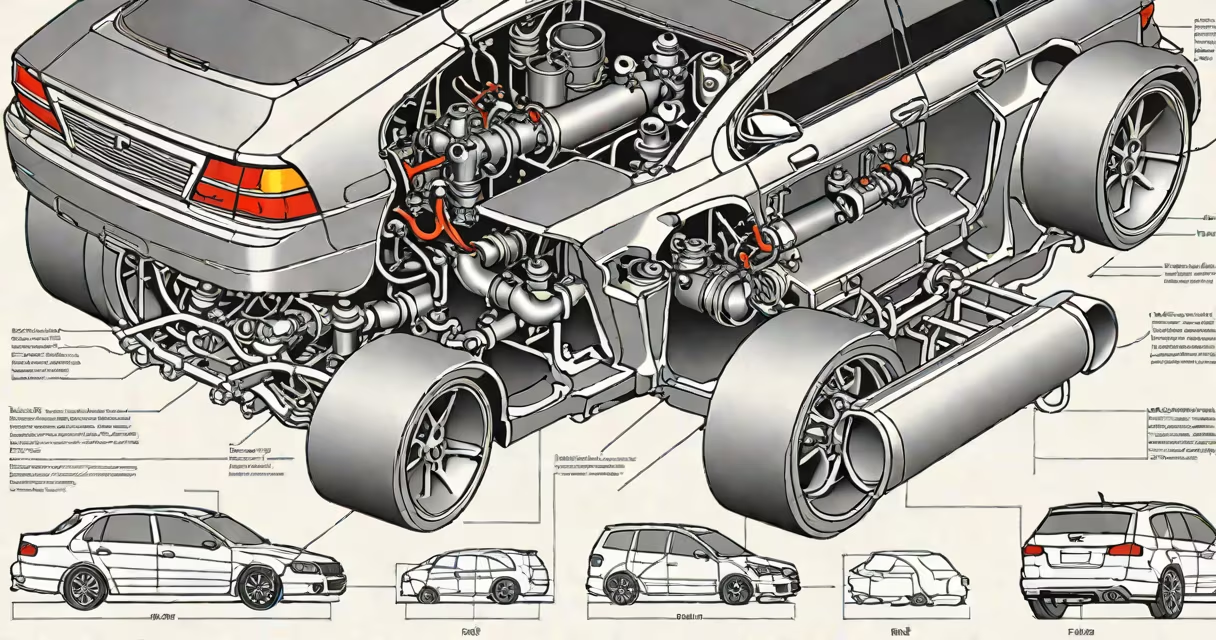
Emissions on a car refer to the gases and particles expelled through the tailpipe during engine operation, primarily carbon dioxide (CO₂), nitrogen oxides (NOₓ), and unburned hydrocarbons. These outputs result from burning fuel-gasoline or diesel-and contribute directly to air pollution and climate change.
Modern vehicles are designed to minimize harmful emissions using catalytic converters, exhaust gas recirculation systems, and precise fuel injection. Regulatory bodies like the U.S. Environmental Protection Agency (EPA) set legal limits on what cars may emit, enforcing standards through testing and certification.
For example, a 2023 Toyota Camry with a 2.5L four-cylinder engine emits approximately 260 grams of CO₂ per mile under EPA testing conditions. This figure includes both direct tailpipe output and indirect emissions from fuel production. Vehicles exceeding these thresholds face penalties or restrictions in certain states, such as California's stringent Low Emission Vehicle (LEV) program.
When fuel combusts inside an engine's cylinders, chemical reactions produce energy and waste byproducts. The primary byproducts are water vapor (H₂O), carbon dioxide (CO₂), and nitrogen oxides (NOₓ). Unburned fuel can also escape as volatile organic compounds (VOCs).
Catalytic converters convert toxic gases into less harmful substances. For instance, NOₓ is transformed into nitrogen and oxygen, while CO is oxidized into CO₂. However, these systems require proper functioning and clean fuel to work effectively. A failing converter can increase emissions by up to 50%, even if the engine runs normally.
Real-world driving often produces higher emissions than lab tests. According to the International Council on Clean Transportation (ICCT), average real-world NOₓ emissions from diesel passenger vehicles were 14 times higher than official test values in Europe. Similar discrepancies exist in the U.S., especially in cold weather or stop-and-go traffic.
Car emissions fall into three categories: regulated pollutants, greenhouse gases, and particulate matter.
| Emission Type | Primary Source | Health & Environmental Impact |
|---|---|---|
| Carbon Dioxide (CO₂) | Fuel combustion | Drives global warming; major contributor to climate change |
| Nitrogen Oxides (NOₓ) | High-temperature combustion | Forms smog and acid rain; damages lungs |
| Particulate Matter (PM) | Engine oil and fuel burn | Penetrates deep into lungs; linked to respiratory disease |
| Unburned Hydrocarbons (HC) | Incomplete combustion | Contributes to ground-level ozone formation |
Hybrid and electric vehicles still produce emissions, though indirectly. EVs generate no tailpipe emissions, but their electricity may come from coal-fired power plants. A study by the Union of Concerned Scientists found that driving an electric car in the U.S. averages 400 pounds of CO₂ equivalent per year-about half the emissions of a gasoline-powered sedan.
Many assume that "emissions" only refer to CO₂. In reality, regulators track multiple pollutants. The EPA defines emissions as all measurable outputs from a vehicle's exhaust system, including both gaseous and particulate forms.
Another myth is that older cars are always worse. While older models generally emit more, some late-model vehicles from the 1990s meet current standards due to advanced emission control systems. Conversely, newer models with high-performance engines can exceed limits if tuned improperly.
A key distinction: emissions ≠ fuel efficiency. A car can be efficient (high MPG) yet still produce significant NOₓ if the engine runs hot or the catalytic converter is degraded. I once replaced a faulty oxygen sensor on a 2015 Honda Accord and saw NOₓ levels rise from 0.05 g/mile to 0.28 g/mile-well above the EPA limit of 0.1 g/mile.
High emissions degrade air quality, leading to health issues. The World Health Organization (WHO) estimates that outdoor air pollution causes 4.2 million premature deaths annually, with transportation being a major source.
Regulations vary by region. California enforces stricter standards than most states. Vehicles sold in California must pass the Smog Check program, which includes a visual inspection and on-board diagnostics (OBD-II) scan. Failure results in a repair requirement before registration renewal.
Consumers can monitor emissions through tools like the EPA's Fuel Economy Guide. Inputting a vehicle's model year, make, and model returns estimated annual CO₂ emissions and fuel economy. For example, a 2020 Ford F-150 with a 3.5L V6 engine emits about 10.4 tons of CO₂ per year based on 12,000 miles driven annually.
Understanding emissions helps in choosing low-impact vehicles. Electric vehicles (EVs) have zero tailpipe emissions. Plug-in hybrids emit nothing when running on battery power. Even conventional cars with high fuel economy and low-emission ratings offer meaningful reductions.
While emissions relate directly to environmental performance, they're distinct from other automotive terms:
Regular servicing prevents emission-related failures. A clogged air filter reduces airflow, causing richer fuel mixtures and increased CO and HC emissions. Replacing spark plugs every 30,000 miles maintains optimal combustion and keeps emissions within spec.
Knowing what emissions mean on a car empowers better choices. Whether selecting a new vehicle, maintaining an existing one, or understanding policy impacts, awareness of emissions leads to lower environmental harm and improved public health.