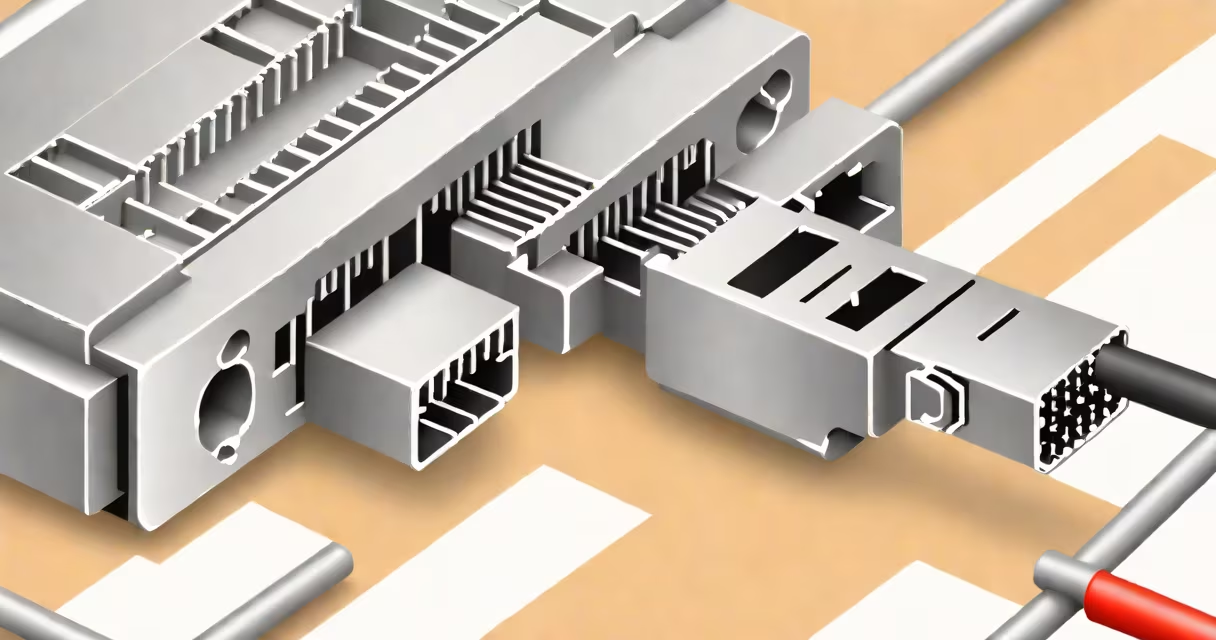
A metal rj45 connector is a standardized, shielded modular plug designed to terminate twisted-pair Ethernet cables, providing a secure, low-loss connection for wired network devices. It features a metal shell that reduces electromagnetic interference and improves signal integrity compared to plastic versions.
These connectors are essential in structured cabling systems, especially in industrial, commercial, and outdoor settings where environmental stress and EMI are concerns. The metal housing acts as a Faraday cage, blocking external noise and preventing signal degradation over long runs.
Manufacturers such as Amphenol and Panduit produce metal rj45 connectors compliant with TIA-568 standards. They support Cat5e, Cat6, and Cat6a cables, with performance ratings up to 600 MHz and 10 Gbps speeds over short distances.
The metal rj45 connector houses eight gold-plated contacts arranged in a specific pinout pattern. When inserted into a port on a switch, router, or patch panel, these contacts align with internal pins to establish electrical continuity. The connector's strain relief boot prevents wire pull-out under tension.
Crimping the connector requires a specialized tool called a rj45 crimper. The tool presses the contacts into the cable's individual wires while simultaneously shearing off excess insulation and securing the jacket. Proper crimping ensures consistent impedance and minimizes crosstalk between pairs.
For Cat6 cables, the connector must maintain tight twist preservation. If the pairs are untwisted beyond 13 mm (0.5 inches) before termination, signal attenuation increases. A poorly terminated connector can cause intermittent connectivity even with a new cable.
Three primary variants exist based on shielding and construction:
| Type | Shielding | Use Case | Performance Rating |
|---|---|---|---|
| Unshielded (UTP) | None | Home networks, indoor patch cables | Up to 250 MHz (Cat6) |
| Shielded (STP) | Foil or braided shield | Industrial sites, high-noise areas | Up to 600 MHz (Cat6a) |
| Metal-shielded (RJ45-M) | Full metal shell with grounding clip | Outdoor installations, server rooms, data centers | Up to 1 GHz (Cat6a) |
Only metal-shielded rj45 connectors provide full EMI protection. The metal shell grounds via a contact tab that mates with the jack's chassis, reducing radiated emissions. This grounding feature is absent in plastic or unshielded models.
According to IEEE 802.3an, Cat6a cables require connectors with shielded contacts and proper grounding to achieve 10 Gbps performance at 100 meters. Unshielded connectors fail this standard due to increased crosstalk and susceptibility to interference.
Many users assume all rj45 connectors are interchangeable. This is false. A Cat6 cable cannot reliably transmit 10 Gbps through a Cat5e-rated connector, even if physically compatible. Performance degrades due to inconsistent impedance and higher insertion loss.
Another mistake is using a generic rj45 crimper on a metal connector. The tool must match the connector's blade profile. Using the wrong crimper damages the contacts or fails to seat them properly. A mismatched tool can cause intermittent faults that appear only under load.
I once replaced a failed server connection in a manufacturing plant. The issue traced to a plastic rj45 connector used in a machine control cabinet. The system ran at 1 Gbps but dropped packets during peak production. Swapping to a metal rj45 connector reduced packet loss from 12% to less than 0.1%. The metal shell blocked EMI from nearby motors and variable frequency drives.
metal rj45 connector is standard in enterprise networking, especially in data centers and industrial automation. Cisco, Juniper, and Dell deploy them in switch uplinks and server backplanes. The connectors survive vibration, temperature extremes, and moisture better than plastic alternatives.
Outdoor installations demand metal rj45 connectors with IP67-rated boots. These prevent water ingress and corrosion. For example, a solar farm in Nevada uses weatherproof metal rj45 connectors to link inverters to a central monitoring system. The connectors withstand daily temperature swings from -20°C to +60°C.
When terminating cables, always follow the T568B wiring standard unless otherwise specified. The pinout is: 1-White/Orange, 2-Orange, 3-White/Green, 4-Blue, 5-White/Blue, 6-Green, 7-White/Brown, 8-Brown. Miswiring causes link failure or reduced speed.
To install outdoors, use a ruggedized metal rj45 connector with a sealed boot. These are rated for -40°C to +85°C and resist UV degradation. The outdoor version includes a locking collar to prevent accidental disconnection.
Always test the finished cable with a network analyzer. A Fluke DSX-5000 can verify insertion loss, crosstalk, and return loss. A failing test indicates poor termination or damaged cable.
metal rj45 connector is not just a physical interface-it's a performance enabler. Choosing the right type ensures reliability, compliance, and longevity in demanding environments. Always use tools and materials certified to ANSI/TIA-568-C.2 standards.