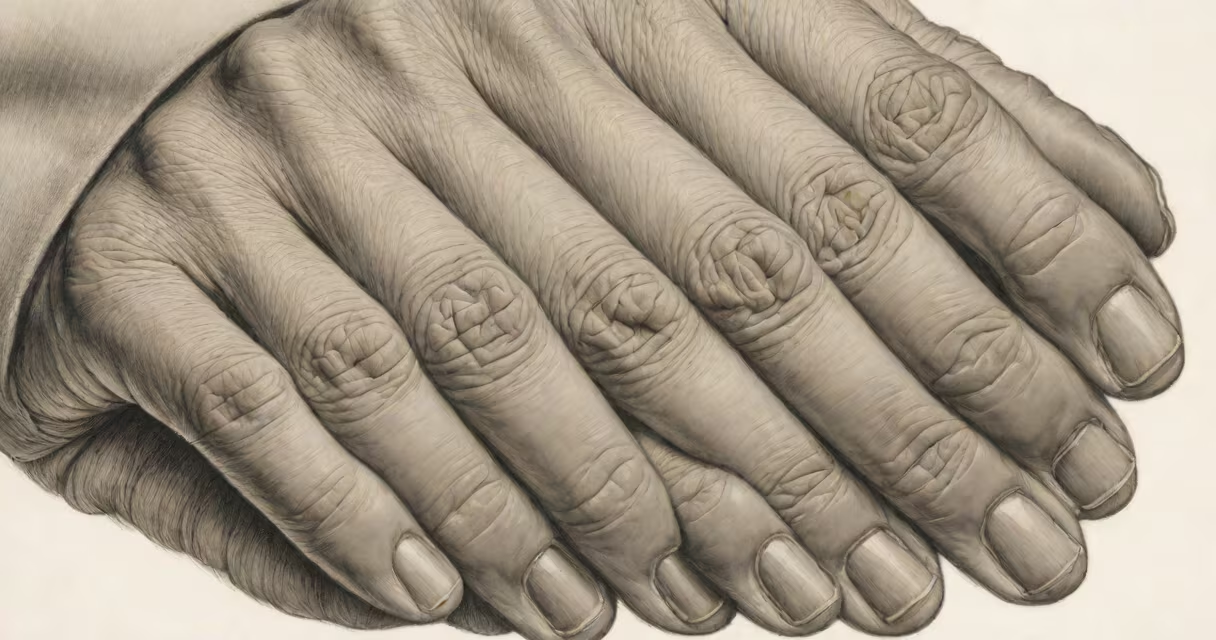
Swollen finger joints occur when fluid accumulates in the tissues around the joints, causing visible enlargement, tenderness, or stiffness. This condition may stem from injury, infection, or chronic diseases such as osteoarthritis or rheumatoid arthritis.
Swelling typically affects the proximal interphalangeal (PIP) and distal interphalangeal (DIP) joints-the middle and fingertip joints-though any joint in the hand can be involved. The swelling may appear suddenly after trauma or develop gradually over weeks due to systemic illness.
According to the American College of Rheumatology, persistent swelling in multiple finger joints-especially if symmetrical-is a sign of inflammatory arthritis. Early diagnosis improves outcomes, particularly in autoimmune forms like rheumatoid arthritis, which affects about 1.3 million adults in the U.S. (CDC, 2023).
Joint swelling results from inflammation, which triggers blood vessel dilation and increased permeability. Fluid, immune cells, and proteins leak into the joint space and surrounding tissue, leading to puffiness and discomfort.
Acute causes include sprains, fractures, or infections. For example, a fall onto an outstretched hand can damage ligaments and cause immediate swelling in the metacarpophalangeal (MCP) joints-the knuckles at the base of the fingers. A bacterial infection like septic arthritis can develop within hours, presenting with redness, warmth, and severe pain.
Chronic swelling arises from ongoing immune system activity or cartilage breakdown. In osteoarthritis, wear-and-tear damages joint surfaces, prompting bone spurs and soft tissue thickening. In rheumatoid arthritis, the immune system attacks synovial lining, leading to progressive joint erosion and deformity.
Not all swollen joints have the same origin. Conditions differ in onset, symmetry, and associated symptoms.
| Condition | Onset | Pattern | Key Symptoms |
|---|---|---|---|
| Osteoarthritis | Gradual | Asymmetrical; affects DIP and PIP joints | Pain with movement, bony nodules (Heberden's and Bouchard's nodes) |
| Rheumatoid arthritis | Subacute to chronic | Symmetrical; often involves MCP and PIP joints | Morning stiffness lasting >30 minutes, fatigue, low-grade fever |
| Gout | Sudden | Often single joint; frequently the base of the big toe, but can affect fingers | Bursting pain, redness, heat; triggered by high-purine foods |
| Tendonitis or tenosynovitis | Repetitive strain | Localized to one finger or area | Pain with motion, swelling near tendon sheath |
A 2022 study in Arthritis & Rheumatology found that 68% of patients with early rheumatoid arthritis reported joint swelling in the hands during their first visit. Swelling was most common in the second and third fingers, often bilaterally.
Swelling that lasts longer than two weeks, worsens over time, or occurs with fever, rash, or unexplained weight loss requires prompt evaluation. These signs may indicate systemic disease.
Specific red flags include:
I once observed a patient who ignored mild swelling in her index and middle fingers for six months. By the time she sought care, she had developed irreversible joint fusion due to untreated rheumatoid arthritis. Early intervention prevents long-term disability.
Many assume swelling always means injury. But swelling in the absence of trauma-especially if it affects multiple joints-often signals a systemic issue. A 2021 review in Journal of Hand Surgery noted that nearly 40% of patients initially misattributed joint swelling to "overuse" or aging, delaying diagnosis by over a year.
Another misconception is that only older adults get arthritis. While osteoarthritis is more common in people over 50, rheumatoid arthritis can begin between ages 20 and 50. Women are three times more likely to develop it than men.
Some confuse swollen joints with psoriatic arthritis, which often presents with dactylitis-"sausage digits"-where entire fingers swell uniformly. This differs from the segmental swelling seen in gout or trauma.
Doctors use physical exams, imaging, and lab tests to identify the root cause. Blood tests for rheumatoid factor (RF) and anti-CCP antibodies help confirm autoimmune arthritis. Ultrasound or MRI can detect early synovitis before X-rays show damage.
Treatment varies by diagnosis. For osteoarthritis, NSAIDs and joint protection strategies reduce pain. Rheumatoid arthritis requires disease-modifying antirheumatic drugs (DMARDs), such as methotrexate, to slow progression. Gout is managed with allopurinol or febuxostat to lower uric acid levels.
Non-drug interventions include splinting to stabilize joints, occupational therapy to maintain function, and cold compresses to reduce acute swelling. A 2020 clinical trial showed that patients using wrist splints for 6 weeks reduced pain scores by 42% compared to controls.
Understanding why your finger joints are swollen helps guide timely care. Identifying the underlying cause-whether mechanical, inflammatory, or metabolic-leads to effective management and better quality of life.