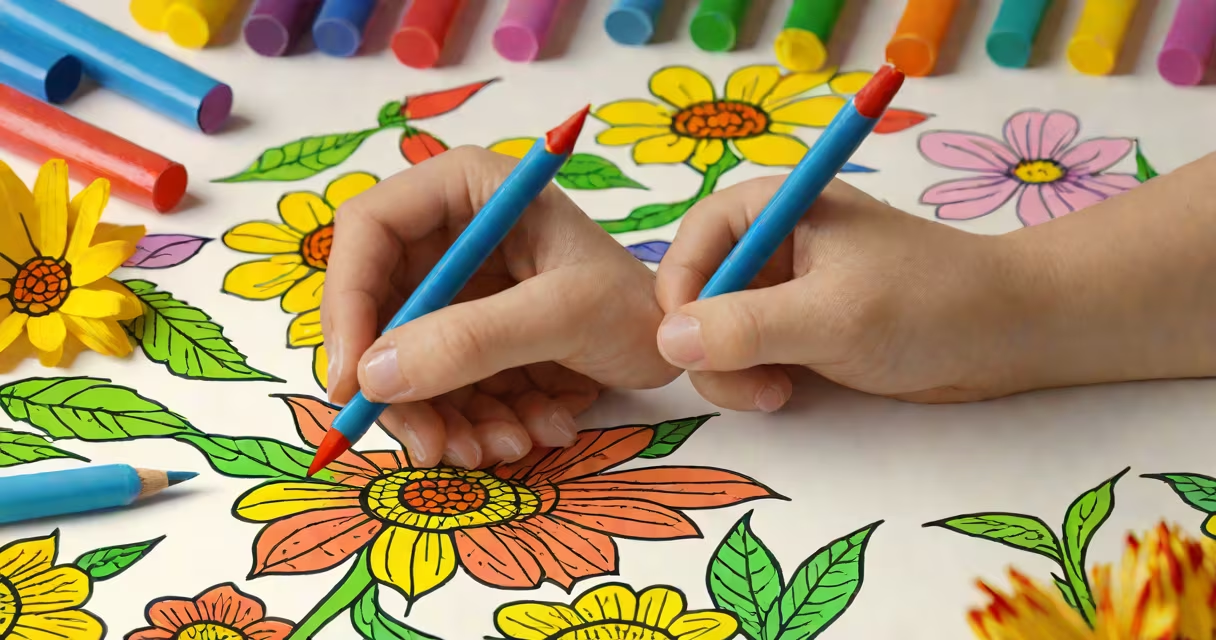
drawing pictures for colouring involves creating line-based illustrations with clear outlines, designed specifically for filling in with crayons, colored pencils, or markers. These images are intended to be both engaging and accessible, allowing users to focus on color application rather than sketching fundamentals.
Such drawings typically feature bold, continuous lines that define shapes and contours. The absence of shading or complex textures helps even beginners can complete a piece without frustration. Most designs avoid fine details that might bleed through paper or require advanced precision. This structure supports many ages and skill levels.
These illustrations serve dual purposes: they entertain and educate. For young children, they build hand-eye coordination and color recognition. For adults, they offer mindfulness benefits, reducing anxiety through repetitive, focused activity. According to the American Psychological Association, engaging in coloring for 20 minutes daily can lower cortisol levels, a key stress hormone.
Each drawing begins as a sketch, often created digitally using software like Adobe Illustrator or Procreate, or drawn by hand and scanned. Artists then refine the lines to ensure consistency and clarity. Thin or broken lines are corrected because they confuse the user during coloring and may result in uneven fills.
The final output is usually exported as a high-resolution PDF or PNG file. These formats preserve line sharpness and allow for printing at various sizes without pixelation. A standard size for home printing is 8.5 x 11 inches, which fits most consumer printers.
Some creators add subtle design elements-like patterns within shapes or hidden objects-to encourage deeper engagement. For example, a butterfly might contain tiny flowers inside its wings, inviting the colorist to explore and discover while coloring.
Categories of drawing pictures for colouring vary by audience and purpose. The following table outlines major types:
| Type | Target Age Group | Common Themes | Design Complexity |
|---|---|---|---|
| Kids' colouring sheets | 3-8 years | Animals, vehicles, cartoon characters | Low - large, simple shapes |
| Adults' complex pages | 16+ | Mandala patterns, fantasy scenes, botanicals | High - detailed linework, small spaces |
| Themed sets (e.g., holidays) | All ages | Christmas, Halloween, Easter motifs | Medium - balanced detail and simplicity |
| Customizable portraits | Teens and adults | People, pets, family silhouettes | Variable - adaptable to skill level |
Many educators use drawing pictures for colouring in classrooms to reinforce learning. A teacher might assign a dinosaur sheet to accompany a science unit, asking students to color based on facts about the animal's habitat or diet. This method improves retention and encourages creative thinking.
One widespread error is assuming that all colouring sheets are suitable for all ages. A page filled with tiny interlocking spirals may look beautiful but frustrate a five-year-old who lacks fine motor control. Conversely, a simple outline of a cat with exaggerated eyes may feel childish to an adult seeking mental relaxation.
Another misconception is that colouring is purely passive. Research from the University of the Arts London shows that participants who engaged in guided colouring sessions reported higher levels of sustained attention and improved mood compared to those who merely observed. The act of choosing colors and applying them creates cognitive engagement.
A lesser-known fact: many professional artists create colouring pages as part of their portfolio work. For example, illustrator Ksenia Pokrovskaya produces detailed botanical illustrations under the brand "Botanical Colouring." Her pages sell internationally and are used in therapy settings due to their calming complexity.
In 2022, a school district in Oregon introduced a weekly colouring session for elementary students. Teachers selected themed sheets from a curated library, including seasonal animals and cultural symbols. After six weeks, teachers reported a 30% decrease in classroom disruptions during independent work time.
One student, Maya, aged 7, colored a jungle scene featuring monkeys, parrots, and vines. She used a mix of red, yellow, and green crayons. When asked why she chose those colors, she said, "The monkey is happy, so he gets bright colors." This response demonstrated emotional expression and narrative thinking-skills beyond basic color matching.
Her finished page was displayed in the school hallway. The artwork wasn't judged on realism but on effort and imagination. This approach aligns with research from the National Art Education Association, which states that process-oriented art activities improve confidence and reduce performance anxiety.
Coloring sheets are not just for fun-they're tools for growth. Whether used in homes, schools, or therapy rooms, drawing pictures for colouring provide structure, creativity, and calm. They support cognitive development, emotional regulation, and artistic exploration across age groups.
Understanding the intent behind each design-whether it's a toddler's first crayon stroke or an adult's meditative mandala-reveals why drawing pictures for colouring remains a lasting practice. The medium adapts to its user, not the other way around.