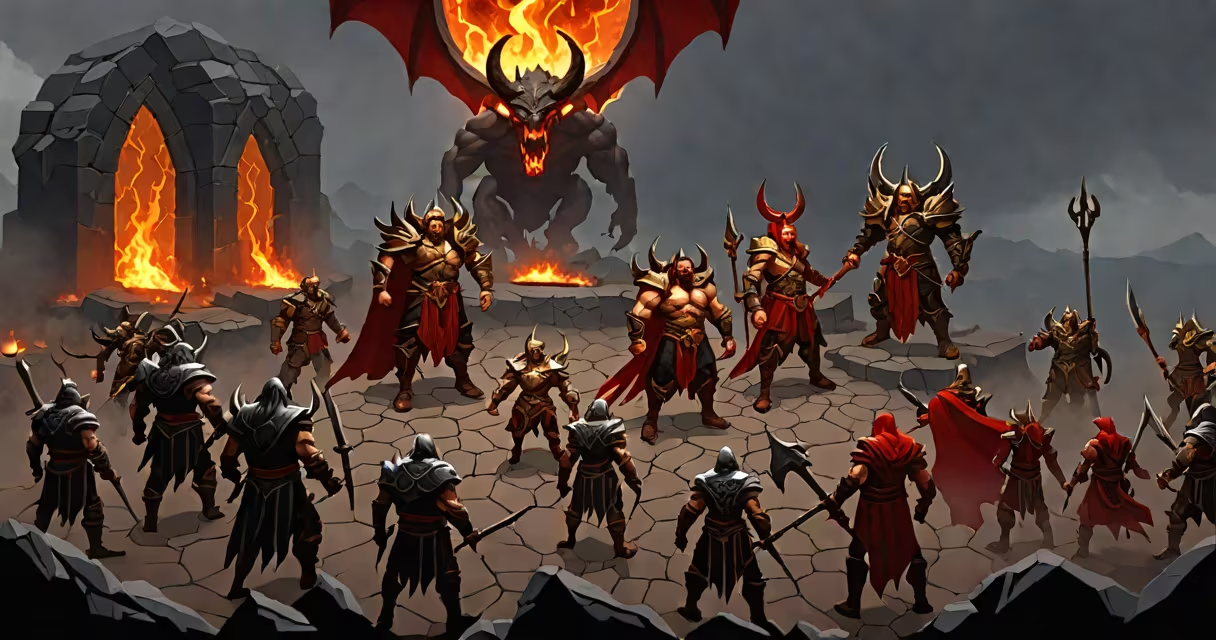
diablo 4 call to arms is a weekly endgame challenge that resets every Tuesday at 10 AM UTC, testing players' gear, coordination, and strategy through increasingly difficult waves of enemies and a final boss encounter. It is designed as a high-stakes, time-limited event tied to the seasonal rotation, offering exclusive loot and rankings.
Call to Arms runs during the active season and is accessible only after completing Act III of the main campaign. Players enter a randomized dungeon layout with procedurally generated encounters, including elite monsters, environmental hazards, and timed objectives. The goal is to survive 15 waves of escalating enemy spawns and defeat a final boss before time expires or health drops to zero.
Each week, the event features new modifiers-such as increased damage, faster enemy spawn rates, or reduced healing-that alter gameplay dynamics. These modifiers are applied randomly but are balanced to maintain fairness across player skill levels. Success requires optimized builds, efficient resource management, and teamwork in multiplayer mode.
Players begin Call to Arms by selecting the event from the seasonal menu after unlocking it via campaign progress. They choose a party of up to four characters and enter a shared instance with changing maps. The map changes each week, ensuring no two runs are identical.
Each wave increases in difficulty. Wave 1 introduces basic enemies like skeletons and imps. By wave 10, players face corrupted champions, elemental golems, and area-denial traps. The final wave culminates in a boss fight against a unique variant of a known antagonist-such as a corrupted Archangel or a fallen Prime Evil.
Survival is measured by time and remaining health. Completing all 15 waves grants a "Perfect Run" achievement and access to a tiered reward pool. Players earn points based on survival time, damage dealt, and efficiency. Rankings are tracked globally and updated weekly.
Call to Arms operates on a tiered system. Each run is assigned a difficulty level based on the modifiers applied:
| Difficulty Tier | Modifiers | Reward Level |
|---|---|---|
| Normal | Standard enemy spawns, no special effects | Common gear, crafting materials |
| Hard | Increased enemy speed, reduced healing duration | Uncommon gear, currency boost |
| Expert | Environmental damage zones, limited teleportation | Rare gear, legendary crafting components |
| Master | Multiple bosses in sequence, permanent debuffs | Epic gear, seasonal currency, unique cosmetic items |
Higher tiers require stronger gear and precise timing. Master difficulty is intended for experienced players who have completed multiple seasons and optimized their builds.
Call to Arms serves as the primary endgame activity in Diablo 4's seasonal model. It replaces the old "endgame grind" by introducing structured, time-bound content that encourages regular play and community engagement.
Blizzard Entertainment introduced the event to address player fatigue from repetitive farming. According to a 2023 developer blog post, the goal was to "create meaningful progression beyond the campaign," emphasizing variety and player agency. The system rewards consistent participation with better loot and recognition.
Players use Call to Arms to farm specific legendary items, test build viability, and compete on leaderboards. For example, a Necromancer player might attempt the event to farm a "Frostbite" legendary weapon with high critical strike chance. A successful run yields a 60% chance of dropping such an item, compared to 10% in standard dungeons.
Many players assume Call to Arms is purely about gear. This is incorrect. While loot is a major incentive, the event emphasizes skill expression and team coordination. A single-player character with suboptimal gear can still succeed through precise positioning and ability usage.
Another misconception is that the event is always the same. It is not. Each week introduces new modifiers and randomized layouts. For instance, in Season 3, the "Blood Moon" modifier caused enemies to heal from blood pools on the ground. This forced players to avoid standing in red zones and rework their movement patterns.
A lesser-known fact: the event uses a hidden "player influence score" that adjusts enemy behavior based on team composition. If a party includes three melee classes, enemies prioritize targeting the closest one. This mechanic was confirmed by Blizzard's lead designer in a 2024 patch notes update.
In Week 4 of Season 2, a player using a Demon Hunter with a "Windrunner" build attempted Call to Arms on Expert difficulty. Their team consisted of a Sorcerer (frost nova specialist), a Barbarian (tank), and a Druid (healer). The modifiers included "Frenzy" (enemies attack twice per turn) and "Shadow Veil" (all players take 15% more damage).
The team survived 12 waves with minimal health loss. On wave 13, they encountered a "Corrupted Warden" with a 30-second stun field. The Druid used a "Healing Totem" to sustain the group, while the Demon Hunter used "Smoke Bomb" to reposition. The final boss, a "Soul Devourer," had a phase where it summoned clones. The team used area-of-effect abilities to clear them quickly.
They completed the event in 14 minutes and 32 seconds. This ranked them in the top 0.8% globally. They received a "Legendary" version of the "Stormcaller's Gauntlets" and 500 seasonal currency.
I ran Call to Arms with a friend during Season 1's final week. We chose Master difficulty with no prior preparation. Our builds were unoptimized-low defense, poor cooldown reduction. After surviving wave 8, we realized we needed to switch tactics. We stopped relying on auto-attacks and focused on positioning and spell combos. We lost one character early but recovered by using resurrection scrolls. We finished in 16 minutes. The experience taught me that adaptability matters more than gear in high-pressure scenarios.
Call to Arms is not a raid. It does not feature scripted story sequences or narrative cutscenes. It is not a permanent dungeon. It does not offer permanent unlocks. It is a temporary, rotating challenge designed for short-term engagement.
It is also not a solo-only event. While players can attempt it alone, success rates drop below 12% for solo players on Expert and higher tiers. The game explicitly discourages solo attempts in official guides, citing "high failure risk and low reward consistency."
Finally, Call to Arms is not tied to the main campaign. You cannot access it before completing Act III. This ensures players have sufficient gear and understanding of mechanics before entering high-difficulty content.