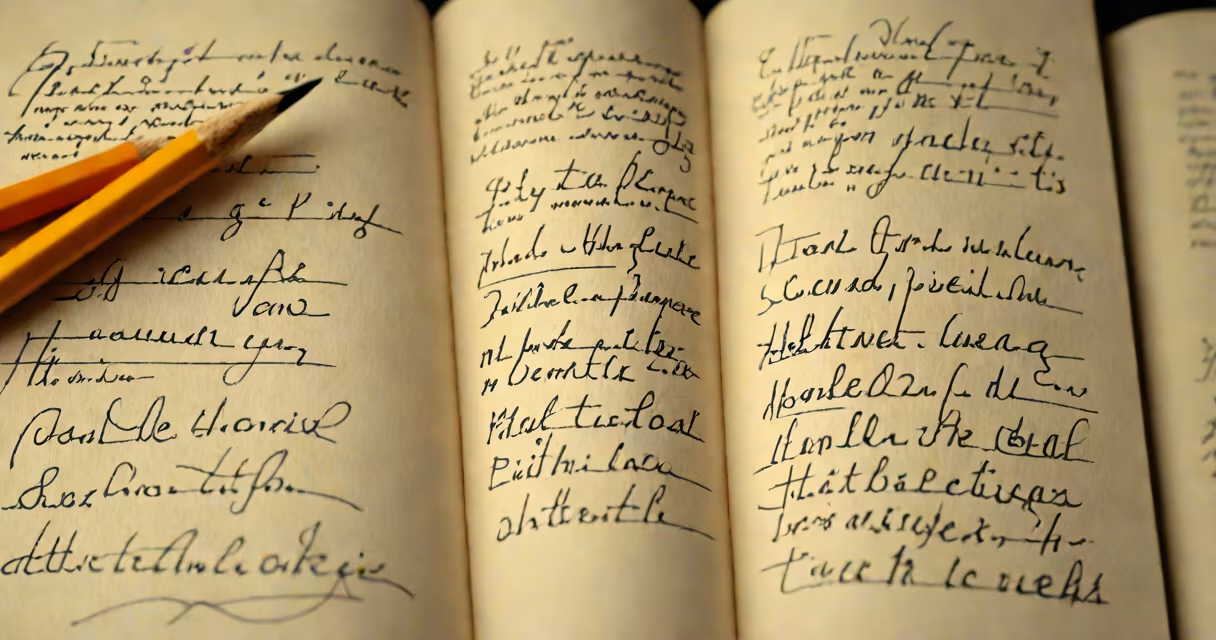
Describing a voice in writing means using word choice, syntax, tone, and rhythm to convey a character's personality, perspective, or narrative style. It's how readers hear a character's inner thoughts, speech patterns, or the narrator's attitude-even when no dialogue appears.
Authors don't just tell readers what a character thinks-they make them feel it through language. A voice isn't just what someone says; it's how they say it. The difference between a nervous teenager and a stoic war veteran isn't just in their actions-it's in the way their thoughts unfold on the page.
For example, in *The Catcher in the Rye*, Holden Caulfield speaks in short, fragmented sentences, uses slang ("phony"), and repeats phrases like "I felt like jumping out the window." His voice isn't just about what he says-it's about how he says it. That rhythm, tone, and diction create a distinct identity that readers recognize instantly.
Voice emerges from consistent linguistic decisions. Writers control tone through sentence structure, vocabulary level, punctuation, and even the frequency of adjectives or metaphors. A formal, precise voice might use long sentences and complex syntax, while a casual, intimate voice favors contractions, fragments, and colloquialisms.
Consider the difference between Jane Austen's ironic, measured prose in *Pride and Prejudice* and the rapid-fire internal monologue in Sylvia Plath's *The Bell Jar*. Austen's voice is controlled, observant, and subtly critical. Plath's is urgent, emotional, and self-aware-like thoughts racing under pressure. Both are effective, but they serve different purposes.
Research from the National Writing Project confirms that students who analyze voice in literature show improved ability to identify authorial intent and emotional subtext in texts-skills essential for both reading comprehension and original writing.
Not all voices are the same. Writers choose among several established forms depending on the story's needs:
| Type | Characteristics | Example |
|---|---|---|
| First-person | Subjective, limited perspective. Uses "I" and "me." Emphasizes personal bias and emotion. | Holden Caulfield in *The Catcher in the Rye* |
| Third-person limited | Observer focused on one character's thoughts. Uses "he," "she," "they." Offers intimacy without direct narration. | Elizabeth Bennet in *Pride and Prejudice* |
| Third-person omniscient | Author knows all characters' thoughts. Can shift between perspectives. Often formal or detached. | Charles Dickens' *Bleak House* |
| Second-person | Rare. Addresses the reader as "you." Creates immediacy and immersion. | Jay McInerney's *Bright Lights, Big City* |
Each type shapes how voice is perceived. First-person voice feels raw and immediate. Third-person limited allows subtle insight. Omniscient voice can be witty or distant. Second-person forces the reader into the role of protagonist.
Many writers confuse voice with accent or dialect. While regional speech patterns can contribute to voice, they're not the core. A character can speak with a Southern drawl and still have a dry, sarcastic voice-or a quiet, thoughtful one.
Another mistake is assuming voice must match the character's age or background. A 12-year-old girl in a novel might narrate with mature syntax and philosophical reflection-not because she's unrealistic, but because her voice reflects the author's stylistic choice. Voice is shaped by intention, not realism alone.
A lesser-known but important point: voice doesn't have to be consistent throughout a work. In *The Sound and the Fury* by William Faulkner, each section shifts in voice-Benjy's stream-of-consciousness, Quentin's obsessive introspection, Jason's bitter pragmatism. These aren't errors. They're deliberate tools to mirror psychological states.
Suppose you want to write a scene where a retired mechanic reflects on his life after losing his job. You don't want him to sound like a poet or a philosopher. You want his voice to feel worn, practical, and slightly resigned.
Start with sentence length: keep most under 15 words. Use contractions: "I ain't got nothing left to fix." Avoid flowery descriptions. Instead of "The sun rose slowly over the rusted pickup," write: "Sun came up. Same as yesterday. Nothing changed."
Add tactile details: "My hands still smell like oil. Even after the shower." This grounds the voice in physical reality. Use repetition: "Used to be proud. Now I'm just... here."
This isn't about making the character "real"-it's about making his voice feel authentic to his worldview. The tone isn't sad; it's weary. Not angry; it's numb. That's voice.
Agents and editors often reject manuscripts not for plot flaws but for weak or inconsistent voice. A story with great events but no distinctive voice feels generic. Readers remember voice more than plot twists.
According to a 2022 study by the Association of American Publishers, 68% of readers cited "distinctive narrative voice" as the top reason they continued reading a book past the first chapter. That's higher than pacing, setting, or character count.
I once read a short story submission where the narrator described a funeral in clinical detail-"The casket was oak, 72 inches long, with brass hinges." The voice was flat, neutral. The writer didn't realize that even a funeral scene can carry emotional weight through voice. I suggested adding small, telling details: "I counted the nails-sixteen. Too many. Like they were trying to hold something in." That single line shifted the entire tone from observational to grieving.
Describing a voice in writing isn't about mimicry. It's about precision. It's choosing words not just for meaning, but for rhythm, mood, and implication. A strong voice makes readers feel the story in their bones, not just their minds.
When you revise your work, ask: "Does this sentence sound like the person who said it?" If not, adjust the syntax, the diction, the pauses. Voice isn't added at the end-it's built into every sentence from the start.
Understanding how to describe a voice in writing gives you control over how your audience experiences your story. It turns a sequence of events into a lived experience.